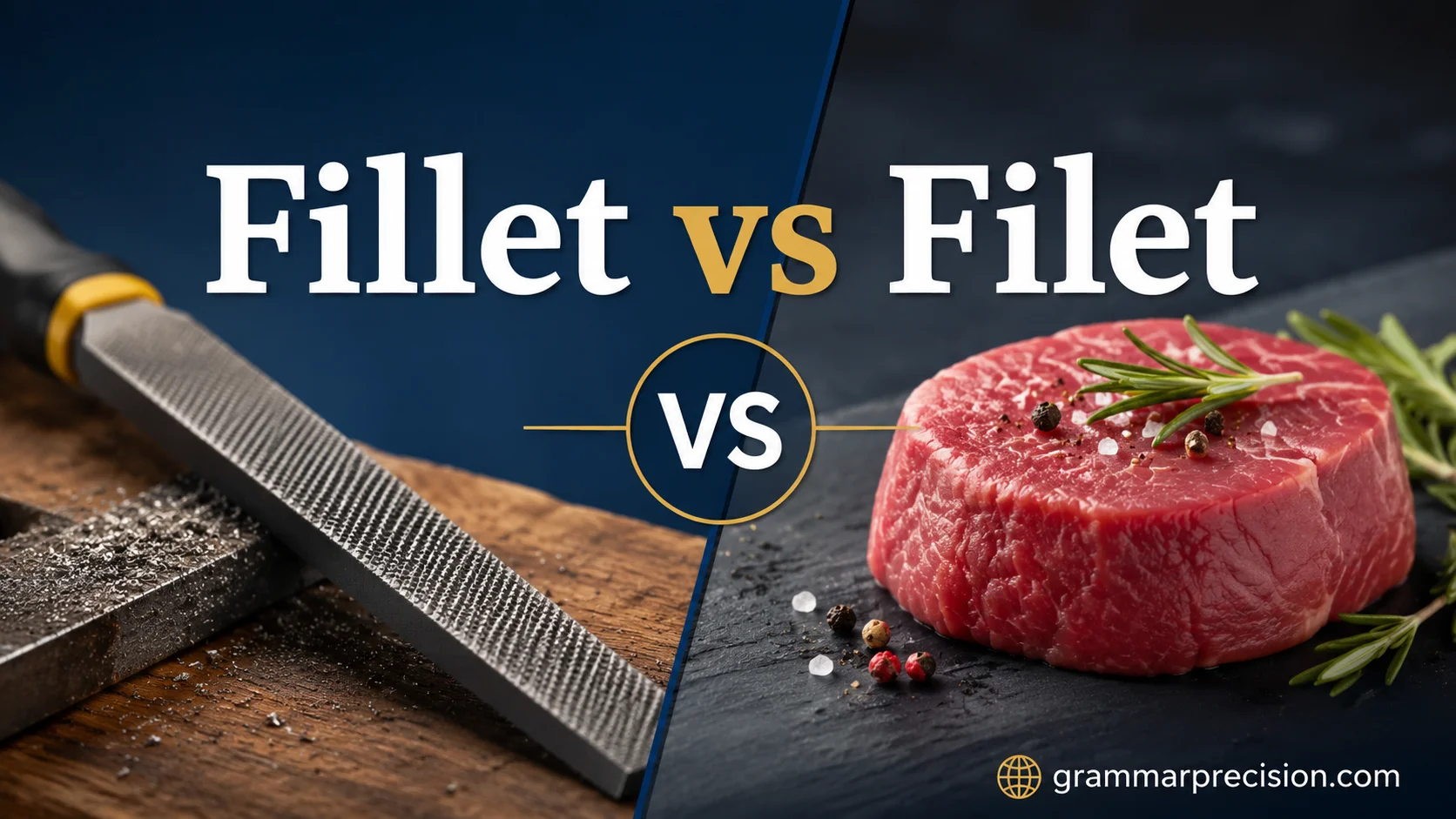
Fillet vs Filet is a common spelling question in English. Both words refer to a boneless cut of fish or meat, but their usage varies by region, cuisine, and writing style today.
After working with food and recipes for many years, I have noticed that Fillet and Filet often confuse writers. While both describe a boneless cut of fish or meat, Fillet is generally preferred in English, whereas Filet is commonly linked to French cuisine and classic dishes.
The distinction becomes clearer with practice and better understanding of language usage. Factors such as spelling, pronunciation, context, and regional preferences influence which term appears. Learning these small nuances can improve communication skills, strengthen vocabulary, and prevent common misunderstandings in writing.
Fillet vs Filet: What’s the Real Difference?
At their core, fillet and filet both refer to a boneless cut of meat or fish.
However, context changes how people use them.
Here’s a quick comparison:
| Feature | Fillet | Filet |
| Common Usage | Fish and general cooking | Steak and upscale dining |
| Language Style | English spelling | French inspired spelling |
| Tone | Everyday and practical | Elegant and premium |
| Pronunciation | Fill it or Fill ay | Usually Fill ay |
| Common Locations | Grocery stores and recipes | Fine dining menus |
The easiest way to remember the difference is this:
Fillet feels practical. Filet feels fancy.
Both spellings are technically correct. Still, cultural usage created clear preferences over time.
What Does “Fillet” Mean?
The word fillet usually describes a boneless piece of fish or meat.
People commonly use this spelling in:
- Grocery stores
- Cooking blogs
- Home kitchens
- Recipe books
- Fish markets
You’ll often see phrases like:
- Chicken fillet
- Fish fillet
- Salmon fillet
- Breaded fillet
The word works as both a noun and a verb.
Examples
- “I bought two salmon fillets.”
- “The chef carefully filleted the fish.”
That second sentence uses “fillet” as an action.
Fillet as a Cooking Technique
In culinary terms, filleting means removing bones from fish or meat.
Professional chefs spend years mastering this skill because precision matters. One careless cut wastes valuable meat.
Fish filleting requires:
- Sharp knives
- Steady hands
- Proper angles
- Speed and control
Watching a skilled chef fillet a fish feels almost artistic. Smooth movements. Clean cuts. Minimal waste.
Great cooking often looks effortless even though it requires serious skill.
What Does “Filet” Mean?
The spelling filet comes directly from French culinary language.
In modern English, restaurants mostly use “filet” in upscale dining settings, especially when talking about beef.
The most famous example is:
Filet mignon
That dish appears on steakhouse menus worldwide.
Why Restaurants Prefer “Filet”
Restaurants understand psychology better than most people realize.
French culinary terms instantly create a sense of luxury and sophistication. Customers associate French words with:
- Fine dining
- Expensive wine
- Professional chefs
- Premium ingredients
- Elegant experiences
That’s why menus often choose “filet” over “fillet.”
The spelling simply feels more upscale.
Compare these menu descriptions:
- Grilled Beef Fillet
- Grilled Beef Filet
The second option sounds more luxurious immediately even if the food is identical.
That’s branding psychology in action.
Fillet vs Filet Pronunciation Explained
Pronunciation creates huge confusion.
Some people say:
- “Fill it”
- “Fill ay”
Others switch pronunciations depending on the food.
Here’s the reality.
| Word | Common Pronunciation |
| Fillet | Fill it or Fill ay |
| Filet | Usually Fill ay |
American English accepts both pronunciations for “fillet.” However, “filet” almost always sounds French inspired.
Why Pronunciation Changes
French influence shaped the pronunciation heavily.
Originally, the French word sounded closer to:
Fee lay
English speakers gradually adapted the sound over time. Different regions developed different pronunciations naturally.
Language changes slowly. Pronunciation drifts across generations like waves reshaping a shoreline.
That’s why multiple versions exist today.
Common Pronunciation Mistakes
Many people assume only one pronunciation is correct.
That’s not entirely true.
Still, context matters.
Casual Context
- “Chicken fill it sandwich”
Fine Dining Context
- “Filet mignon” pronounced “fill ay min yon”
Saying “fill it mignon” at a luxury steakhouse sounds awkward immediately.
The Fascinating History Behind Fillet and Filet
Food vocabulary carries centuries of history.
The original word comes from French:
Filet
Originally, it referred to a thread or strip.
Over time, chefs began using the term for thin boneless cuts of meat and fish.
English eventually borrowed the word and created the spelling “fillet.”
That created two surviving versions:
- English adaptation: Fillet
- French inspired spelling: Filet
Most borrowed words eventually settle into one spelling. This one never fully did.
Also Read This: Bunk vs Debunk
How French Cuisine Influenced English Cooking Terms
French culinary culture shaped modern cooking vocabulary dramatically.
Professional kitchens still use French terms daily.
| French Culinary Word | Meaning |
| Sauté | Fry quickly |
| Julienne | Thin strips |
| Roux | Flour fat mixture |
| Mise en place | Ingredient setup |
| Filet | Boneless cut |
French cooking dominated elite dining culture for centuries. As a result, English borrowed countless culinary terms.
Even today, fancy restaurants rely heavily on French wording because it signals expertise and elegance.
Filet Mignon Explained
No discussion about fillet vs filet feels complete without talking about filet mignon.
This famous steak comes from the tenderloin section of beef.
Specifically:
- Located beneath the ribs
- Runs along the spine
- Extremely tender
- Lean with little connective tissue
Because this muscle rarely works, the meat stays incredibly soft.
That tenderness drives the high price.
Why Filet Mignon Costs So Much
Several factors increase the price dramatically.
Limited Quantity
Each cow produces only a small amount of tenderloin meat.
Scarcity naturally increases value.
Careful Butchering
Butchers must trim and portion tenderloin carefully.
Precision matters because mistakes waste expensive meat.
Restaurant Prestige
Luxury restaurants market filet mignon as a premium experience.
The elegant reputation adds value beyond the actual cut itself.
Filet Mignon Nutrition Facts
Here’s an approximate nutritional breakdown for an 8 ounce filet mignon steak:
| Nutrient | Approximate Amount |
| Calories | 430–500 |
| Protein | 45–50g |
| Fat | 25–30g |
| Carbohydrates | 0g |
| Iron | High |
Values vary depending on cooking style and marbling.
Fish Fillet vs Beef Filet
People commonly associate “fillet” with fish and “filet” with steak.
That pattern became popular over time.
| Food Type | Common Spelling |
| Fish | Fillet |
| Chicken | Fillet |
| Beef Tenderloin | Filet |
| Fast Food Sandwiches | Fillet |
| Steakhouse Menus | Filet |
You rarely see “fish filet” outside specific marketing campaigns.
Meanwhile, British English commonly uses “beef fillet” instead of “beef filet.”
Fillet vs Filet Around the World
Language usage changes dramatically between countries.
United States
Americans commonly use:
- Fillet for fish
- Filet for steak
Restaurants strongly prefer “filet.”
United Kingdom
British English usually prefers “fillet” across nearly all food contexts.
Examples include:
- Beef fillet
- Fish fillet
- Chicken fillet
Even luxury restaurants often use “fillet.”
France
French naturally uses “filet” because it’s the original spelling.
Canada and Australia
Usage varies depending on British or American influence.
Canadian menus often mix both styles.
The Psychology Behind Fancy Menu Language
Restaurants don’t choose menu words randomly.
Language shapes customer expectations.
Researchers studying restaurant psychology discovered that descriptive menu wording can increase perceived value significantly.
French culinary terms create associations with:
- Luxury
- Expertise
- Craftsmanship
- Tradition
- Fine dining
That’s why “filet” sounds more expensive than “fillet.”
Even when the meat itself stays exactly the same.
Words influence appetite more than people realize.
Case Study: Fast Food vs Fine Dining Language
Look at these menu examples:
| Restaurant Style | Menu Wording |
| Fast food | Crispy chicken fillet |
| Casual dining | Grilled salmon fillet |
| Luxury steakhouse | Center cut filet mignon |
The wording matches the restaurant identity perfectly.
Fast food menus focus on simplicity.
Fine dining menus focus on elegance and emotional appeal.
Fillet vs Filet in Grocery Stores
Grocery stores usually prefer “fillet.”
Why?
Because shoppers value clarity over sophistication when buying everyday food.
Examples include:
- Tilapia fillets
- Frozen cod fillets
- Breaded chicken fillets
The spelling feels practical and familiar.
Fancy wording doesn’t help much in frozen food aisles.
Cooking Methods for Fillets and Filets
Different cuts work better with different cooking methods.
Pan Searing
Perfect for filet mignon.
This method creates:
- Crisp crust
- Tender center
- Rich flavor
Professional chefs love it.
Grilling
Excellent for:
- Fish fillets
- Chicken fillets
- Beef filets
High heat adds smoky depth and caramelization.
Baking
Ideal for delicate fish fillets.
It helps maintain moisture without overcooking.
Sous Vide
Many restaurants use sous vide cooking for filet mignon.
The process involves:
- Vacuum sealing
- Slow cooking
- Precise temperature control
The result feels incredibly tender.
Chef Tips for Choosing High Quality Fillets and Filets
Professional chefs look for specific signs of quality.
Fish Fillet Tips
Choose fish with:
- Firm texture
- Bright appearance
- Mild smell
- Moist surface
Fresh seafood should smell clean and ocean like.
Avoid fish with strong odors.
Beef Filet Tips
Look for:
- Fine marbling
- Deep red color
- Smooth texture
- Thick cuts
Higher grade beef usually offers better tenderness and flavor.
Common Mistakes People Make
Small mistakes create confusion quickly.
Thinking Filet and Fillet Mean Different Cuts
Most of the time, they describe the same idea:
A boneless cut of meat or fish.
The difference mostly involves style and context.
Assuming One Spelling Is Wrong
Both spellings are correct.
Usage depends on region and setting.
Mispronouncing Filet Mignon
Many people struggle with the French pronunciation.
Correct pronunciation sounds roughly like:
Fill ay min yon
Not:
Fill it mig non
That second version makes chefs silently suffer.
Related Culinary Terms You Should Know
Understanding related food terms helps decode restaurant menus.
| Term | Meaning |
| Tenderloin | Tender cut from beef loin |
| Butterfly Cut | Meat sliced open flat |
| Debone | Remove bones |
| Portion Cut | Pre sized serving cut |
| Medallion | Small round cut of meat |
Restaurants often combine these terms with “filet” or “fillet.”
Fillet vs Filet in Popular Food Brands
Branding heavily influences spelling choices.
Examples include:
- McDonald’s uses “Filet O Fish”
- Grocery stores use “fish fillets”
- Luxury restaurants advertise “filet mignon”
Notice the pattern?
Upscale branding often prefers “filet.”
Mass market practicality favors “fillet.”
How Butchers Use These Terms
Professional butchers usually focus on precision more than style.
Many use “fillet” in technical contexts while restaurants prefer “filet” for presentation.
Still, usage varies between countries and businesses.
Food industry language remains surprisingly flexible.
Fillet vs Filet Quiz
Test your understanding.
Luxury Steakhouse Menu
Answer: Filet
Frozen Fish Packaging
Answer: Fillet
French Culinary Context
Answer: Filet
Everyday Recipe Blog
Answer: Fillet
FAQs:
Is Fillet or Filet the Correct Spelling?
Both spellings are correct. Fillet is the more common spelling in general English, while Filet is often associated with French cuisine and dishes such as filet mignon. The preferred spelling may vary by region and style guide.
Why Do People Confuse Fillet and Filet?
People often confuse these terms because they have nearly the same meaning and pronunciation. Both refer to a boneless cut of fish or meat, making the distinction less obvious in everyday writing and conversation.
Is Filet Used Only in French Cuisine?
Not always. Although Filet is strongly connected to French cuisine, some American writers also use it in broader contexts. However, Fillet remains the more widely accepted general term in English.
What Does Filleting Mean?
Filleting is the process of carefully removing bone from fish, chicken breast, or other cuts of meat using a sharp knife. The goal is to create a clean and presentable boneless portion.
Which Spelling Should I Use in Formal Writing?
For most forms of formal writing, Fillet is the safer choice because it is the standard spelling in many English dictionaries. Filet is usually best reserved for specific culinary references or French-inspired dishes.
Conclusion:
Understanding Fillet vs Filet helps improve spelling, vocabulary, and overall communication. Although both words describe a boneless cut of meat or fish, their usage depends on context, regional preferences, and culinary traditions.
Learning this distinction can prevent confusion and make your writing more accurate, professional, and polished.