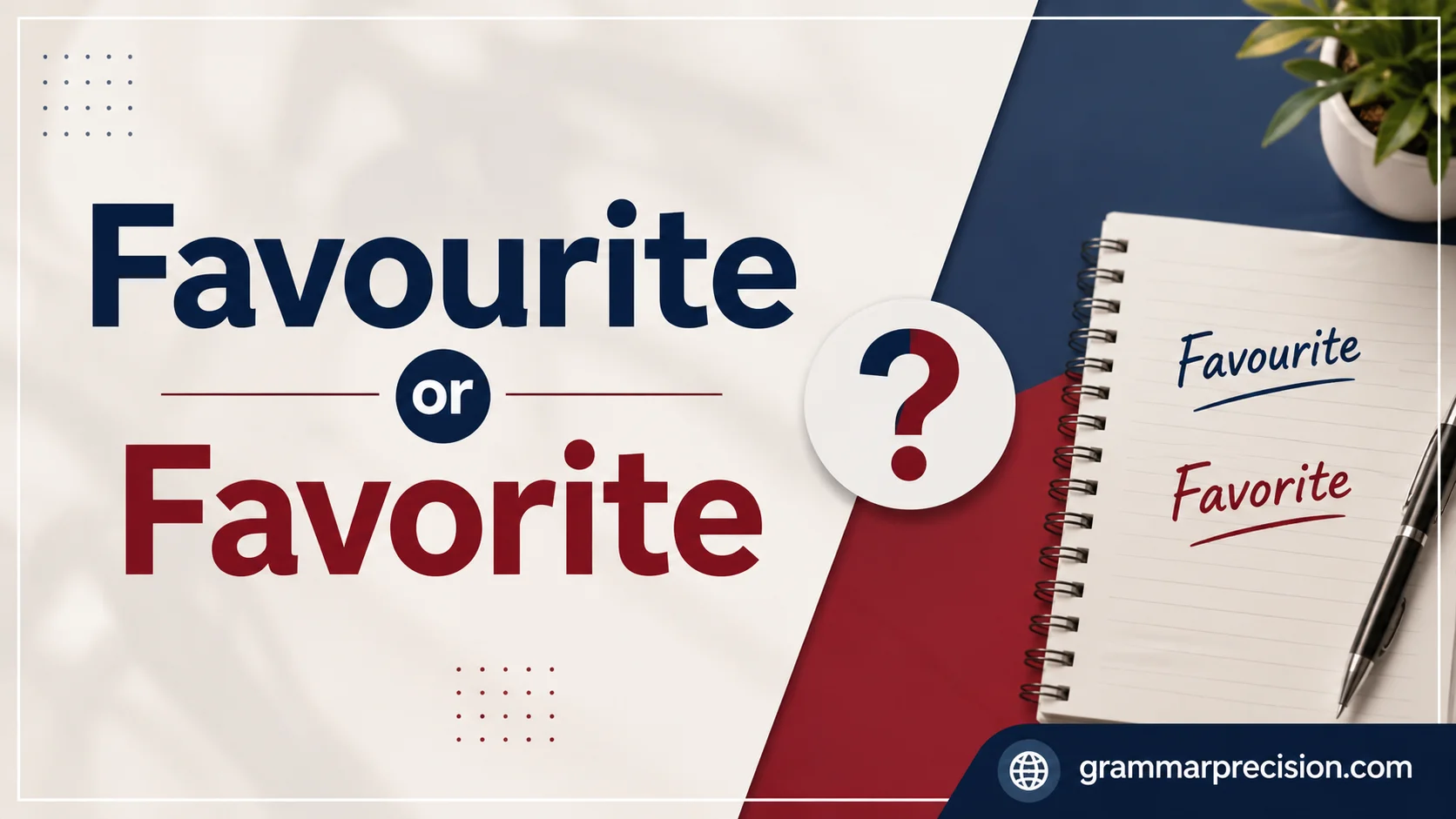
Favourite or Favorite often confuses English learners because both spellings are correct. American English prefers favorite, while British English uses favourite in daily writing, communication, education, and media across different regions worldwide.
Many writers, students, and readers notice small differences between American English and British English when studying spelling, grammar, and written communication. These language variations come from history, French influence, and evolving writing conventions. Understanding style guide rules, orthographic rules, and regional standards helps improve clarity, consistency, and overall textual understanding for a global audience today.
In casual conversations, people discuss their favorites, including a color like blue, a flower such as poppies, tasty Chocolate, or a beloved TV show. The word works as both a noun and an adjective, helping people express preference, liking, and personal sentiment. Learning correct usage, context, and spelling rules makes writing feel more natural and accurate.
Favourite vs Favorite: The Quick Answer
The words “favourite” and “favorite” mean the same thing. Both describe something preferred above others.
The only real difference is regional spelling.
| Spelling | Used In | English Style |
| Favourite | UK, Canada, Australia, New Zealand | British English |
| Favorite | United States | American English |
Example:
- British English: Pizza is my favourite food.
- American English: Pizza is my favorite food.
The pronunciation remains identical in both versions.
Why Do Favourite and Favorite Have Different Spellings?
English spelling didn’t split by accident. History shaped it.
The difference between favourite and favorite traces back to the evolution of British and American English. When English spread globally, spelling systems slowly drifted apart.
A major influence came from American lexicographer Noah Webster, who pushed for simplified spelling in the United States.
He believed American English should remove unnecessary letters and become easier to learn. That philosophy permanently changed how Americans write today.
Common British vs American Spelling Differences
| British English | American English |
| Favourite | Favorite |
| Colour | Color |
| Honour | Honor |
| Labour | Labor |
| Flavour | Flavor |
| Neighbour | Neighbor |
Over time, schools, dictionaries, and publishing systems locked these differences in place.
Today, both systems are correct inside their own regions.
Is Favourite or Favorite More Correct?
There is no universal winner here.
The correct choice depends entirely on your audience.
If you write for an American audience, favorite is correct. If you write for UK readers, favourite is correct.
The Real Rule
The only true rule is consistency. Mixing both styles inside one document looks unprofessional.
❌ My favourite color is blue.
❌ My favorite colour is blue.
Both are inconsistent.
✔ My favourite colour is blue.
✔ My favorite color is blue.
Favourite vs Favorite Pronunciation
Despite spelling differences, pronunciation stays identical.
| Word | IPA |
| Favourite | /ˈfeɪ.vər.ɪt/ |
| Favorite | /ˈfeɪ.vər.ɪt/ |
People rarely notice any difference when spoken aloud.
That’s why spelling confusion is so common in writing.
Why Americans Dropped the “U”
The missing “u” is not random. It comes from intentional language reform.
In the 1800s, Noah Webster promoted simplified spelling rules in the United States.
His goals included:
- Simplifying English learning
- Standardizing spelling across America
- Reducing unnecessary letters
- Building a distinct American identity
This reform led to spellings like:
- favorite instead of favourite
- color instead of colour
- honor instead of honour
It permanently shaped American English.
Which Spelling Should You Use?
Your choice depends on your audience.
Use “Favorite” If:
- You target US readers
- You write American English content
- Your SEO strategy focuses on US traffic
- Your brand follows US style guidelines
Use “Favourite” If:
- You target UK or Commonwealth readers
- Your brand uses British English
- You write for academic or UK publications
Also Read This: Gaudy vs Gawdy
Favourite vs Favorite in SEO
This is where many writers miss a key opportunity.
Search engines understand both spellings. However, user behavior still differs by region.
| Keyword | Audience | Competition |
| Favorite | United States | High |
| Favourite | UK, AU, CA | Medium |
Google adapts results based on location and search habits.
SEO Insight
- Use one primary spelling per page
- Include the alternative version naturally in content
- Avoid keyword stuffing
- Match spelling to your target region
This improves both ranking and readability.
Does Google Treat Favourite and Favorite Differently?
Google recognizes both as semantically identical.
However, it still prioritizes regional intent. That means users in different countries see different spelling preferences in search results.
For example:
- US users see “favorite” more often
- UK users see “favourite” more often
Search engines optimize for familiarity and trust.
Favourite vs Favorite in Content Marketing
Spelling impacts brand perception more than people realize.
A consistent spelling system builds trust.
Why consistency matters:
- Improves readability
- Strengthens brand identity
- Avoids confusion
- Looks professional
Mixing spelling styles can make content feel careless.
Why “Favourite” Looks More Elegant
This is a psychological effect.
Many readers associate British spelling with:
- tradition
- sophistication
- academic tone
Meanwhile, American spelling feels:
- modern
- simple
- direct
Neither is better. It’s just perception shaped by exposure.
Common Mistakes Writers Make
Small errors can damage credibility.
Mixing spelling systems
❌ favourite color
❌ favorite colour
Ignoring audience expectations
A UK reader may notice American spelling instantly.
Autocorrect confusion
Tools often switch spelling automatically based on settings.
Always double check your language settings.
Favourite vs Favorite in Academic Writing
Academic standards depend on region.
British institutions use:
- favourite
- colour
- organisation
American institutions use:
- favorite
- color
- organization
International universities may accept both as long as consistency is maintained.
Favourite vs Favorite in Social Media
Social media blends global audiences.
Creators often adjust spelling based on their audience.
Example:
- US audience → favorite
- UK audience → favourite
Brands may even run separate campaigns for different regions.
Which Spelling Is More Popular Worldwide?
Globally, favorite appears more frequently online due to high US content production.
However, favourite remains dominant across many English speaking regions outside the US.
Both are widely used and accepted.
Countries That Prefer “Favourite”
| Country | Spelling |
| UK | Favourite |
| Australia | Favourite |
| New Zealand | Favourite |
| Ireland | Favourite |
| South Africa | Favourite |
| Canada | Mixed usage |
Canada often blends British and American conventions.
Countries That Prefer “Favorite”
| Country | Spelling |
| United States | Favorite |
American English strongly influences global digital content due to media scale.
Why Spellcheck Flags One Version
Spellcheck tools depend on language settings.
If your system is set to US English:
- “favourite” is flagged
If set to UK English:
- “favorite” is flagged
Fix it by adjusting:
- keyboard language
- browser settings
- writing tool preferences
Similar British vs American Spelling Differences
| British | American |
| Favourite | Favorite |
| Centre | Center |
| Theatre | Theater |
| Colour | Color |
| Travelling | Traveling |
| Jewellery | Jewelry |
These patterns help you predict spelling differences easily.
The Branding Impact of Spelling
Spelling shapes how people feel about your brand.
British English often feels:
- premium
- traditional
- refined
American English often feels:
- modern
- simple
- fast paced
Brands choose spelling intentionally to match tone.
Case Study: Localization and Trust
Imagine two websites targeting UK users.
Site A:
- favorite
- color
- organization
Site B:
- favourite
- colour
- organisation
Most UK users trust Site B more because it feels familiar.
That familiarity increases engagement and conversions.
Expert Writing Tips
Professional writers follow clear rules.
Build a style guide
Choose one spelling system and stick to it.
Audit content regularly
Check old articles for inconsistencies.
Configure tools properly
Set grammar tools to the correct English variant.
Fun Facts About Favourite vs Favorite
- Both words come from Latin favor
- Pronunciation never changed
- British English often preserves older spellings
- American English simplifies spelling for efficiency
FAQs:
Is Favourite or Favorite correct in English?
Yes, both Favourite and Favorite are correct spellings in English. American English prefers favorite, while British English commonly uses favourite in writing and communication.
Why do British and American spellings differ?
The difference comes from language history, French influence, and changing spelling conventions over time. British English often keeps older spellings, while American English simplifies certain words by removing extra letters.
Does Favourite and Favorite have different meanings?
No, both words share the same meaning and express preference, liking, or something well liked. They can work as both a noun and an adjective depending on the sentence.
Which spelling should students use in writing?
Students should follow the style guide or regional standards required by their school, university, or audience. Using one spelling consistently improves clarity, consistency, and overall written communication.
Why is it important to learn these spelling differences?
Understanding these language variations helps improve grammar, vocabulary, textual understanding, and communication with a global audience. It also helps learners write in a more natural and accurate style.
Conclusion:
The difference between Favourite and Favorite mainly depends on American English and British English spelling traditions. Both forms are correct, interchangeable, and widely accepted across the English speaking world.
Learning these small spelling differences, along with proper usage, context, and writing conventions, helps writers and learners communicate with greater clarity, confidence, and accuracy.