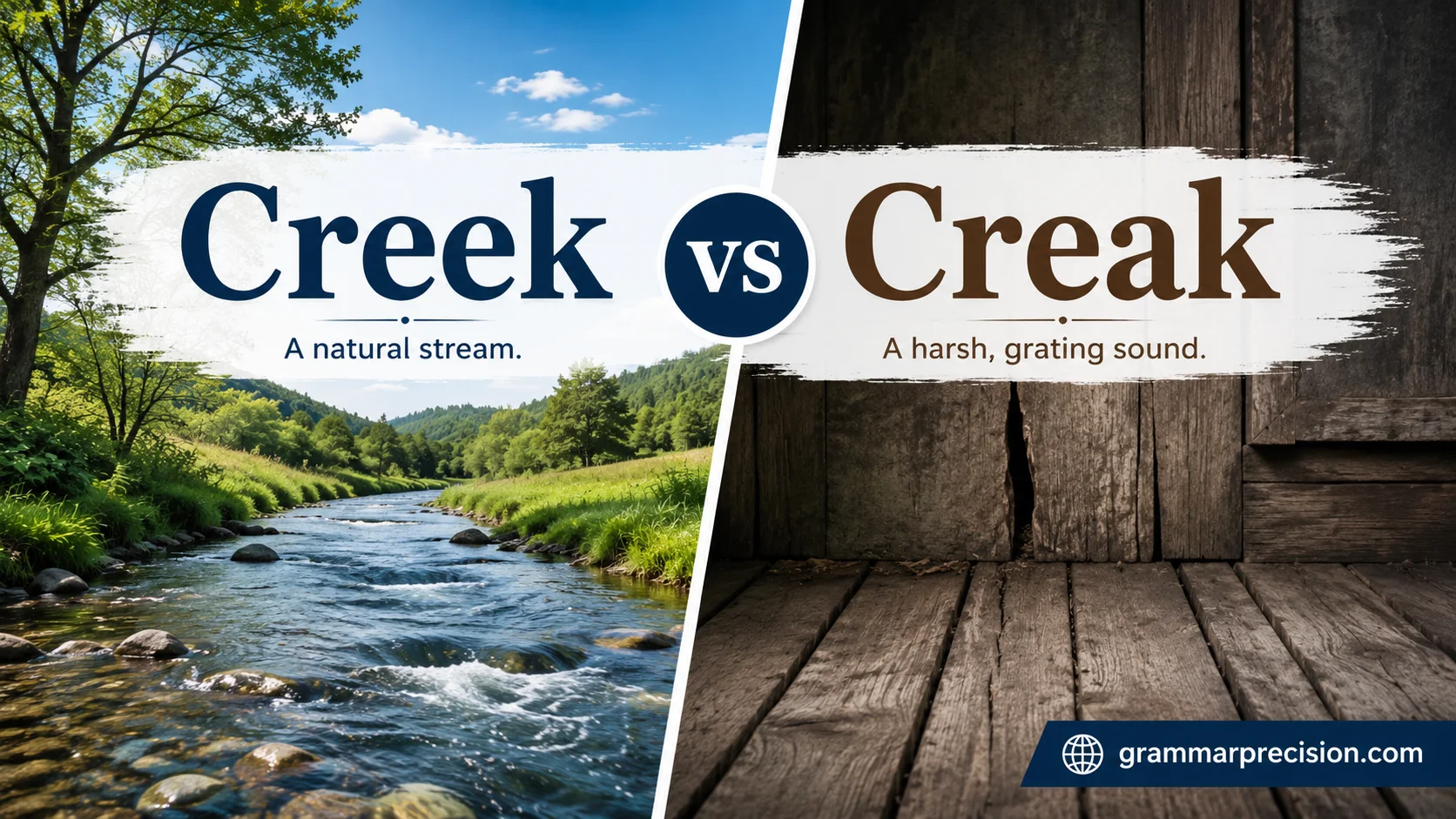
Creek vs Creak shows how Homophones create confusion in English, where words sound same but differ in meaning, spellings, and usage, especially between a sound and a place.
A creak is a specific sound linked with movement, pressure, and strain in old, wooden materials. It often comes from a swinging door, loose hinge, or tired floorboard in familiar interior settings, producing a harsh, grating, or squeaking noise. From my experience, this verb and noun use helps describe objects under stress, showing weakness, instability, or need for repair. This adds a vivid, sensory detail in spoken and written communication, improving clarity, comprehension, and precise expression.
In contrast, a creek is a narrow, small, minor river, stream, or tributary found in rural and natural places. I once followed a path near a native American group location and heard water instead of wood, which helped me spot the difference. This example continues to sharpen writing skills because both terms play distinct roles in professional conversation. Learners improve by paying attention to semantics, phonetics, sentence structure, and context, making accurate understanding and correct usage easier in English.
Creek Meaning Explained (Water, Nature, and Geography)
A creek is a small flowing stream of water. It usually moves through land like forests, fields, valleys, or rural areas.
Think of it as a mini river. Not big, but still natural and flowing.
Simple definition
A creek is a small natural water stream that often connects to a river or lake.
Where you’ll usually see creeks
- Forest regions
- Mountain areas
- Countryside villages
- Parks and hiking trails
Real life examples of “creek”
- “We sat near the creek and ate lunch.”
- “A small creek runs behind the farmhouse.”
- “Fish live in the shallow creek water.”
Interesting fact
In many English speaking countries, especially the US, the word creek is also used in place names. This shows how common small water streams are in geography and settlement history.
Creak Meaning Explained (Sound, Movement, and Everyday Noise)
Now let’s switch from water to sound.
A creak is a short, sharp, high pitched noise that happens when something moves under pressure or friction.
You usually hear it when something is old or slightly worn out.
Simple definition
A creak is a squeaky sound made when two surfaces rub against each other.
Where you hear a creak in daily life
- Old wooden doors
- Floorboards under footsteps
- Chairs when someone sits
- Staircases in quiet houses
Real life examples of “creak”
- “The door creaked open slowly.”
- “The wooden stairs creak at night.”
- “The chair creaked when he leaned back.”
Why writers love this word
Creak sounds create mood. In horror or suspense stories, even a small “creak” can build tension instantly.
Creek vs Creak Pronunciation Difference Explained
These words look similar, but their sound behavior helps you tell them apart.
Creek pronunciation
- Sounds like: kree k
- Smooth and clean sound
- Feels like flowing movement
Creak pronunciation
- Sounds like: kree k (but longer and strained)
- Feels rough or squeaky
- Often stretched in speech for effect
Simple way to remember sound difference
- Creek = smooth water flow
- Creak = strained wooden sound
If you imagine the sound while saying it, confusion disappears quickly.
Creek vs Creak Side by Side Comparison
Let’s make everything crystal clear.
| Feature | Creek | Creak |
| Meaning | Small natural stream | Squeaky sound |
| Category | Geography / nature | Sound / noise |
| Usage | Rivers, land, water | Doors, wood, objects |
| Sense | Visual (you see it) | Audio (you hear it) |
| Example | “A creek flows nearby.” | “The door creaks loudly.” |
This table makes the difference instantly obvious.
Also Read This: No Thank You or No, Thank You?
Why Creek vs Creak Confuses So Many People
This pair confuses learners for a few simple reasons.
- Only one letter changes
- Both are short words
- Both appear in daily English
- Spelling looks almost identical
Your brain tries to guess meaning based on similarity. That’s where mistakes happen.
Another reason is speed. When writing fast, people don’t stop to think about meaning. They rely on muscle memory, and that often leads to mix ups.
Real Life Case Study: A Common Writing Mistake
Let’s look at a realistic situation.
Situation
A student writes:
“We walked along the creak near the village.”
What went wrong
The writer meant creek, but used creak instead.
Why this is incorrect
- “Creak” refers to sound
- It cannot describe water or geography
Correct version
“We walked along the creek near the village.”
Lesson learned
Even one wrong letter can change the meaning completely in English writing.
Creek in Geography and Real Locations
A creek is not just a random water stream. It plays a role in real landscapes.
Where creeks matter
- Farming and irrigation
- Wildlife habitats
- Rural water systems
- Hiking and tourism routes
Examples of place names with “creek”
- Walnut Creek
- Bear Creek
- Mill Creek
These names show how often the word is used in real geography.
Creak in Storytelling and Emotional Writing
Creak is a favorite word for writers, especially in storytelling.
Why it works so well
- It creates sound imagery
- It builds suspense
- It signals age or decay
- It adds emotional tension
Example in storytelling
“The empty house creaked as the wind pushed the door open.”
You can almost hear the sound. That’s why it’s powerful in fiction.
Common Mistakes People Make With Creek vs Creak
Even advanced learners sometimes slip.
Mistake 1: Wrong spelling in context
- Using “creak” for water
- Using “creek” for sound
Mistake 2: Ignoring meaning
People focus on spelling instead of context.
Mistake 3: Overthinking pronunciation
Both words sound similar, so learners rely too much on spelling alone.
Memory Tricks to Remember Creek vs Creak Easily
Here are simple ways to lock it in your memory.
Trick 1: Water vs wood method
- Creek = flowing water
- Creak = wooden sound
Trick 2: Letter hint
- “ee” in creek → think of smooth flow
- “ea” in creak → think of ears hearing sound
Trick 3: Visual imagination
- Creek = peaceful river scene
- Creak = spooky old house
Your brain remembers images better than rules.
Creek vs Creak in Everyday Communication
You won’t confuse them in speech much, but writing is where errors happen.
Where you’ll see them
- School essays
- Travel descriptions
- Story writing
- Articles and blogs
Simple usage examples
- “The creek runs through the valley.”
- “The stairs creak every night.”
Both are correct—but in totally different contexts.
Why Creek vs Creak Helps You Understand English Better
This pair teaches something important about English.
- Small spelling changes can shift meaning completely
- Context always matters more than appearance
- Sound and spelling are not always connected
- Precision improves communication clarity
Once you understand this, many similar word pairs become easier.
FAQs:
What is the difference between Creek vs Creak?
A creak is a sound made by movement or pressure in old wooden objects, while a creek is a small river or stream found in natural places.
Is creak a noun or a verb?
Creak can be both a noun and a verb. It describes a harsh, grating sound or the action of an object making that noise under strain.
Where do we usually hear a creak?
A creak is often heard in doors, hinges, and floorboards inside familiar settings, especially when pressure or movement is applied.
What does creek refer to in geography?
A creek refers to a narrow, small water body like a stream or tributary, usually found in rural and natural environments.
Why do learners confuse creek and creak?
Learners confuse them because both are homophones in English, meaning they sound the same but have different meanings, spellings, and usage.
Conclusion:
The difference between creek and creak is important for clear communication in English. A creak relates to a sound caused by pressure, movement, or old materials, while a creek refers to a natural water stream in geography. Understanding these homophones improves writing skills, vocabulary, and overall precision in both spoken and written language.