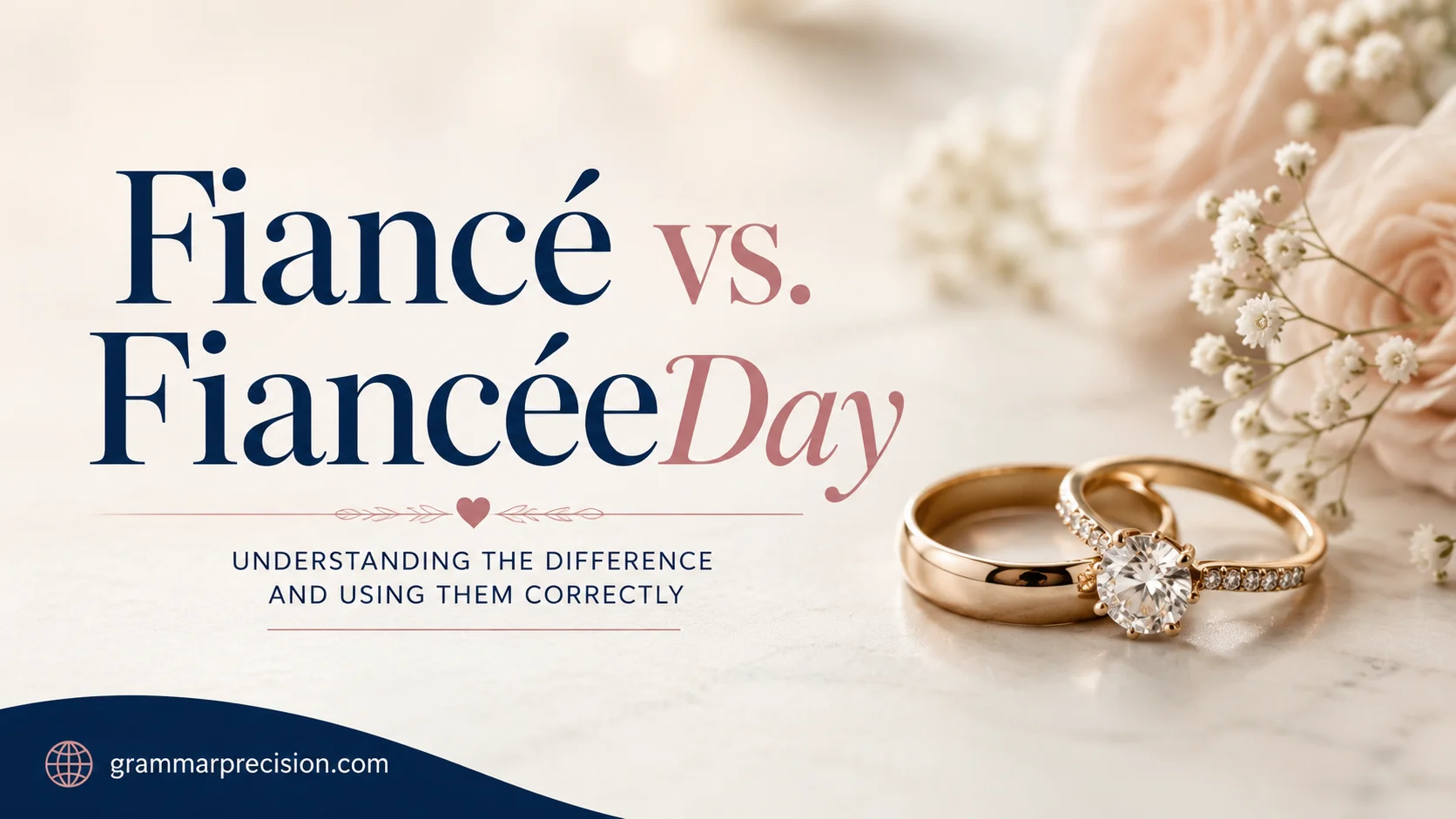
Fiancé vs. Fiancée explains the French engagement terms used for an engaged man or woman. These words show gender differences, relationship status, and modern English usage in writing and communication today.
Many people confuse fiancé and fiancée because their spellings look similar. A fiancé refers to an engaged man, while a fiancée means an engaged woman. Both words come from the French language and connect with marriage, engagement, and a lifelong promise between couples. These terms still appear in formal writing and modern conversations worldwide today.
The origin of fiancé and fiancée traces back to Latin and Old French roots connected with trust, betroth, and promise meaning. In modern English vocabulary, these words describe a future husband, future wife, or spouse to be before marriage. Their proper grammar, pronunciation, and word usage help improve communication in relationships and formal language today.
Fiancé vs. Fiancée: Quick Answer
The difference is simple:
- Fiancé = a man engaged to be married
- Fiancée = a woman engaged to be married
The extra “e” at the end signals the feminine form because both words come from French.
Even though the spellings differ, both words are usually pronounced the same way in English:
fee ahn SAY
Fiancé vs. Fiancée Comparison Table
FeatureFiancéFiancéeMeaningEngaged manEngaged womanGenderMasculineFeminineLanguage OriginFrenchFrenchPronunciationfee ahn SAYfee ahn SAYAccent MarkYesYesFormal UsageCommonCommonModern Gender Neutral UseSometimesLess commonExample“My fiancé proposed in Paris.”“My fiancée loves vintage rings.”
Why People Constantly Confuse Fiancé and Fiancée
This mix up happens for three major reasons.
The Words Sound Exactly the Same
Unlike many gendered French words, these two terms share the same pronunciation in English. Most people never hear the spelling difference during conversation.
That creates instant confusion online.
Someone hears “my fiancé” in a video. Later, they type “fiancée” because it looks more complete.
Human brains love patterns. Double letters often feel more natural in English spelling. That’s why people accidentally default to the feminine version.
English Rarely Uses Gendered Spellings
Modern English stripped away many gender distinctions long ago.
For example:
Older Gendered TermsModern Neutral TermsStewardessFlight attendantActressActorChairmanChairpersonWaitressServer
Because English increasingly favors neutral language, many people don’t realize fiancé and fiancée still carry gender specific meanings.
Social Media Accelerated the Confusion
Instagram captions rarely undergo proofreading.
TikTok comments move fast. Wedding hashtags move faster.
As a result, millions of people repeatedly encounter incorrect spellings. Over time, those mistakes start looking normal.
A Reddit discussion highlighted this exact issue. Many users admitted they didn’t even know the distinction existed until someone corrected them.
Language evolves that way sometimes. Incorrect usage spreads through repetition.
What Does “Fiancé” Mean?
A fiancé is a man who is engaged to be married.
The word entered English from French during the 19th century. It originally came from the French verb fiancer, which means “to betroth” or “to promise in marriage.”
Example Sentences
- My fiancé planned the entire proposal secretly.
- Her fiancé works as an architect in Chicago.
- Jake introduced his fiancé to the family last weekend.
Notice something important here.
The word refers only to the engaged person’s gender — not the partner’s gender.
A man marrying another man is still a fiancé.
What Does “Fiancée” Mean?
A fiancée is a woman who is engaged to be married.
The extra “e” transforms the word into its feminine French form.
French grammar frequently changes word endings based on gender. English borrowed both spellings directly from French and preserved that distinction.
Example Sentences
- My fiancée designed our wedding invitations herself.
- His fiancée loves outdoor weddings.
- Sarah introduced her fiancée during the engagement dinner.
Again, the term refers only to the engaged woman herself.
The French Grammar Rule Behind Fiancé vs. Fiancée
Here’s where things get interesting.
English borrowed these words from French without simplifying them. That’s relatively unusual.
French nouns often change spelling depending on masculine or feminine form.
Examples include:
MasculineFeminineBlondBlondeBrunetBrunetteFiancéFiancée
English speakers kept these distinctions largely because French historically carried a sense of sophistication and elegance.
Wedding vocabulary especially borrowed heavily from French traditions.
That’s why words like:
- RSVP
- bouquet
- couture
- fiancé
- fiancée
still retain French spelling patterns today.
How To Pronounce Fiancé and Fiancée Correctly
Both words are generally pronounced the same way in modern English:
fee ahn SAY
Phonetically, it looks like this:
WordPronunciationFiancéfee ahn SAYFiancéefee ahn SAY
Pronunciation experts and dictionaries consistently confirm this.
Common Pronunciation Mistakes
People often pronounce these words incorrectly because English spelling instincts take over.
Here are common mistakes:
IncorrectCorrectfee ANN seefee ahn SAYFYE ancefee ahn SAYfee ance eefee ahn SAY
The accent mark changes the final sound dramatically.
Without the accent, English speakers might naturally pronounce it differently.
Do You Need the Accent Mark?
Technically, yes.
The correct spellings are:
- fiancé
- fiancée
However, many English speakers omit the accent in casual writing because English keyboards don’t always make accented letters convenient.
That means you’ll commonly see:
- fiance
- fiancee
especially in:
- texts
- social media
- emails
- casual messaging
When You Should Keep the Accent
Use the accent in:
- Formal writing
- Wedding invitations
- Academic papers
- Professional publications
- Journalism
- Printed materials
The accented spelling looks cleaner and more polished.
How To Type É on Different Devices
Windows
Hold:
- Alt + 0233 → é
Mac
Press:
- Option + e, then e
iPhone and Android
Hold the letter “e” until accent options appear.
Simple. Problem solved.
Can “Fiancé” Be Used for a Woman?
Traditionally, no.
According to dictionaries and grammar authorities:
- fiancé refers to a man
- fiancée refers to a woman
However, modern usage complicates things.
Modern English Is Becoming More Gender Neutral
Many people now use fiancé as a gender neutral label.
Why?
Because:
- the pronunciation is identical
- English increasingly avoids gendered words
- many speakers simply prefer shorter spellings
Linguists have observed this shift growing in informal writing.
Still, edited publications usually preserve the traditional distinction.
What Native Speakers Actually Do
Here’s the reality.
ContextMost Common UsageFormal writingTraditional distinctionWedding magazinesTraditional distinctionSocial mediaMixed usageCasual textingOften interchangeableNewspapersUsually correct grammarSpoken EnglishNo distinction audible
So while grammar guides still recommend separate spellings, everyday English has become more flexible.
Language behaves like water. It slowly reshapes its container.
Fiancé vs. Boyfriend vs. Partner vs. Husband
Relationship labels carry emotional and social meaning beyond grammar.
Here’s how these terms differ.
WordMeaningCommitment LevelBoyfriendRomantic partnerModeratePartnerSerious companionBroadFiancéEngaged manHighFiancéeEngaged womanHighHusband/WifeMarried spouseLegal commitment
Calling someone your fiancé or fiancée signals:
- a planned marriage
- long term commitment
- public engagement status
That single word instantly changes how people perceive the relationship.
Also Read This: In the Same Day vs. On the Same Day
The History of Fiancé and Fiancée
These words trace back centuries.
The French verb fiancer meant:
“to promise”
Its deeper Latin root came from fidere, meaning:
“to trust.”
That’s actually beautiful when you think about it.
At its core, engagement language historically centered around trust and promises.
English previously used older terms such as:
- betrothed
- intended
- affianced
Eventually, French influence reshaped wedding vocabulary during the 1800s.
The newer French derived terms sounded more refined and fashionable.
And honestly, they stuck.
“Betrothed” sounds like someone announcing a royal alliance in medieval Europe.
Fiancé vs. Fiancée in Real Life Examples
Understanding grammar gets easier through context.
Casual Conversation
Correct
- “My fiancé loves hiking.”
- “My fiancée works in healthcare.”
Incorrect
- “My fiancée proposed to me.” (if referring to a man)
Wedding Invitations
Correct
Emma Carter and her fiancé Daniel Brooks invite you to celebrate their engagement.
Correct
Michael Lee and his fiancée Olivia Turner request your presence.
Social Media Captions
Examples
- “Still can’t believe my fiancé proposed!”
- “Weekend getaway with my fiancée.”
- “Officially engaged to my best friend.”
The Most Common Fiancé vs. Fiancée Mistakes
People repeat the same errors constantly.
Here are the biggest ones.
Using “Fiancée” for Everyone
This happens constantly online.
Many people assume:
- fiancé = typo
- fiancée = correct spelling
That assumption is wrong grammatically.
Forgetting the Accent Marks
Technically acceptable in casual writing.
Less acceptable in formal settings.
For example:
- Casual text: fine
- Wedding invitation: avoid dropping accents
Mixing Up Plural Forms
Plural spelling confuses many writers.
SingularPluralFiancéFiancésFiancéeFiancées
Notice how the feminine plural keeps both “e” letters.
Confusing Fiancé With Husband
An engaged person is not yet a spouse legally.
That distinction matters in:
- legal paperwork
- insurance forms
- taxes
- immigration documents
As Internal Revenue Service guidelines make clear, engagement alone does not grant marital legal status.
Easy Tricks To Remember the Difference Forever
Memory tricks help fast.
Here are the best ones.
The “Extra E = Extra Feminine Ending” Trick
- fiancé → man
- fiancée → woman
The woman’s version gets the extra “e.”
Simple. Visual. Effective.
Think of “Bride to Be”
“Bride” traditionally refers to women.
Both:
- bride
- fiancée
contain extra feminine endings visually.
The Beyoncé Trick
This one sounds silly. It works surprisingly well.
Since:
fiancée rhymes with Beyoncé
Many people associate the double “e” ending with female usage.
Brains remember weird things better than boring rules.
Are Fiancé and Fiancée Becoming Outdated?
Some people think so.
Modern couples increasingly choose:
- partner
- significant other
- future spouse
- engaged partner
Why?
Because these alternatives:
- feel more inclusive
- avoid gender distinctions
- sound more modern
Still, fiancé and fiancée remain extremely common in:
- wedding culture
- magazines
- engagement announcements
- formal writing
The words aren’t disappearing anytime soon.
They’re simply evolving alongside modern relationship language.
Fiancé vs. Fiancée Around the English Speaking World
Usage patterns differ slightly by region.
CountryCommon TrendUnited StatesTraditional spelling still commonUnited KingdomMore flexible modern usageCanadaStrong French influence preserves distinctionAustraliaCasual interchangeability increasing
Canada especially maintains stricter French spelling traditions due to bilingual influence.
Quick Quiz: Can You Pick the Correct Word?
Sentence 1
“My ______ proposed during dinner.”
If the person is male:
- fiancé ✅
If female:
- fiancée ✅
Sentence 2
“Her ______ surprised everyone with the engagement ring.”
Correct answer:
- fiancé ✅
Sentence 3
“James and his ______ are planning a beach wedding.”
Correct answer:
- fiancée ✅
You’re already ahead of most internet comment sections.
Final Verdict on Fiancé vs. Fiancée
The difference between fiancé and fiancée comes down to one simple rule:
- Fiancé = engaged man
- Fiancée = engaged woman
That extra “e” matters because English borrowed both words directly from French.
In formal writing, maintaining the distinction remains the safest and most polished choice. In casual conversation though, modern English has become increasingly flexible.
Still, knowing the correct usage gives you an advantage. You avoid embarrassing grammar mistakes. Your writing looks sharper. And honestly, you’ll probably start noticing these errors everywhere now.
Funny how that works.
FAQs:
What is the difference between fiancé and fiancée?
A fiancé refers to an engaged man, while a fiancée refers to an engaged woman. The main difference comes from the French spelling, where the extra “e” identifies the feminine form.
Are fiancé and fiancée French words?
Yes, both fiancé and fiancée come from the French language. Their roots are connected to ideas of trust, promise, and betrothal in historical language usage.
Can fiancé and fiancée be used in English writing?
Yes, these words are commonly used in modern English writing and conversations. They are popular in formal writing, wedding announcements, invitations, and relationship discussions.
Why do people confuse fiancé and fiancée?
People often confuse them because of their very similar spellings and pronunciation. However, the gender difference is important in proper grammar and accurate communication.
Is the word betrothed still used today?
The word betrothed is still correct, but it is rarely used nowadays. Most people prefer modern terms like fiancé and fiancée in everyday language.
Conclusion:
Understanding the difference between fiancé and fiancée helps improve grammar, communication, and correct word usage in English. These French terms are closely connected with engagement, marriage, and romantic relationships. Knowing their meanings, origins, and proper spellings can make your writing more accurate, professional, and easier to understand.