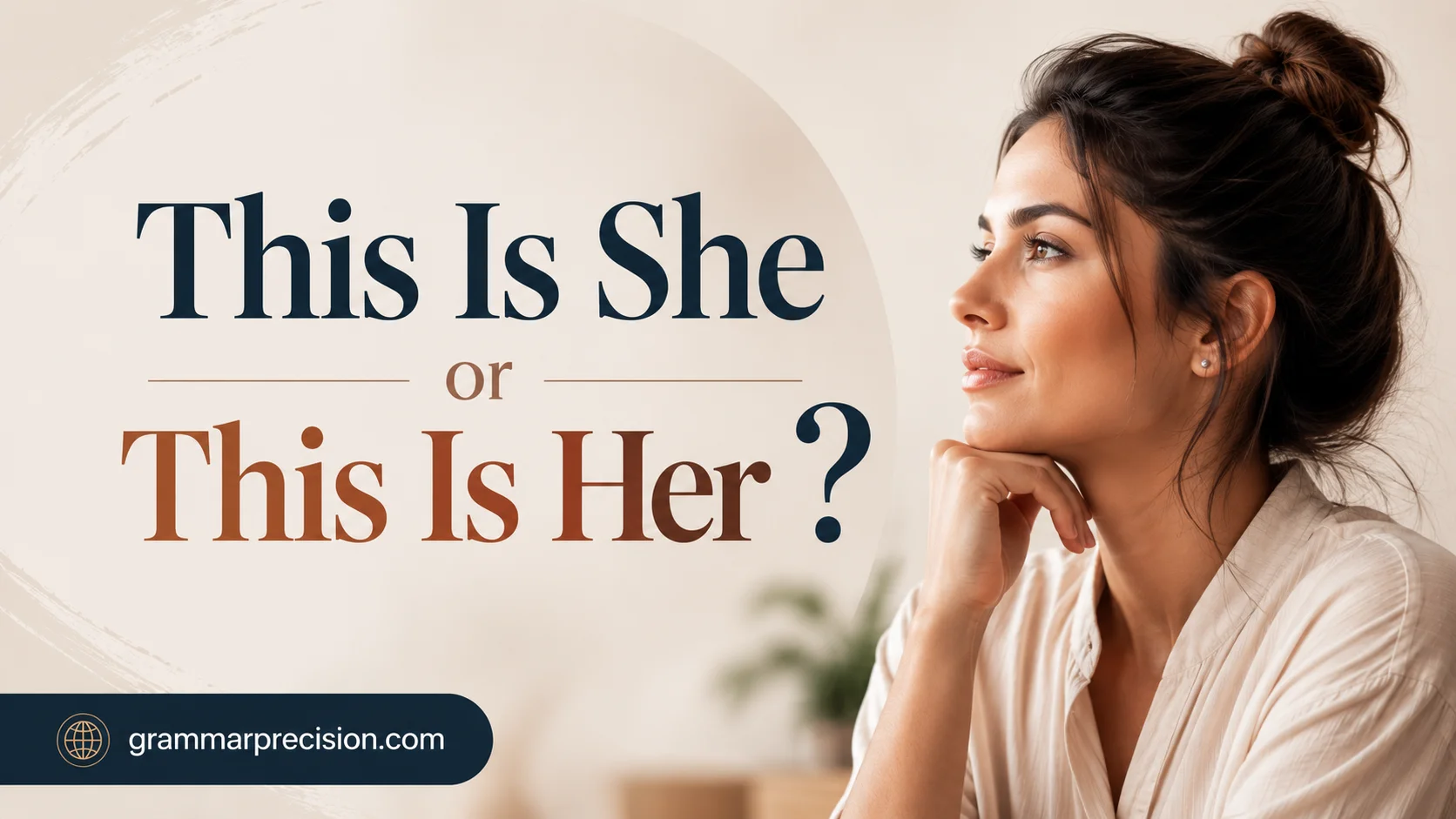
This Is She or This Is Her? is a common English grammar confusion that often puzzles learners when identifying correct pronoun usage in formal and informal contexts today clearly explained
The phrase involves correct use of subject and object pronouns, where ‘She’ is used for subjects and ‘Her’ for objects, but confusion arises in conversational replies, formal introductions, and grammar corrections across English learning environments worldwide making clarity essential for beginners and advanced learners of English grammar rules explained simply.
This confusion between This Is She and This Is Her often appears in spoken English and written communication, especially when learners are unsure about grammatical correctness and usage contexts in real life situations requiring accuracy and confidence which helps improve fluency and professional communication skills significantly overall in modern English
Quick Answer: Is It “This Is She” or “This Is Her”?
Here’s the short answer most readers want immediately:
PhraseTechnically CorrectCommon in Daily SpeechSounds Natural TodayThis is sheYesLess commonFormal or old-fashionedThis is herYes in modern usageExtremely commonNatural and conversational
Traditional grammar rules favor “this is she.”
Modern conversational English strongly favors “this is her.”
So if someone calls and asks for Sarah, most native speakers today would naturally respond:
“This is her.”
Meanwhile, formal grammar instruction may still teach:
“This is she.”
Both exist. The difference mainly comes down to formality, tone, and modern usage patterns.
Why This Grammar Question Confuses So Many People
This grammar debate sits in a strange gray area.
Usually, grammar rules feel straightforward:
- Subject pronouns go here
- Object pronouns go there
- Done
But English loves exceptions. Especially spoken English.
The confusion around “this is she” and “this is her” happens because English has two competing forces:
- Traditional grammar
- Natural speech patterns
Those forces don’t always agree.
Grammar books often preserve older rules long after everyday speech changes. That’s exactly what happened here.
The result?
Millions of English speakers hear:
- one rule in school
- another rule in real life
No wonder people hesitate before answering the phone.
Understanding Subject Pronouns and Object Pronouns
Before diving deeper, you need one simple grammar concept.
Subject pronouns perform the action.
Examples:
- I ran.
- She called.
- They arrived.
Common subject pronouns:
- I
- he
- she
- we
- they
Object pronouns receive the action.
Examples:
- Call me.
- I saw her.
- They invited us.
Common object pronouns:
- me
- him
- her
- us
- them
Here’s the key detail:
- She = subject pronoun
- Her = object pronoun
That distinction creates the entire debate.
Why Grammar Books Prefer “This Is She”
Traditional grammar rules treat the verb “to be” differently from normal action verbs.
Words like:
- is
- are
- was
- were
are called linking verbs.
Instead of showing action, linking verbs connect two equal things.
For example:
“She is the winner.”
According to older grammar logic:
- “she” and “winner” refer to the same person
- therefore both should match grammatically
The same reasoning applies here:
“This is she.”
Traditional grammarians argue:
- “this” and “she” identify the same person
- therefore “she” should remain a subject pronoun
That’s why old-school grammar teachers defend “this is she.”
Why “This Is Her” Sounds More Natural
Now comes the real-world side of English.
Most people don’t walk around analyzing linking verbs during conversations.
They speak by instinct.
And instinctively, modern English speakers often use object pronouns after “is.”
That’s why people naturally say:
- It’s me.
- That’s him.
- This is her.
Even though older grammar traditions preferred:
- It is I.
- That is he.
- This is she.
Modern English shifted toward a smoother conversational rhythm.
In daily speech:
- “This is her” sounds warm
- “This is she” sounds formal
- sometimes even robotic
Language evolves. English constantly bends toward convenience.
This debate proves it perfectly.
The Hidden Reason Native Speakers Prefer “This Is Her”
Here’s something fascinating.
Many native speakers who say “this is her” have no idea why they say it.
They simply know it sounds right.
That happens because spoken language follows patterns of comfort and familiarity.
Read these aloud:
- “This is she.”
- “This is her.”
For most Americans, the second sentence flows more naturally.
It feels softer. Faster. More conversational.
That’s why modern speech overwhelmingly leans toward object pronouns in these situations.
Real-Life Phone Call Examples
This grammar issue appears most often during phone conversations.
Here’s how people actually respond today.
Everyday conversation example:
Caller: May I speak with Jessica? Jessica: This is her.
Another common example:
Caller: Is Daniel available? Daniel: This is him.
Many people also say:
Caller: Can I talk to Emily? Emily: Speaking.
These sound completely natural in modern English.
Formal or traditional example:
Caller: May I speak with Jessica? Jessica: This is she.
This still appears in:
- formal business settings
- older etiquette traditions
- highly polished professional speech
But many younger speakers rarely use it naturally.
Which Phrase Sounds More Professional?
This question matters in business settings.
Many people assume:
“More formal = more professional.”
That’s not always true.
Sometimes overly formal language sounds awkward or unnatural.
In modern workplaces, most professionals now say:
- “This is her.”
- “This is John.”
- “Speaking.”
These responses sound:
- confident
- natural
- efficient
Meanwhile, “this is she” can sound:
- overly rehearsed
- old-fashioned
- stiff in casual industries
The phrase may still fit:
- law firms
- government offices
- traditional corporate environments
- formal customer service roles
Even there, usage continues declining.
“This Is She” vs “This Is Her” Comparison Table
FeatureThis Is SheThis Is HerGrammar traditionTraditional ruleModern conversational usagePronoun typeSubject pronounObject pronounToneFormalNaturalCommon in speechLess commonExtremely commonCommon in business callsSometimesVery commonSounds old-fashionedOftenRarelyUsed by native speakers dailyOccasionallyConstantly
Why English Changed Over Time
English today looks very different from English centuries ago.
Many older grammar rules came from attempts to make English behave more like Latin.
Latin relied heavily on grammatical case endings. Early grammarians tried applying similar standards to English.
That’s where rules like:
- “It is I”
- “This is she”
became popular.
But spoken English gradually moved in another direction.
People preferred simpler, smoother phrasing.
So conversational English evolved into:
- “It’s me”
- “This is her”
Modern linguists often focus on descriptive grammar instead of prescriptive grammar.
That means:
- descriptive grammar studies how people actually speak
- prescriptive grammar tells people how they supposedly should speak
What Modern Linguists Say About the Debate
Many modern linguists accept both forms.
However, they recognize that one dominates natural speech.
Several language experts note that conversational English increasingly uses object pronouns after linking verbs.
That’s why these sentences sound normal:
- It’s me.
- That’s him.
- This is her.
Meanwhile, these feel unusually formal:
- It is I.
- That is he.
- This is she.
Grammar evolves through actual usage. Not classroom rules alone.
The “It’s Me” Comparison Makes Everything Easier
Here’s the easiest way to understand this entire topic.
Ask yourself:
Which sounds more natural?
- “It is I.”
- “It’s me.”
Most people instantly choose:
“It’s me.”
That’s the exact same pattern happening with:
- “This is she”
- “This is her”
Once you understand that connection, the confusion disappears.
Simple Memory Trick You’ll Never Forget
Use this shortcut:
If you want formal grammar, use:
- This is she.
If you want natural modern English, use:
- This is her.
That’s it.
Easy.
Common Grammar Myths About “This Is She”
Many people misunderstand this debate completely.
Let’s clear up the biggest myths.
Myth: “This Is Her” Is Wrong
Not true.
Modern English widely accepts it in everyday speech.
Myth: Only Grammar Experts Say “This Is She”
Not entirely true.
Some native speakers genuinely use it naturally. Especially in traditional or formal environments.
Myth: Formal English Is Always Better
Context matters more than rigid rules.
Sometimes sounding natural creates stronger communication.
What Native Speakers Actually Say Today
If you listen carefully to:
- movies
- TV shows
- podcasts
- customer service calls
- workplaces
you’ll hear:
- “This is her”
- “This is him”
- “Speaking”
far more often than:
- “This is she”
That doesn’t make traditional grammar “wrong.”
It simply reflects how modern English evolved.
Best Alternatives to Avoid the Entire Problem
Here’s a secret many native speakers use:
They skip the debate entirely.
Instead of saying either phrase, they simply say:
- “Speaking.”
- “This is Sarah.”
- “Yes, speaking.”
- “Sarah speaking.”
These responses:
- sound natural
- avoid grammar anxiety
- work professionally
Sometimes the smartest grammar strategy is sidestepping the problem altogether.
Also Read This: I’ve Added vs. I Added
Examples of Correct Usage in Different Situations
Casual conversation example:
“Hey, is Emma there?” “Yeah, this is her.”
Professional phone call example:
“May I speak with Ms. Johnson?” “This is she.”
Modern workplace example:
“Can I speak with Amanda?” “Amanda speaking.”
Academic grammar example:
“This is she who submitted the report.”
Very formal. Rare in normal speech.
Why ESL Learners Struggle With This Topic
English learners often feel frustrated here.
Textbooks usually teach:
“This is she.”
Then learners hear native speakers constantly say:
“This is her.”
That contradiction feels confusing.
But it actually reveals an important truth:
Real English doesn’t always follow textbook patterns perfectly.
Fluent communication depends heavily on:
- tone
- context
- natural rhythm
- audience expectations
That’s why advanced English learners eventually study both:
- grammar correctness
- real-world usage
Case Study: How Language Evolves Naturally
This grammar shift isn’t unique.
English changes constantly.
Consider these examples:
Older Formal EnglishModern Everyday EnglishIt is IIt’s meWhom are you calling?Who are you calling?Shall we begin?Should we start?
Over time:
- convenience wins
- rhythm matters
- speakers simplify patterns
“This is her” follows the same trend.
Expert Quote on Spoken English
One Reddit user explained the issue perfectly:
“Formal correctness vs natural speech flow.”
That short phrase captures the entire debate.
Pronoun Rules Made Simple
Here’s a fast breakdown that helps many learners instantly.
Pronoun TypeExamplesSubject pronounsI, he, she, we, theyObject pronounsme, him, her, us, them
Traditional grammar prefers subject pronouns after linking verbs.
Modern conversational English frequently uses object pronouns instead.
That’s why both versions exist.
Should You Use “This Is She” or “This Is Her”?
Here’s the practical recommendation most readers actually need.
Use “This Is Her” if:
- you want natural modern English
- you’re speaking casually
- you work in modern business environments
- you want conversational flow
Use “This Is She” if:
- you prefer strict traditional grammar
- you’re in highly formal settings
- you’re preparing for grammar exams
- your workplace values traditional etiquette
Safest universal option:
“This is Sarah speaking.”
It avoids the debate entirely.
Final Verdict: Which Phrase Is Best Today?
Here’s the bottom line.
Technically:
- “This is she” follows traditional grammar rules.
Practically:
- “This is her” sounds more natural to most native speakers today.
Language changes. English especially loves bending rigid grammar rules in conversation.
That’s why millions of fluent speakers comfortably say:
- “It’s me.”
- “That’s him.”
- “This is her.”
without sounding incorrect at all.
So which should you choose?
For most modern conversations:
“This is her” works perfectly.
For highly formal situations:
“This is she” still fits.
And if you want the smoothest option of all:
“Speaking.”
Simple. Natural. Professional.
That’s how real English works.
FAQs:
What is the correct usage: “This is she” or “This is her”?
The correct formal usage is “This is she” because “she” is the subject pronoun, used after the verb “is” when identifying a person in formal English.
Why do people say “This is her” in conversation?
People often say “This is her” in informal speech because it sounds more natural in modern usage, even though it is less grammatically formal than “This is she.”
Is “This is she” still correct in modern English?
Yes, “This is she” is grammatically correct and commonly used in formal situations like phone calls or introductions, especially in academic or professional English contexts.
When should I use “her” instead of “she”?
You should use “her” as an object pronoun, for example after verbs or prepositions, while “she” is used as a subject performing the action in a sentence.
Which one is better for exams or formal writing?
In exams and formal writing, “This is she” is preferred because it follows traditional grammar rules and demonstrates correct understanding of English pronoun usage.
Conclusion:
The difference between “This is she” and “This is her” depends on formal vs informal English usage. While both are commonly understood, correct grammar prefers subject pronouns in identification sentences. Learning this distinction improves accuracy, fluency, and professional communication skills in English effectively.