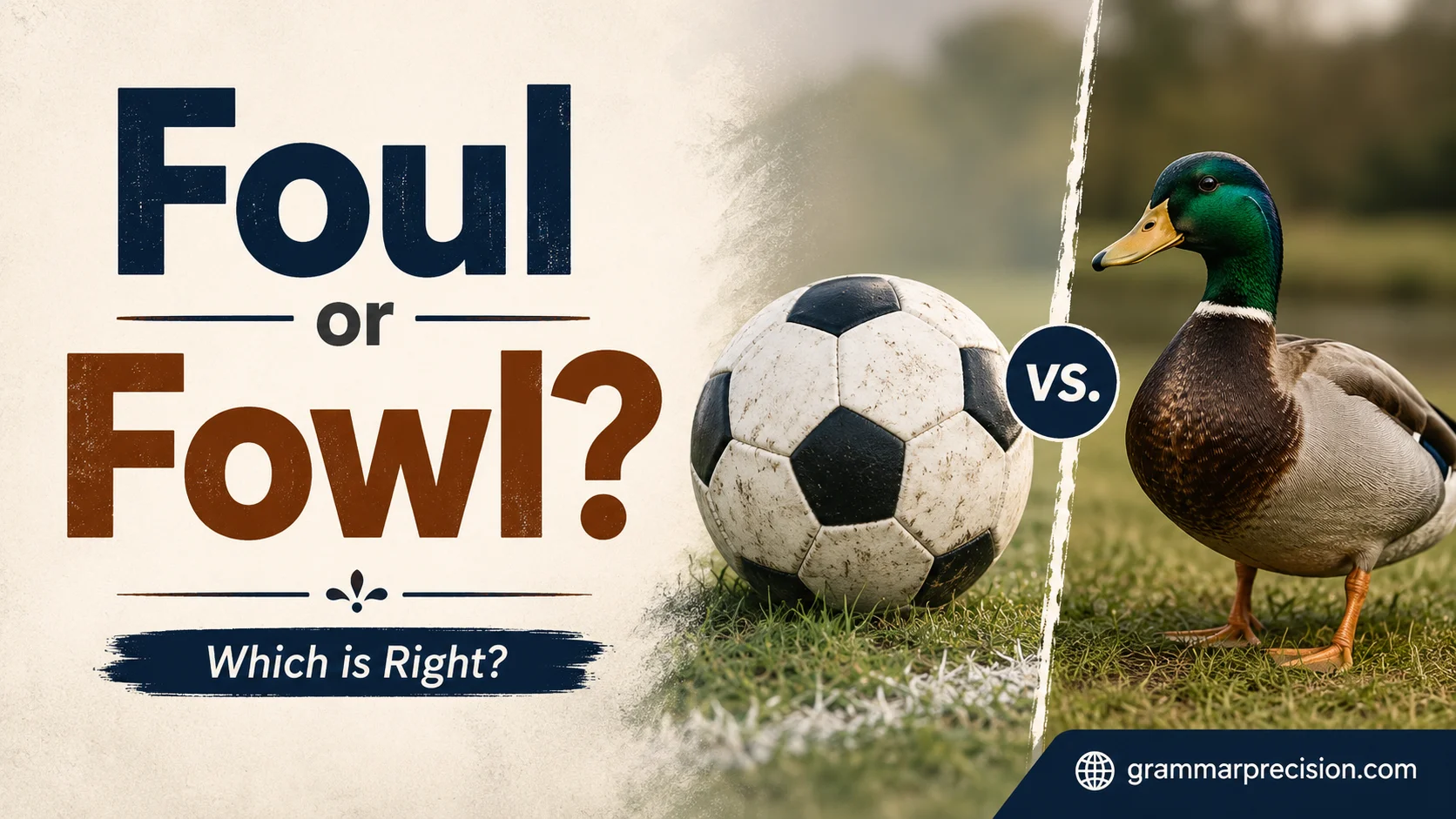
Foul or Fowl? often confuses new learners because both words sound alike in spoken English, yet their meaning, usage, and context completely change depending on conversation, sports, farming, or cooking situations.
In sports commentary, foul usually describes a violation, illegal actions, broken rules, or offensive behavior that may give a penalty to a player during a game. The word can also describe an unpleasant smell, dirty environment, or bad smells near water or a smelly dock, helping learners better understand real life usage and context situations clearly.
The word fowl relates to agriculture, poultry farming, cooking, and culinary contexts, where people discuss birds, chickens, ducks, avian species, eggs, and meat prepared for dinner. Through language learning, written English, communication skills, and personal experiences, many learners improve their understanding of homophones, spelling, pronunciation, and English vocabulary without mixing these confusing terms again.
What Is the Difference Between Foul and Fowl?
The short answer feels simple:
WordMeaningCommon UsageFoulSomething unpleasant, offensive, dirty, unfair, or against the rulesSports, bad smells, rude languageFowlA bird, especially one raised for food or huntingChickens, ducks, turkeys, poultry
Even though they sound the same, they belong to completely different categories of meaning. Grammar experts classify them as homophones, which are words with identical pronunciation but different spellings and meanings.
For example:
- “The referee called a foul.”
- “The farm raised several kinds of fowl.”
One sentence talks about breaking rules. The other talks about birds.
That single letter changes everything.
Why People Confuse Foul and Fowl So Often
Your brain naturally connects sounds before spelling. Since foul and fowl sound exactly alike, many people type the wrong version automatically.
This confusion happens for several reasons:
- English spelling follows inconsistent patterns
- Autocorrect sometimes misses homophones
- Fast texting encourages phonetic spelling
- Many learners hear the word before seeing it written
- Sports vocabulary makes “foul” more common than “fowl”
That’s why this mistake appears everywhere:
- Social media captions
- Basketball discussions
- Restaurant menus
- School assignments
- Sports blogs
- Memes
Honestly, English sometimes feels like it enjoys trolling learners.
What Does “Foul” Mean?
The word foul usually describes something unpleasant, offensive, dirty, dishonest, or against the rules.
It can function as:
- An adjective
- A noun
- A verb
That flexibility makes the word extremely common in daily English.
Foul Meaning in Everyday English
People use foul constantly in conversation.
Here are the most common meanings.
Foul as Something Disgusting
When something smells terrible or feels revolting, people often call it foul.
Examples
- The refrigerator gave off a foul odor.
- Garbage creates a foul smell in summer.
- The spoiled milk tasted absolutely foul.
Foul as Offensive Behavior
People also use foul for rude or offensive actions.
Examples
- He used foul language during the argument.
- The movie contains foul humor.
- Her comments crossed the line and sounded foul.
This meaning often relates to:
- Swearing
- Insults
- Offensive jokes
- Aggressive speech
Foul in Sports
Sports made the word even more famous.
A foul means a violation of the rules.
Examples
- The basketball player committed a personal foul.
- That tackle was clearly a foul.
- The referee blew the whistle for unnecessary contact.
Common Sports That Use the Word “Foul”
SportMeaning of FoulBasketballIllegal contactSoccerRule violationBaseballBall outside the linesBoxingIllegal hitFootballPenalty against the rules
Sports commentators say “foul” thousands of times during major tournaments. That exposure makes people accidentally type “fowl” instead.
Foul as Morally Wrong
Sometimes foul describes something unethical or evil.
Examples
- The detective uncovered foul play.
- The scandal involved foul business practices.
- Shakespeare used “most foul” to describe evil acts.
This meaning gives the word emotional intensity. It sounds dramatic, dark, and serious.
Famous Expressions Using “Foul”
English speakers love idioms involving this word.
Foul Play
Means dishonest or criminal behavior.
Example
- Police suspect foul play in the investigation.
Foul Mood
Means someone feels angry or irritated.
Example
- He woke up in a foul mood.
Foul Weather
Means stormy or unpleasant weather.
Example
- Sailors prepared for foul weather.
Cry Foul
Means complaining about unfair treatment.
Example
- Fans cried foul after the referee’s decision.
What Does “Fowl” Mean?
Unlike foul, the word fowl has a much narrower meaning.
It refers to birds.
More specifically, it often describes:
- Domestic birds
- Farm birds
- Birds hunted for food
Common Types of Fowl
TypeExamplesDomestic fowlChickens, turkeysWaterfowlDucks, geeseWildfowlWild hunting birdsGame fowlBirds hunted for sport
Fowl in Cooking and Farming
You’ll often hear this word in:
- Agriculture
- Hunting
- Cooking
- Wildlife discussions
Examples
- The farm raises organic fowl.
- Roast fowl appeared on the holiday menu.
- Hunters tracked wild fowl near the lake.
Although modern English uses “poultry” more often, “fowl” still appears in formal writing and traditional contexts.
Waterfowl Explained
One of the most common bird related terms is waterfowl.
Waterfowl are birds that live near water.
Examples
- Ducks
- Swans
- Geese
Pronunciation: Do Foul and Fowl Sound the Same?
Yes. Completely.
Both words are pronounced:
/faʊl/
That makes them perfect homophones.
Some regional accents slightly stretch the sound into two syllables. Still, standard American English pronounces both words exactly the same.
That’s why context matters more than sound.
Foul vs. Fowl: Side by Side Comparison
Many English learners confuse foul and fowl because they sound the same. However, these two words have completely different meanings and uses. Understanding the difference between foul vs. fowl can improve your writing, speaking, and grammar skills.
| Feature | Foul | Fowl |
| Part of Speech | Adjective / Noun / Verb | Noun |
| Meaning | Something unpleasant, dirty, unfair, or offensive | A bird, especially a chicken, duck, or turkey |
| Common Usage | Bad smell, unfair play, offensive language | Farm birds or wild birds |
| Pronunciation | Same as “fowl” | Same as “foul” |
| Example Sentence | The garbage produced a foul smell. | The farmer raised several fowl on his land. |
What Does “Foul” Mean?
The word foul usually describes something dirty, unpleasant, unfair, or offensive. It can also refer to a rule violation in sports.
Examples of “Foul”
- The kitchen had a foul odor after the food spoiled.
- The player committed a foul during the match.
- Using foul language is inappropriate in school.
- The river water became foul after pollution spread.
Common Uses of “Foul”
| Phrase | Meaning |
| Foul smell | A very bad odor |
| Foul play | Unfair or illegal behavior |
| Foul language | Offensive words |
| Foul weather | Bad weather conditions |
What Does “Fowl” Mean?
The word fowl refers to birds, especially birds raised for food or farming. It is commonly used for chickens, ducks, geese, and turkeys.
Examples of “Fowl”
- The farm contains different types of fowl.
- Ducks and chickens are common domestic fowl.
- Wild fowl migrate during winter seasons.
- The hunter searched for water fowl near the lake.
Types of Fowl
| Type | Example |
| Domestic fowl | Chicken, turkey |
| Waterfowl | Duck, goose |
| Wild fowl | Pheasant, quail |
The Fastest Trick to Remember the Difference
Here’s the easiest memory trick.
Fowl Has an “Owl” Inside It
Look carefully:
fOWL
Owls are birds.
Fowl means birds.
Simple.
Another Easy Memory Trick
Foul Feels Ugly
The word itself sounds harsh.
Think:
- foul smell
- foul language
- foul behavior
Everything connected to foul feels unpleasant.
Meanwhile, fowl belongs on a farm.
Also Read This: Masonary vs Masonry
Real Life Examples of Foul and Fowl
Context changes everything.
Correct Use of Foul
- The locker room smelled foul after practice.
- The referee called a technical foul.
- That was a foul thing to say.
- Storms created foul weather conditions.
Correct Use of Fowl
- The chef prepared roasted fowl.
- Farmers sold domestic fowl at the market.
- Hunters searched for wild fowl.
- The lake attracts migrating waterfowl.
Sentences That Commonly Confuse People
Here’s where many writers make mistakes.
IncorrectCorrectFowl languageFoul languageBasketball fowlBasketball foulFowl odorFoul odorWild foul birdsWild fowl birds
Tiny spelling errors can completely change the meaning.
Sometimes the results become unintentionally hilarious.
Funny Internet Mistakes Involving Foul and Fowl
The internet absolutely loves this homophone pair.
Social media users constantly create accidental bird jokes.
Examples
- “Please stop using fowl language.”
- “The referee called a fowl.”
- “That chicken committed a technical foul.”
Honestly, English learners aren’t alone here. Native speakers mess this up too.
Why “Foul Play” Never Means Birds
This phrase confuses learners constantly.
What Does Foul Play Mean?
“Foul play” refers to:
- Crime
- Dishonesty
- Illegal behavior
- Suspicious actions
Example
- Detectives suspect foul play in the disappearance.
The phrase has absolutely nothing to do with chickens or ducks.
Why “Fowl Play” Exists as a Joke
Writers intentionally replace “foul” with “fowl” for humor.
This creates a pun.
Movies, cartoons, and memes use it constantly when birds appear in the story.
That wordplay works because both words sound identical.
The History Behind Foul and Fowl
These words actually come from different Old English roots.
Origin of Foul
The word comes from Old English fūl, meaning:
- Rotten
- Filthy
- Corrupt
That negative feeling stayed attached to the word for centuries.
Origin of Fowl
Fowl comes from Old English fugol, which simply meant bird.
Over time:
- “foul” became emotional and negative
- “fowl” stayed literal and animal related
That split explains their modern meanings.
Foul vs. Fowl in Literature and Pop Culture
Writers love using these words because they create:
- Puns
- Double meanings
- Humor
- Dramatic contrast
Shakespeare and “Most Foul”
Shakespeare famously used “most foul” in Hamlet to describe evil murder.
Modern media often twists this phrase into bird jokes like:
- “Most fowl”
- “Fowl revenge”
- “Fowl play”
Common Collocations With Foul
Collocations are words that naturally appear together.
Frequent Foul Combinations
PhraseMeaningFoul odorBad smellFoul languageOffensive speechFoul weatherStormy weatherFoul playCriminal behaviorTechnical foulSports penaltyPersonal foulIllegal contact
These combinations appear constantly in modern English.
Common Collocations With Fowl
PhraseMeaningWaterfowlBirds living near waterWildfowlWild birdsDomestic fowlFarm birdsGame fowlHunting birds
Unlike foul, fowl appears in fewer everyday expressions.
Mini Case Study: Why ESL Learners Struggle With Homophones
English learners often memorize vocabulary through sound first.
That creates problems with:
- there/their/they’re
- flour/flower
- brake/break
- foul/fowl
A learner may hear:
“That was a foul.”
Then later spell it:
“That was a fowl.”
The brain remembers pronunciation before spelling patterns.
That’s completely normal.
Quick Grammar Rules You Should Remember
Use “Foul” When Talking About:
- Bad smells
- Offensive language
- Sports penalties
- Unethical behavior
- Dirty conditions
Use “Fowl” When Talking About:
- Birds
- Poultry
- Ducks
- Chickens
- Hunting birds
If feathers are involved, use fowl.
If something feels unpleasant or illegal, use foul.
Practice Sentences
Try these yourself before checking the answers.
Fill in the Blank
- The referee called a ______.
- The kitchen smelled ______.
- Farmers raised domestic ______.
- That joke was incredibly ______.
- Ducks belong to the water ______ category.
- Police investigated possible ______ play.
- The turkey is a type of ______.
- His language became extremely ______.
- The baseball landed outside the line as a ______ ball.
- Hunters tracked wild ______ near the marsh.
Answers
- foul
- foul
- fowl
- foul
- fowl
- foul
- fowl
- foul
- foul
- fowl
The One Sentence Rule That Solves Everything
Here’s the easiest summary possible:
Foul means bad. Fowl means bird.
That single rule fixes almost every mistake instantly.
FAQs:
What is the main difference between foul and fowl?
The word foul usually describes something unpleasant, offensive, or against the rules in sports, while fowl refers to birds like chickens and ducks commonly connected with farming, cooking, and poultry.
Why do people confuse foul and fowl?
People confuse these words because they are homophones, meaning they sound alike in spoken English. Their similar pronunciation creates confusion, especially for new learners improving their English vocabulary and language learning skills.
How is the word foul used in sports?
In sports commentary, foul describes a violation of the rules by a player. It may involve illegal actions, offensive behavior, or actions that result in a penalty during a game.
What does fowl mean in cooking and farming?
In culinary contexts and agriculture, fowl refers to poultry birds raised for eggs and meat. The term is commonly used when discussing poultry farming, bird species, and preparing food for dinner.
How can learners remember the difference between these words?
A simple trick is to connect fowl with farm birds that have wings, while foul relates to something unpleasant like a bad smell, broken rules, or offensive behavior. Practicing contextual usage and reading more written English also helps.
Conclusion:
Understanding the difference between foul and fowl becomes easier when learners focus on context, usage, and meaning instead of only pronunciation. While foul is linked with sports violations, unpleasant situations, and offensive behavior, fowl belongs to farming, cooking, and avian species.
With regular practice in spoken English, communication, and vocabulary learning, learners can confidently use both words without confusion.