Themselves vs Themself is a common grammar confusion that affects many writers today. Learning the correct usage helps you create clearer sentences and avoid mistakes when choosing these reflexive pronouns.
Understanding the difference between themselves and themself can improve your writing skills and make your communication more accurate. While themselves is traditionally used for groups of people, themself has gained popularity in modern English for singular they usage. This guide explains the rules, examples, and practical tips you need to choose the right word confidently.
English grammar changes over time, and these two reflexive pronouns show how language evolves naturally. By exploring the meaning, usage, and common errors of themselves vs themself, you will discover simple ways to strengthen your sentences. Whether you are a student, writer, or professional, this article provides clear explanations with helpful examples for better understanding.
The Quick Difference Between Themselves and Themself
The easiest way to understand themselves vs themself is to look at the number of people being discussed.
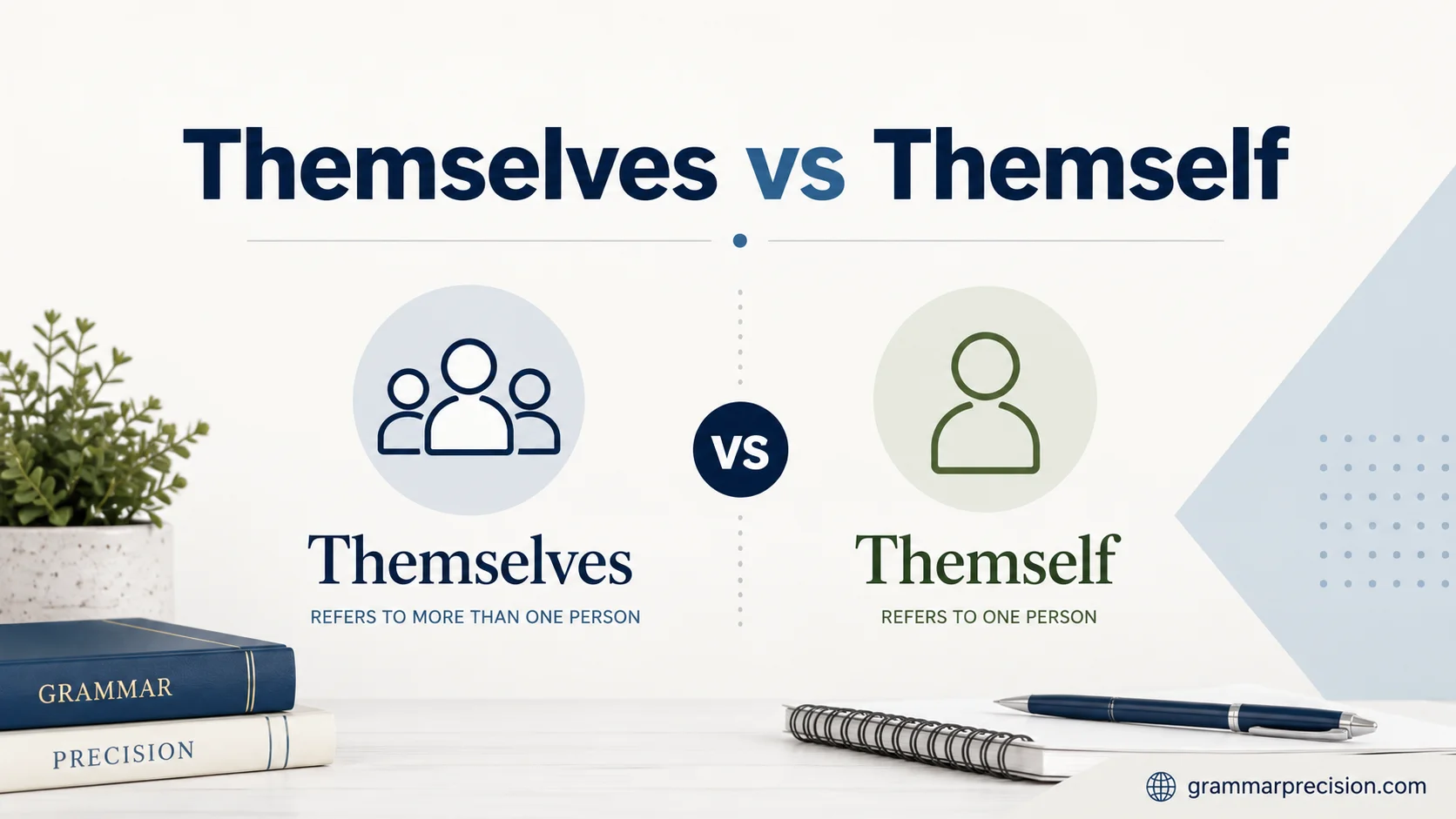
Themselves is traditionally used as a plural reflexive pronoun. It refers to two or more people or to a singular person when using the widely accepted singular they.
Themself is a singular reflexive pronoun that connects with singular they when someone refers to one person without specifying gender.
Here’s a simple comparison:
| Word | Main Use | Example |
| Themselves | Plural people or accepted singular they usage | The students prepared themselves for the exam. |
| Themself | One person using singular they | Jordan taught themself how to code. |
Both words can appear correct depending on the sentence. The key is understanding the context.
Understanding Reflexive Pronouns in English
Before comparing themselves and themself, it helps to understand what reflexive pronouns actually do.
A reflexive pronoun is a word that refers back to the subject of a sentence. It shows that the person or thing performing an action is also receiving that action.
For example:
- She blamed herself for the mistake.
- They prepared themselves for the meeting.
- I taught myself Spanish.
In each sentence, the action comes back to the person who performed it.
Without reflexive pronouns, sentences can sound incomplete or confusing.
Compare these examples:
- John looked at John in the mirror.
- John looked at himself in the mirror.
The second sentence sounds natural because himself clearly points back to John.
English reflexive pronouns include:
| Subject Pronoun | Reflexive Pronoun |
| I | Myself |
| You (singular) | Yourself |
| You (plural) | Yourselves |
| He | Himself |
| She | Herself |
| It | Itself |
| We | Ourselves |
| They | Themselves / Themself |
The main debate appears with the last row because English speakers use they in both plural and singular situations.
Themselves Meaning and Usage
Themselves is the traditional reflexive form of they. For centuries, English speakers have used it when referring to groups of people.
For example:
- The children dressed themselves before school.
- The employees introduced themselves to the new manager.
- The players congratulated themselves after winning the game.
In these examples, the subject contains multiple people, so themselves naturally fits.
When to Use Themselves
You should use themselves when:
- The subject is plural.
- You are referring to a group.
- You follow traditional grammar conventions.
- You want a widely accepted choice in formal writing.
Examples:
Plural subject:
The guests enjoyed themselves at the wedding.
The word guests refers to multiple people, so themselves is correct.
Group action:
The scientists challenged themselves to find a solution.
The scientists performed the action and received it themselves.
Formal writing:
Employees should familiarize themselves with company policies.
This structure is common in professional communication.
Why Themselves Is More Common Than Themself
One reason themselves appears more frequently is because it has existed in English for a much longer time.
Traditional grammar books taught that:
- They → Themselves
- He → Himself
- She → Herself
Because of this pattern, many teachers and editors still prefer themselves in most situations.
However, English doesn’t stay frozen. Language changes as people use it. Over time, speakers began using they for a single person, which created a need for a singular reflexive form.
That’s where themself entered the conversation.
Themself Meaning and Usage
Themself is a singular reflexive pronoun that refers back to one person who is identified with singular they.
For example:
Someone left their jacket. They should come back and get it themself.
Here, someone represents one person, and themself refers back to that individual.
Another example:
Taylor designed the website themself.
Taylor could be any gender, and the speaker chooses themself because they are using singular they.
Why Does Themself Exist?
The word themself developed because English speakers wanted a reflexive pronoun that matched singular they.
Consider this sentence:
Every student should believe in themselves.
Many people accept this sentence because singular they has been used naturally for a long time.
However, some writers prefer:
Every student should believe in themself.
They argue that a singular subject should have a singular reflexive form.
Both approaches appear in modern English.
The Rise of Singular They and Its Effect on Grammar
The debate around themselves vs themself is closely connected to the rise of singular they.
Singular they means using “they” to refer to one person when the person’s gender is unknown, irrelevant, or intentionally not mentioned.
Examples:
- Someone forgot their phone.
- A customer should check their receipt.
- If anyone calls, tell them I’ll return the message.
This usage isn’t new. English speakers have used singular they for hundreds of years.
Famous writers, including William Shakespeare and Jane Austen, used forms of singular they in their works.
As singular they became more accepted, speakers naturally started experimenting with themself.
Themselves vs Themself: Key Differences Explained
The main difference between themselves and themself comes down to whether you are talking about multiple people or one person.
| Difference | Themselves | Themself |
| Number | Usually plural | Singular |
| Connected pronoun | They | Singular they |
| Commonness | Very common | Less common but growing |
| Traditional acceptance | Strong | More recent |
| Example | They completed the project themselves. | Alex completed the project themself. |
Example Comparison
Consider these sentences:
Themselves:
The designers created the entire project themselves.
This means multiple designers worked independently.
Themself:
Casey created the entire project themself.
This refers to one person named Casey.
The meaning changes because the subject changes.
Also Read This: At the Weekend or On the Weekend: Which Is Correct?
Is Themself a Real Word?
Yes, themself is a real word. It appears in modern dictionaries and is recognized as a legitimate English word.
However, its acceptance depends on context.
Some traditional grammar guides still recommend themselves because it is more established. Other modern language experts accept themself because it provides a clear singular match for singular they.
English often develops this way. Words become common through repeated use before they become widely accepted in formal writing.
A good example is the word you. Historically, English used:
- Thou for one person
- You for multiple people or formal situations
Over time, you replaced thou almost completely.
Grammar changes when speakers find a pattern useful.
The Singular They Debate: Why Grammar Rules Keep Changing
The discussion around themselves vs themself is not just about two words. It reflects a larger change happening in modern English: the acceptance of singular they.
For many years, grammar teachers encouraged writers to use he when referring to an unknown person. For example:
Every student should bring his notebook.
However, many readers found this approach outdated because it excluded people who do not identify as male. Writers began searching for a more neutral option.
That led to sentences like:
Every student should bring their notebook.
Today, this structure is widely accepted because it sounds natural and avoids unnecessary assumptions about gender.
The same change created a question:
If we use they for one person, should we use themselves or themself?
Both options appear in modern English.
Can Themselves Refer to One Person?
Yes, themselves can refer to one person, especially when that person is represented by singular they.
For example:
Everyone should take care of themselves.
Here, everyone is grammatically singular. However, themselves is commonly used because it sounds natural and has become widely accepted.
This usage is sometimes called a singular they reflexive.
Many speakers choose themselves because it has a long history and feels familiar.
Consider these examples:
- If anyone needs help, they can ask themselves what they really want.
- Someone should be proud of themselves for completing the challenge.
- Each person should prepare themselves before the interview.
Although everyone, anyone, and someone refer to one person, themselves works smoothly in these sentences.
Can Themself Replace Themselves in These Sentences?
Sometimes, yes.
For example:
Everyone should be proud of themself.
This sentence highlights that everyone refers to an individual person.
Some writers prefer this because the grammar feels more consistent:
- Everyone = one person
- Themself = one person
However, many readers still find themselves more natural because they have heard it more often.
The choice often depends on the writer’s audience, style preferences, and the level of formality.
Themselves vs Themself in Different Writing Styles
The correct choice can change depending on where you are writing.
A casual conversation, a company document, and an academic paper may follow slightly different expectations.
Themselves vs Themself in Everyday Conversation
In everyday speech, people often use whichever form sounds natural to them.
Examples:
- They fixed the problem themselves.
- Jamie completed the assignment themself.
Both can sound normal depending on the speaker.
Conversation is usually more flexible because people focus on meaning rather than strict grammar rules.
Themselves vs Themself in Professional Writing
Professional writing values clarity and consistency.
In many workplaces, themselves remains the safer choice.
Example:
Employees should familiarize themselves with the new safety procedures.
This sentence sounds professional and follows traditional grammar expectations.
However, if you are writing about a specific person who uses singular they, themself may be appropriate.
Example:
Jordan prepared themself for the leadership interview.
The important thing is to use the form consistently.
Themselves vs Themself in Academic Writing
Academic writing often depends on the style guide being followed.
Some academic institutions accept singular they and related forms. Others may prefer traditional constructions.
Before submitting academic work, check:
- Your professor’s requirements
- Your institution’s style rules
- Your chosen citation style
Consistency matters more than choosing one form in every situation.
Themselves vs Themself in Creative Writing
Creative writers often have more freedom.
A novelist, screenwriter, or storyteller may choose themself because it matches a character’s identity or natural speech.
For example:
Morgan wanted to prove they could handle the challenge themself.
The word choice helps readers understand the character’s perspective.
Common Mistakes When Using Themselves and Themself
Even experienced writers sometimes confuse these words. Here are the mistakes you should avoid.
Using Themself With a Clearly Plural Subject
Incorrect:
The players prepared themself for the championship.
Why is it wrong?
The subject players refers to multiple people. Therefore, the reflexive pronoun should also be plural.
Correct:
The players prepared themselves for the championship.
A simple rule:
Plural subject = themselves
Using Themselves When Themself Better Matches the Meaning
Example:
Alex fixed the computer themselves.
This sentence is not always wrong. Many speakers accept it because singular they commonly uses themselves.
However, if you want to emphasize that Alex is one individual, you may choose:
Alex fixed the computer themself.
The second version creates a stronger connection between the singular subject and reflexive pronoun.
Confusing Reflexive Pronouns With Regular Pronouns
Reflexive pronouns cannot replace normal object pronouns.
Incorrect:
I gave the book to themself.
Correct:
I gave the book to them.
Correct:
They gave the book to themself.
Remember:
- Them receives an action from someone else.
- Themself receives an action from themselves.
Using Reflexive Pronouns Without a Clear Subject
Incorrect:
Themselves completed the project.
A reflexive pronoun needs something to refer back to.
Correct:
They completed the project themselves.
The subject must appear first.
Real-Life Examples of Themselves vs Themself
Understanding grammar becomes easier when you see it in real situations.
Workplace Example
Imagine a manager talking about employees:
The employees organized the event themselves.
This clearly refers to multiple workers.
Now imagine talking about one employee:
Taylor organized the event themself.
Taylor represents one person, so themself may work well.
School Example
Plural:
The students challenged themselves to improve their grades.
Singular:
Each student challenged themselves to improve their grades.
Modern writers often use themselves with each student because it sounds natural.
Some writers may choose:
Each student challenged themself to improve their grades.
Both versions communicate the same idea.
Everyday Life Example
Plural:
The neighbors decorated their houses themselves.
Singular:
Someone decorated their house themself.
The difference depends on whether you mean several people or one person.
A Simple Decision Guide: Themselves or Themself?
When you are unsure, follow these steps:
Identify the Subject
Ask:
Who is performing the action?
Examples:
- The children → plural
- Someone → singular
- Taylor → singular
Check Whether the Subject Is One Person or More
Use this guide:
| Subject Type | Best Choice |
| A group of people | Themselves |
| Multiple individuals | Themselves |
| One person using singular they | Themself or themselves |
| Unknown person | Usually themselves, sometimes themself |
Consider Your Audience
Think about who will read your writing.
For a broad audience:
- Themselves may feel more familiar.
For modern, inclusive writing:
- Themself may fit your purpose.
For formal documents:
- Follow the required style guide.
Style Guide Perspectives on Themselves vs Themself
Different writing authorities have different preferences.
Many modern style guides recognize singular they as acceptable because it appears naturally in everyday English.
For example, Merriam-Webster recognizes modern uses of singular they and discusses the development of related forms.
Meanwhile, some traditional grammar resources still prefer themselves over themself because it has a longer history.
The main lesson is simple:
English grammar is shaped by both rules and real-world usage.
A word does not become incorrect simply because it is newer. Language evolves when speakers find better ways to express ideas.
Memory Tricks to Remember Themselves vs Themself
Grammar becomes easier when you have a quick mental shortcut.
Try these:
Think About the Number
Many people → themselves
Example:
The athletes congratulated themselves.
One person → themself
Example:
Riley taught themself photography.
Match the Subject
Look at the subject before choosing the reflexive pronoun.
- They (group) → themselves
- They (one person) → themself
Focus on Meaning, Not Just Rules
Grammar exists to help people understand each other.
If your sentence is clear and your word choice matches your meaning, your writing will usually communicate successfully.
Quick Comparison: Themselves vs Themself
| Question | Answer |
| Is themselves a correct word? | Yes, it is a standard reflexive pronoun. |
| Is themself a real word? | Yes, it is recognized in modern English. |
| Is themselves more common? | Yes, it has a longer history. |
| Can themselves refer to one person? | Yes, especially with singular they. |
| Can themself refer to one person? | Yes, especially when using singular they. |
| Which one should writers choose? | Choose based on meaning, audience, and style. |
FAQs:
Is themself a correct word in English?
Yes, themself is a recognized English word and is used as a singular reflexive pronoun with singular they. Although some traditional grammar rules prefer themselves, many modern writers use themself when referring to one person without specifying gender.
What is the main difference between themselves and themself?
The main difference between themselves and themself is the number of people being referred to. Themselves is traditionally used for plural subjects, while themself is used for a singular person who uses they as a pronoun. However, themselves is also widely accepted with singular they in many situations.
Can themselves be used for one person?
Yes, themselves can refer to one person when using singular they. For example, “Everyone should believe in themselves” is a common and accepted sentence. Many speakers choose themselves because it sounds more natural and has been used in English for a long time.
When should I use themself instead of themselves?
You can use themself when you are referring to one person and using singular they. For example, “Jordan completed the project themself” emphasizes that one individual completed the task alone. The choice depends on your audience, writing style, and personal preference.
Which is more common: themselves or themself?
Themselves is much more common because it has been part of standard English for centuries. Themself is a newer and less frequent form, but its use is growing as singular they becomes more accepted in everyday and professional communication.
Conclusion:
Understanding themselves vs themself helps you make smarter grammar choices. Use themselves for groups and common singular they situations, while themself works for one person using singular they. Choosing the right form depends on context, audience, and clarity.