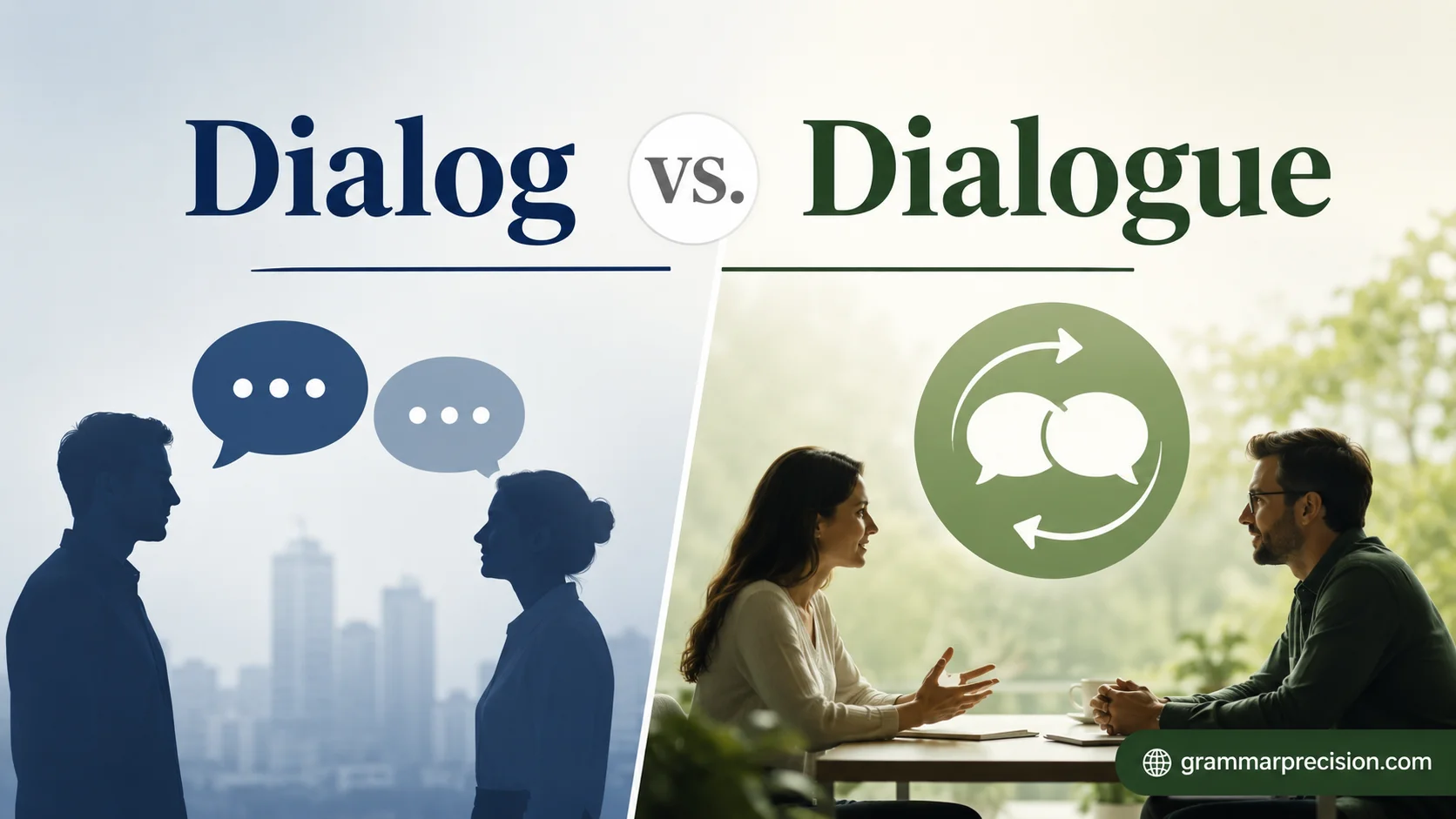
In Dialog vs. Dialogue, spelling shapes communication, conversation, writing, screen production, technology, forms of English and computer interface usage emerges
In writing, dialog and dialogue often describe conversation, exchange of ideas, in a written work, or screen production, where a novelist or playwright builds storyline through two or more characters in novel, play, or movie depending on context forms of English American software interfaces user prompts British literature scripts academic discussions usage jumpstarted turn century
In dictionary usage, dialogue appears as alternate allowable spelling in Merriam Webster’s Collegiate Dictionary where real meaning emerges through interaction abstract philosophical discussions in book screen gadget describe signify tackle conversations practically globally endangered linguistic contexts peeling layers onion broader meaning have you ever difference discover meanings when to use forms usage context today now.
Dialog vs. Dialogue: The Quick Answer
Here’s the short version:
WordMost Common UsePreferred in Standard English?DialogueLiterature, essays, blogs, journalism, educationYesDialogSoftware, programming, UI design, technical documentationSometimes
For everyday English, “dialogue” is the safest and most widely accepted choice.
However, “dialog” is completely normal in software and technical writing, especially when discussing a dialog box or user interface.
Both spellings can technically be correct. The context decides which one sounds natural.
Why This Spelling Difference Confuses So Many Writers
The confusion exists because English borrowed the word from older languages and then evolved in different directions over time.
Traditional English kept the longer spelling “dialogue,” while the technology industry gradually shortened it to “dialog.”
As a result:
- Students usually learn “dialogue”
- Developers frequently see “dialog”
- Dictionaries include both versions
- Search engines recognize both spellings
- Different style guides recommend different forms
That combination creates constant uncertainty for writers.
The same pattern appears in other English word pairs too:
Short FormTraditional FormCatalogCatalogueAnalogAnalogueMonologMonologue
In most cases, the longer version feels more formal and traditional.
What Does “Dialogue” Mean?
The word dialogue refers to a conversation or exchange of ideas between two or more people.
You’ll commonly see it used in:
- Fiction writing
- Movies and TV scripts
- Journalism
- Academic discussions
- Business communication
- Education
In literature, dialogue includes the spoken words between characters.
Example:
“Where are you going?” Sarah asked. “I’m heading home,” Daniel replied.
Everything spoken between those characters is dialogue.
Strong dialogue helps stories feel realistic and emotionally engaging. Without it, writing often sounds stiff and lifeless.
What Does “Dialog” Mean?
The word dialog mainly appears in computing and software development.
It usually refers to:
- Dialog boxes
- Pop-up windows
- Software prompts
- User interface interactions
Example:
The installer displayed a warning dialog before deleting the files.
In technical environments, the shorter spelling became standard because developers preferred concise terminology.
The History Behind Dialog and Dialogue
The word originally comes from the Greek term dialogos, which means conversation or discussion.
Over time, Latin and French influenced the spelling before English adopted dialogue as the traditional form.
Later, the technology industry simplified the spelling.
Why Developers Shortened the Word
During the early decades of computing, programmers valued short and efficient terminology.
Several factors influenced the change:
- Early interfaces had limited screen space
- Shorter labels improved readability
- Coding systems preferred concise naming
- Technical documentation favored brevity
That’s why software companies adopted terms like:
- Print dialog
- Error dialog
- Settings dialog
Microsoft played a major role in spreading this terminology across the software industry.
Dialog vs. Dialogue in American and British English
Both American and British English strongly prefer dialogue in everyday writing.
Here’s how usage typically works:
RegionPreferred Everyday SpellingUnited StatesDialogueUnited KingdomDialogueCanadaDialogueAustraliaDialogue
The shorter spelling mainly survives in technical and computing contexts.
So if you’re writing:
- A school assignment
- A blog article
- A novel
- A business report
- A newspaper article
You should almost always choose dialogue.
When You Should Use “Dialogue”
In most situations, dialogue is the correct choice.
Use Dialogue in Fiction Writing
Readers expect the traditional spelling in books and stories.
Correct Example
The dialogue between the characters felt natural.
Incorrect Example for Fiction
The dialog between the characters felt natural.
To many readers, the second sentence looks strange and overly technical.
Use Dialogue in Academic Writing
Schools and universities overwhelmingly prefer “dialogue.”
Common phrases include:
- Political dialogue
- Cultural dialogue
- Internal dialogue
- Philosophical dialogue
Using “dialog” in essays may appear incorrect outside technical discussions.
Use Dialogue in Blogging and SEO Writing
For bloggers and content creators, “dialogue” is usually the stronger keyword because it matches natural language patterns.
Popular searches include:
- dialog vs dialogue
- what is dialogue
- dialogue examples
- dialogue meaning
- how to write dialogue
The traditional spelling also appears more professional to general readers.
Use Dialogue in Journalism
Major news organizations overwhelmingly prefer “dialogue.”
Examples include:
- The New York Times
- BBC
- Reuters
- The Guardian
In media writing, “dialog” often looks incomplete or too technical.
Also Read This: “In Summer” or “In the Summer”?
When “Dialog” Is Acceptable
Even though “dialogue” dominates standard English, “dialog” still has legitimate uses.
Software and UI Design
This is where the shorter spelling appears most naturally.
Examples include:
- Dialog box
- Error dialog
- Confirmation dialog
- Settings dialog
In software documentation, “dialog” sounds completely normal.
Programming Environments
Many programming frameworks use the shorter spelling directly in their naming systems.
Example
OpenFileDialog SaveDialog PrintDialog
These naming conventions became deeply embedded in software development culture.
Technical Documentation
Software manuals and engineering documents frequently prefer “dialog.”
This is especially common in:
- Developer tutorials
- UI design guides
- Technical support documents
- Programming documentation
Dialog Box vs. Dialogue: The Simplest Way to Remember the Difference
The easiest way to separate the two spellings is this:
TermMeaningDialogueA conversation between peopleDialog boxA software pop-up window
Think about it this way:
- Dialogue belongs to human conversation
- Dialog belongs to computer interfaces
That simple trick solves the confusion for most writers instantly.
Why Native Speakers Usually Prefer “Dialogue”
Native English speakers tend to trust familiar spellings.
“Dialogue” looks complete and polished because readers have seen it for decades in:
- Books
- Newspapers
- Schools
- Academic writing
- Entertainment media
Meanwhile, “dialog” feels more technical and mechanical.
Readers often associate it with:
- Software
- Coding
- Engineering
- Technology
- User interfaces
Neither spelling is wrong. They simply fit different environments.
Real Examples of Dialog and Dialogue
Here are real-world examples showing how both spellings work in context.
Dialogue Examples
Literature
“The dialogue in the novel sounded realistic.”
Film Reviews
“The movie’s dialogue felt sharp and emotional.”
Business Communication
“The company opened a dialogue with customers.”
Dialog Examples
Software Documentation
“Click OK to close the dialog.”
User Interface Design
“The settings dialog appears automatically.”
Programming Tutorials
“Create a custom dialog window.”
Common Mistakes Writers Make
Small spelling mistakes can subtly damage credibility.
Here are the most common issues.
Mixing Both Spellings in One Article
This happens constantly online.
Incorrect Example
The dialogue sounded realistic. The dialog between characters improved later.
That inconsistency distracts readers immediately.
Choose one spelling based on context and stay consistent.
Using “Dialog” in Essays
Outside technical writing, this usually appears incorrect.
Risky Example
Shakespeare’s dialog reveals emotional tension.
Most teachers and editors would strongly prefer:
Shakespeare’s dialogue reveals emotional tension.
Confusing Dialogue With Quotation Marks
Dialogue is not the same thing as quotation marks.
Quotation marks are punctuation.
Dialogue is the actual spoken conversation between characters.
Why Software Companies Prefer “Dialog”
The technology industry loves efficiency and brevity.
That preference helped “dialog” become standard in many technical environments.
Reasons the Shorter Spelling Became Popular
ReasonExplanationLimited screen spaceOlder systems saved charactersCoding efficiencyShorter labels improved readabilityUI conventionsDevelopers copied existing standardsTechnical writingConcise terminology mattered
Microsoft heavily influenced these naming conventions through Windows software documentation.
That influence spread throughout the programming world.
Dialog vs. Dialogue in SEO
For bloggers and website owners, spelling choice can influence search visibility.
Which Keyword Gets More Searches?
Generally:
- Dialogue receives broader mainstream searches
- Dialog attracts technical and software-related searches
Search Intent Comparison
KeywordTypical Search IntentDialogueWriting, grammar, literatureDialogSoftware, UI, programming
Best SEO Strategy
For most websites, the smartest approach is:
- Target “dialogue” as the primary keyword
- Mention “dialog” naturally where relevant
- Include both spellings strategically in headings
That approach captures broader search traffic while maintaining relevance.
Related Word Pairs That Follow the Same Pattern
English contains many similar spelling variations.
Catalog vs. Catalogue
- “Catalog” dominates American English
- “Catalogue” sounds more traditional and British
Analog vs. Analogue
- “Analog” appears frequently in tech contexts
- “Analogue” appears more often in traditional writing
Monolog vs. Monologue
- “Monologue” remains standard in literature
- “Monolog” occasionally appears in technical usage
These examples show a larger pattern in English:
Technical industries often simplify traditional spellings over time.
The Psychology Behind Spelling Preferences
Spelling subtly affects how readers perceive writing.
How Readers Perceive “Dialogue”
Readers often associate it with:
- Education
- Literature
- Professionalism
- Authority
- Traditional writing
How Readers Perceive “Dialog”
Readers often connect it with:
- Technology
- Engineering
- Software development
- User interfaces
- Modern systems
Those impressions shape how your writing feels to audiences.
Style Guide Recommendations
Professional style guides overwhelmingly favor “dialogue” for general writing.
AP Style
Associated Press style generally prefers “dialogue” outside technical content.
Chicago Manual of Style
Chicago style also favors “dialogue” in standard English writing.
Technical Style Guides
Software documentation sometimes encourages “dialog” depending on company standards.
How to Never Confuse Dialog and Dialogue Again
A simple memory trick makes this easy.
Dialogue = Literature and Conversation
The extra “ue” makes the word look more formal and complete.
Think:
Dialogue belongs in books and conversations.
Dialog = Digital Technology
The shorter spelling looks more mechanical.
Think:
Dialog belongs on computer screens.
That distinction works surprisingly well.
Case Study: Microsoft’s Influence on “Dialog”
Microsoft played a huge role in popularizing the shorter spelling.
In early Windows systems, terms like:
- Print Dialog
- Save Dialog
- Error Dialog
became standard terminology for developers.
As programmers copied Microsoft’s documentation style, the spelling spread across:
- Coding tutorials
- Software frameworks
- UI design systems
- Technical manuals
Today, millions of developers use the spelling automatically because of those early conventions.
Case Study: Why Novelists Still Use “Dialogue”
Fiction writers almost universally prefer “dialogue.”
Why?
Because readers expect it.
Publishers know unusual spellings can interrupt reading flow. Even tiny variations distract audiences during emotional scenes or character conversations.
That’s why bestselling authors consistently use phrases like:
- dialogue scenes
- dialogue pacing
- dialogue tags
The traditional spelling remains deeply tied to literary culture.
Dialogue vs. Conversation: Are They the Same?
Not exactly.
The two words overlap, but subtle differences exist.
WordMeaningConversationCasual exchange between peopleDialogueMeaningful or structured exchange
Dialogue often suggests:
- Emotional depth
- Purpose
- Intellectual discussion
- Dramatic interaction
That’s why writers and filmmakers frequently prefer the term.
FAQs:
What is the difference between dialog and dialogue?
Dialog and dialogue both refer to conversation or exchange of ideas, but dialogue is more common in British literature, while dialog is often used in technology like computer interface and software systems.
Where is the word dialog commonly used?
The word dialog is commonly used in American software interfaces, user prompts, interactive box, and window systems, especially in computer terminology and technology-based contexts.
Why do writers use dialogue in literature?
Writers use dialogue in novels, plays, and movies to show interaction between two or more characters, helping build storyline and explain context clearly.
Is dialog a legit spelling according to dictionaries?
Yes, according to Merriam Webster’s Collegiate Dictionary, dialog is an alternate allowable spelling, and both forms are considered correct depending on usage.
When should I use dialogue instead of dialog?
You should use dialogue in British literature, academic discussions, and formal writing, while dialog is better suited for technology, software interfaces, and computer-based communication systems.
Conclusion:
The difference between dialog and dialogue mainly depends on context, usage, and forms of English. Both terms represent conversation and exchange of ideas, but they are applied differently in literature, technology, and academic fields.
Understanding their distinct connotations helps in choosing the right word in writing, screen production, or computer interfaces, making communication clearer and more effective in both traditional and modern environments.