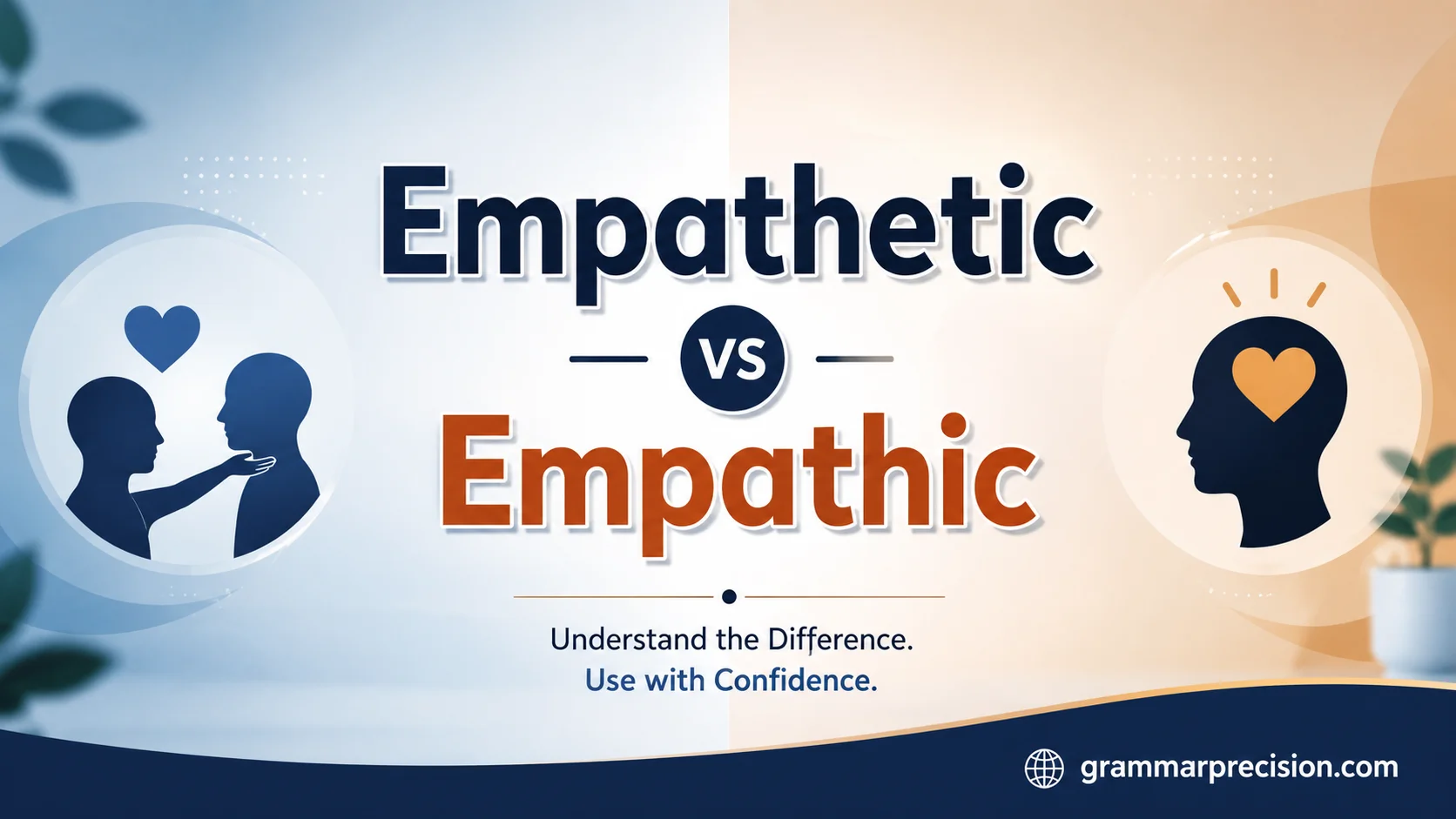
Understanding Empathetic vs Empathic helps you choose the right word when describing emotional awareness and connection. This guide explains the key differences with simple examples so your writing feels natural.
Many people confuse empathetic and empathic because both words relate to empathy and understanding others emotions. However, they can create different impressions depending on the situation and audience. This article explores their meanings, usage, and examples to help you communicate more clearly. You will discover how these words work in everyday conversations and professional settings.
Choosing the correct term can make your message more effective and natural. While empathetic often appears in casual communication, empathic is commonly used in formal or psychological contexts. By learning the subtle differences between them, you can improve your vocabulary and write with greater confidence. These simple explanations will make the comparison easy to remember.
Empathetic vs Empathic: Quick Difference
| Word | Meaning | Common Usage | Example |
| Empathetic | Showing the ability to understand and share another person’s feelings | Everyday English, relationships, workplaces | “She was empathetic when I explained my problems.” |
| Empathic | Showing emotional understanding or the ability to recognize another person’s feelings | Psychology, therapy, formal writing | “The counselor used an empathic approach during the session.” |
Both words come from the same idea: empathy.
However, the difference often comes down to style, context, and what sounds natural to the reader.
What Does Empathetic Mean?
The word empathetic describes someone who can understand another person’s emotions and respond with care.
An empathetic person does not simply hear what someone says. They try to imagine what that person feels. They put themselves in another person’s position.
For example:
“My friend was empathetic when I lost my job because she understood how stressful that situation felt.”
This means the friend recognized the emotional struggle and responded with kindness.
An empathetic person might:
- Listen without judging
- Recognize emotional pain
- Offer support
- Understand different perspectives
- Respond with compassion
The word is commonly used when describing people, actions, communication styles, and relationships.
Examples of Empathetic in Sentences
- “The teacher was empathetic toward students who struggled with the assignment.”
- “A good leader should be empathetic and understand employees’ concerns.”
- “Her empathetic response made me feel respected.”
- “Doctors need empathetic communication skills when dealing with patients.”
In modern English, empathetic feels warm, personal, and conversational.
What Does Empathic Mean?
The word empathic also means showing empathy. It describes the ability to understand another person’s emotions or experiences.
However, it often sounds more formal or professional.
You will frequently see empathic in fields such as:
- Psychology
- Counseling
- Healthcare
- Emotional intelligence research
- Communication studies
For example:
“The therapist created an empathic connection with the client.”
Here, the word focuses on a professional skill or method of understanding emotions.
An empathic approach means someone carefully notices emotional signals and responds appropriately.
Examples of Empathic in Sentences
- “The nurse used an empathic approach while caring for patients.”
- “An empathic listener pays attention to both words and emotions.”
- “The study examined empathic communication between doctors and patients.”
While empathetic often feels personal, empathic can feel more analytical.
Are Empathetic and Empathic Actually Different?
This is where many people get confused.
The answer: They are extremely similar, and many people use them interchangeably.
Both words describe emotional understanding.
The main difference is not the meaning. The difference is the feeling and context behind the word.
Think of them like two outfits for the same person:
- Empathetic is like casual clothing. It fits daily conversations.
- Empathic is like professional clothing. It fits formal situations.
Both work. The choice depends on where you are using them.
Also Read This: Continuing Success or Continued Success: What’s the Difference and Which Should You Use?
Empathetic vs Empathic: Detailed Comparison
| Feature | Empathetic | Empathic |
| Meaning | Understanding another person’s emotions | Understanding another person’s emotions |
| Tone | More natural and conversational | More formal and professional |
| Common in | Daily speech and writing | Psychology and academic writing |
| Describes | People, behavior, responses | Skills, approaches, communication methods |
| Popularity | More common today | Less common but still correct |
When Should You Use Empathetic?
Use empathetic when you are talking about normal human interactions.
It works well in:
Personal Relationships
Example:
“An empathetic partner listens and understands their spouse’s feelings.”
Relationships depend on emotional connection. The word fits because it focuses on human behavior.
Workplace Communication
Example:
“A manager with an empathetic leadership style creates a healthier work environment.”
Modern workplaces value emotional intelligence because employees want leaders who understand their challenges.
Everyday Conversations
Example:
“She was empathetic when I shared my worries.”
This sounds natural because people commonly use the word when discussing kindness and support.
When Should You Use Empathic?
Use empathic when discussing a method, skill, or professional practice.
It often appears in:
Therapy and Counseling
Therapists often develop empathic listening skills. This means they carefully understand emotions without making the conversation about themselves.
Healthcare
Doctors and nurses use empathic communication to create trust with patients.
For example:
“A doctor’s empathic response can help patients feel more comfortable discussing their health concerns.”
Research and Academic Writing
Researchers may study empathic behavior, emotional responses, and human communication patterns.
Empathetic vs Empathic vs Sympathetic
Many people also confuse empathetic with sympathetic.
They are related but different.
| Word | Meaning | Example |
| Empathetic | Understanding someone’s feelings by imagining their experience | “I understand how difficult this must feel.” |
| Sympathetic | Feeling concern or sadness for someone’s situation | “I’m sorry you are going through this.” |
| Compassionate | Wanting to help someone who is suffering | “How can I support you?” |
A simple way to remember:
Empathy means feeling with someone. Sympathy means feeling for someone.
For example:
Your friend fails an important exam.
A sympathetic response:
“I’m sorry that happened.”
An empathetic response:
“I know how much effort you put into preparing. I can understand why you feel disappointed.”
Both responses show care, but empathy creates a deeper emotional connection.
Common Mistakes With Empathetic and Empathic
Even though both words are correct, people often use them incorrectly.
Mistake: Thinking Empathic Is Wrong
Some people believe only empathetic is correct.
That is not true.
Empathic is a legitimate English word and has been used for many years.
Mistake: Using Empathy and Sympathy as the Same Thing
These words overlap, but they are not identical.
Empathy requires understanding another person’s internal experience.
Sympathy shows concern about their situation.
Mistake: Overusing These Words
Sometimes writers repeat “empathetic” too often.
Instead, you can use alternatives:
- Understanding
- Caring
- Compassionate
- Supportive
- Sensitive
- Considerate
How to Remember the Difference Between Empathetic and Empathic
A simple memory trick:
Empathetic = everyday empathy
The word feels more natural when talking about people and relationships.
Empathic = expert empathy
The word fits professional or academic discussions.
Examples:
Everyday:
“She is an empathetic friend.”
Professional:
“The counselor demonstrated empathic communication.”
Real-Life Examples of Empathetic Behavior
Empathy appears everywhere in daily life.
Example: Friendship
Your friend is upset after receiving bad news.
An empathetic friend does not immediately say:
“Don’t worry. Everything is fine.”
Instead, they might say:
“That sounds really difficult. I understand why you feel this way.”
Example: Leadership
An empathetic manager notices when employees feel overwhelmed.
They do not ignore the problem. They ask questions, listen, and find solutions.
Example: Customer Service
A customer service worker who understands frustration can handle problems better.
Instead of giving a cold response, they acknowledge the customer’s feelings.
Why Empathy Matters in Communication
Strong communication is not only about speaking clearly. It is also about understanding others.
Empathetic communication helps people:
- Build stronger relationships
- Reduce conflict
- Create trust
- Improve teamwork
- Show emotional intelligence
A person who listens carefully often communicates better than someone who only focuses on giving answers.
FAQs:
What is the difference between empathetic and empathic?
Empathetic and empathic both describe the ability to understand another person’s feelings and emotions. The main difference is in their usage. Empathetic is more common in everyday conversations, while empathic is often used in professional fields like psychology, counseling, and healthcare.
Is empathetic or empathic the correct word?
Both words are correct English words. Neither one is wrong. The choice depends on the context. If you are writing about daily relationships or personal experiences, empathetic usually sounds more natural. For formal discussions about emotional skills, empathic may be a better choice.
Can empathetic and empathic be used interchangeably?
Yes, in most situations, empathetic and empathic can be used interchangeably because they share the same basic meaning. However, the tone can feel slightly different. Empathetic sounds more personal, while empathic can sound more professional or academic.
Which word is more common in modern English?
The word empathetic is generally more popular in modern English. People often use it when describing someone who understands and cares about another person’s emotions. Empathic is still widely accepted and appears more often in formal writing and specialized fields.
What is an example of an empathetic and empathic sentence?
An empathetic example is: “She was empathetic when her friend shared her problems because she understood her feelings.” An empathic example is: “The therapist used an empathic approach to support the patient during the session.” Both sentences show emotional understanding but in different contexts.
Conclusion:
Understanding the difference between empathetic vs empathic makes your writing clearer and more accurate. Both words describe emotional understanding and the ability to connect with others, but their usage depends on the situation.
Empathetic works best for everyday communication, while empathic fits well in professional or psychological discussions. Choosing the right word helps you express ideas in a more natural and meaningful way.