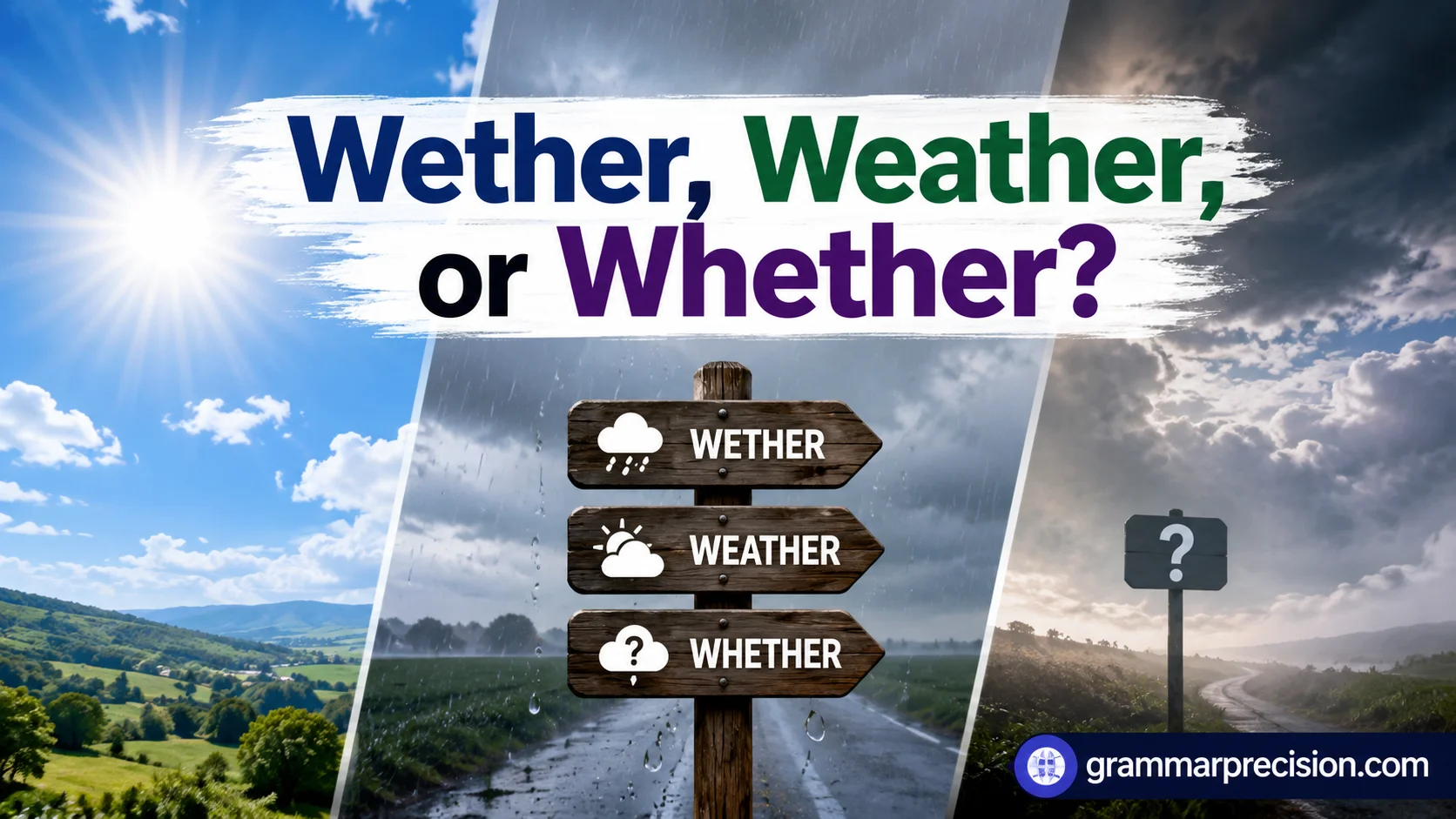
Confused by Wether, Weather, or Whether? This guide explains these tricky words with simple rules, clear examples, and useful tips so you can understand their meanings and use them correctly.
Many writers struggle with wether, weather, and whether because they sound alike but have different meanings and uses. This article helps you discover the key differences between these words through practical explanations and examples. You’ll learn when to choose each word and avoid common grammar mistakes that can affect your writing clarity and overall accuracy.
Understanding wether, weather, and whether doesn’t have to feel complicated. With the right approach, you can remember their meanings easily and improve your English skills. From everyday conversations to professional writing, using the correct word creates a stronger impression. These simple explanations will give you the confidence to write more clearly and communicate more effectively.
Wether, Weather, and Whether: Quick Difference Explained
The easiest way to understand these three words is to look at their basic meanings:
| Word | Meaning | Part of Speech | Example |
| Wether | A castrated male sheep | Noun | The farmer sold an old wether. |
| Weather | The condition of the atmosphere | Noun/Verb | The weather is sunny today. |
| Whether | Used to show choices or possibilities | Conjunction | I don’t know whether he will join us. |
A simple memory trick can help:
- Wether → Think of a sheep
- Weather → Think of the sky outside
- Whether → Think of a choice between options
Although these words sound alike, their meanings have nothing in common.
What Does Wether Mean?
Wether Definition and Meaning
The word wether refers to a male sheep that has been castrated. In farming and agriculture, farmers use this term when talking about sheep raised for wool or meat.
Unlike weather and whether, the word wether has a very specific meaning. You won’t usually see it in everyday conversations unless the topic involves farming, livestock, or historical texts.
For example:
- The farmer moved the young wether into a separate field.
- The shepherd counted every ewe and wether in the flock.
The word comes from Old English and has been used for centuries in agricultural communities.
Why Is Wether Rarely Used Today?
Modern English speakers rarely use wether because most people don’t work directly with livestock. The word still exists, but it appears mostly in:
- Farming documents
- Agricultural articles
- Historical books
- Animal science materials
Many people mistake wether as a spelling error because they are more familiar with weather and whether.
However, it is a real English word with a completely different meaning.
What Does Weather Mean?
Weather Meaning Explained
The word weather describes the condition of the atmosphere at a particular place and time. It includes everything happening outside, such as temperature, rain, wind, clouds, and storms.
Examples of weather conditions include:
- Sunny skies
- Heavy rainfall
- Strong winds
- Snowstorms
- Heat waves
- Thunderstorms
You might say:
- The weather looks perfect for a picnic.
- The cold weather made driving difficult.
- We canceled the trip because of bad weather.
When people talk about daily forecasts, they are almost always talking about weather.
Weather as a Noun
Most commonly, weather works as a noun.
It refers to the state of the atmosphere around us.
Examples:
- The weather changed suddenly.
- Today’s weather forecast predicts rain.
- The extreme weather damaged several homes.
Weather can change within minutes or hours. A sunny morning can quickly become a rainy afternoon.
Weather as a Verb
Many people know weather as a noun, but it can also work as a verb.
As a verb, to weather means to survive, endure, or withstand something difficult.
Examples:
- The company weathered the financial crisis.
- The old building weathered many storms.
- She weathered the criticism with confidence.
This meaning creates a connection between physical storms and life challenges. Just as a house survives harsh weather, people can survive difficult situations.
Weather vs Climate: Understanding the Difference
Many people confuse weather with climate, but they are not the same.
| Weather | Climate |
| Short-term atmospheric conditions | Long-term patterns |
| Changes daily or hourly | Measured over many years |
| Example: Rain today | Example: Desert regions have dry climates |
For example, a desert can experience a rainy day, but its overall climate remains dry.
What Does Whether Mean?
Whether Definition and Usage
The word whether introduces a choice, possibility, or uncertainty between different options.
It often appears when someone is deciding between two possibilities.
Examples:
- I don’t know whether she will attend.
- Tell me whether you agree or disagree.
- We need to decide whether to continue.
Unlike weather, which relates to nature, whether relates to decisions and possibilities.
How to Use Whether Correctly
You usually use whether when there are two possible outcomes.
Common structures include:
Whether + option
Examples:
- I’m unsure whether he understands.
- She asked whether the meeting was canceled.
Whether + or not
Examples:
- I’ll go whether or not you come.
- He needs to decide whether or not to accept the offer.
The phrase whether or not emphasizes that both possibilities exist.
Whether vs If: Are They the Same?
Many writers wonder if whether and if can replace each other. Sometimes they can, but there are important differences.
| Whether | If |
| Shows alternatives or uncertainty | Often introduces conditions |
| Works well with “or not” | Common in conditional sentences |
| Sounds more formal | Sounds more conversational |
Examples:
Both can work:
- I don’t know whether she is coming.
- I don’t know if she is coming.
But only whether works naturally here:
- I don’t know whether or not he will arrive.
And if is better for conditions:
- If it rains, we will stay home.
Wether vs Weather vs Whether: Common Mistakes to Avoid
Because these words sound identical, spelling mistakes happen frequently.
Here are common errors:
Mistake: Using Weather for a Choice
Incorrect:
- I don’t know weather I should leave.
Correct:
- I don’t know whether I should leave.
The sentence talks about a decision, not the atmosphere.
Mistake: Using Whether for Outdoor Conditions
Incorrect:
- The whether is cold today.
Correct:
- The weather is cold today.
The sentence describes temperature, so weather is correct.
Mistake: Writing Wether Accidentally
Incorrect:
- I wonder wether he will come.
Correct:
- I wonder whether he will come.
Most people accidentally type wether when they mean whether.
Also Read This: Rime vs. Rhyme: Meaning, History and Examples
Easy Memory Tricks to Remember Wether, Weather, and Whether
Learning three similar words can feel confusing, but simple associations make it easier.
Remember Wether With Animals
Think:
Wether = wool and sheep
If the sentence involves farming or sheep, wether might be the correct choice.
Remember Weather With the World Outside
Think:
Weather = what you see through your window
Rain, sunshine, wind, and storms all belong to weather.
Remember Whether With Choices
Think:
Whether = which one?
If someone must choose between possibilities, use whether.
A quick formula:
- Sheep → wether
- Sky → weather
- Choice → whether
Wether vs Weather vs Whether Examples Compared
Seeing examples side by side makes the differences clearer.
| Sentence | Correct Word | Reason |
| The storm damaged homes because of severe _____. | Weather | Talks about conditions outside |
| I don’t know _____ she will accept the job. | Whether | Shows uncertainty |
| The farmer bought a young _____. | Wether | Refers to a sheep |
| We must decide _____ to move forward. | Whether | Shows a decision |
| The building survived harsh _____. | Weather | Refers to environmental conditions |
How These Words Appear in Real-Life Writing
Understanding these words becomes easier when you see them in everyday situations.
Workplace Example
Incorrect:
Please let me know weather you can attend the meeting.
Correct:
Please let me know whether you can attend the meeting.
The writer is asking about a choice, not discussing rain or sunshine.
Travel Example
Correct:
Check the weather before your flight.
Here, weather refers to conditions that could affect travel.
Farming Example
Correct:
The farmer separated the wether from the rest of the flock.
Here, wether refers to a sheep.
Practice Quiz: Choose the Correct Word
Test yourself:
The forecast says the _____ will improve tomorrow.
Answer: weather
The sentence discusses outdoor conditions.
I’m not sure _____ we should wait.
Answer: whether
The sentence shows uncertainty.
The farmer purchased a new _____.
Answer: wether
The sentence refers to an animal.
FAQs:
What is the difference between wether, weather, and whether?
Wether refers to a castrated male sheep, while weather describes atmospheric conditions like rain, wind, or sunshine. Whether is used to show a choice, possibility, or uncertainty between options. Although these words sound similar, their meanings and uses are completely different.
Is wether a commonly used word in English?
No, wether is not commonly used in everyday conversations. It mainly appears in farming, agriculture, and animal-related contexts. Many people mistake it for a spelling error because they are more familiar with weather and whether, but it is still a correct English word.
How can I remember the difference between weather and whether?
A simple memory trick can help you remember these words. Think of weather as something you experience outside, such as sunshine or storms. Think of whether as a word connected to choices and decisions. If you are choosing between possibilities, whether is usually the right option.
Can whether and if be used in the same way?
Sometimes whether and if can have similar meanings, especially when talking about uncertainty. However, they are not always interchangeable. Whether works better when discussing two possible choices, especially with the phrase “whether or not,” while if is commonly used for conditions.
Why do wether, weather, and whether sound the same?
Wether, weather, and whether are examples of homophones, which means they have similar pronunciation but different meanings and spellings. English contains many homophones because words developed from different historical sources. Understanding the context of a sentence helps you choose the correct word.
Conclusion:
Learning the difference between wether, weather, and whether can make your writing more accurate and professional. Remember that wether relates to a sheep, weather describes conditions in the environment, and whether introduces a choice or possibility. Once you understand their meanings and practice using them in sentences, you’ll avoid common mistakes and communicate with greater confidence.