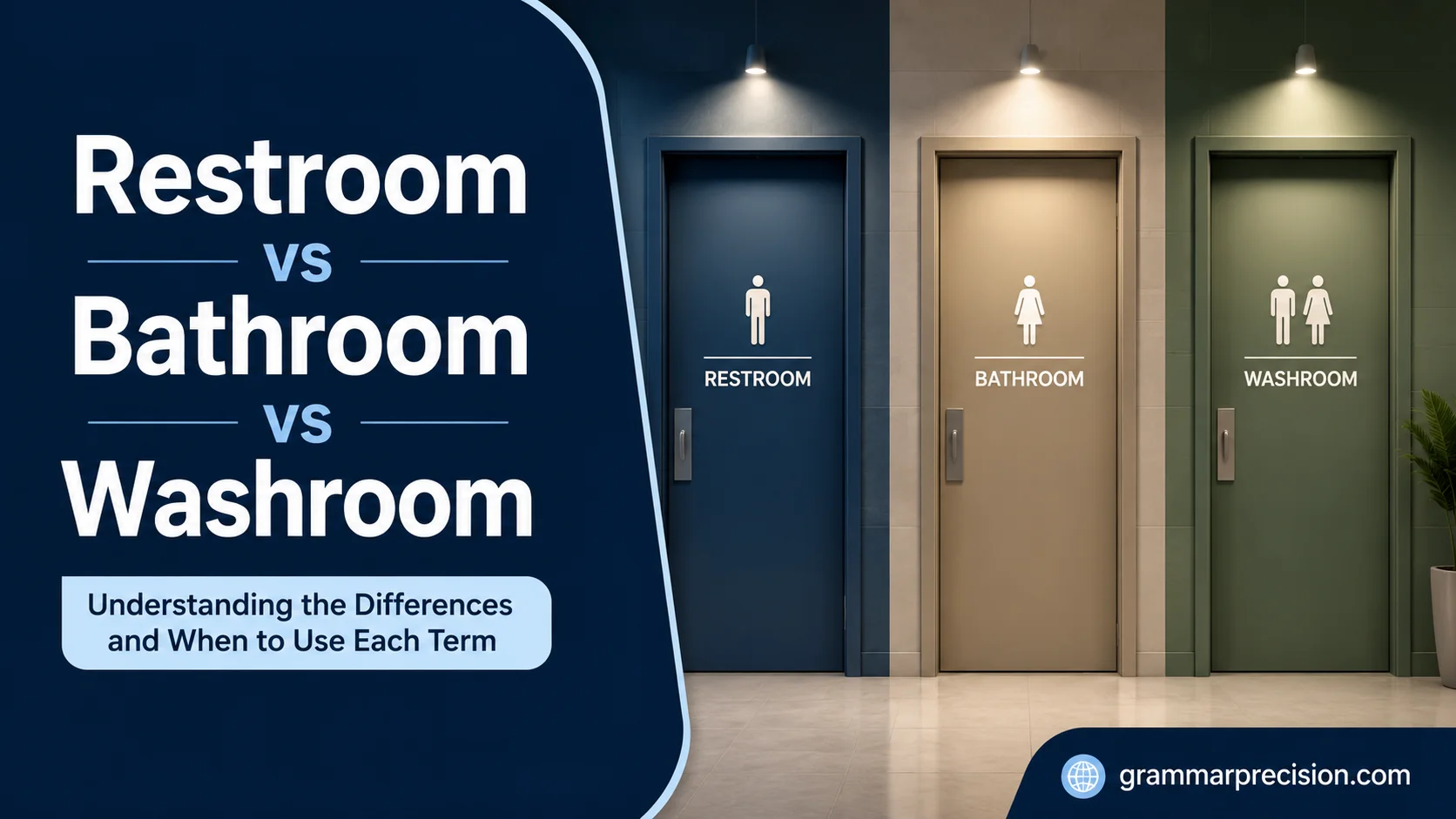
Restroom vs Bathroom vs Washroom shows how language changes across regions, where American English, British English, and Canadian usage create different meanings for public facilities and everyday hygiene spaces.
Many travellers feel confused by these terms because Restroom, Bathroom, and Washroom all describe similar personal hygiene facilities but differ in regional usage. In American English, a bathroom is used in homes, while restroom refers to public places like airports, malls, and offices. In Canada, washroom is the preferred term in both public settings and private settings, reflecting cultural norms, comfort, and proper etiquette in everyday communication.
From my experience, understanding these language differences reduces confusion when traveling across regions. In British English, people often use toilet, WC, or lavatory, which describe the function more directly. These words may sound formal or blunt to North American speakers, but all terms still represent spaces for cleanliness, hygiene, and respectful communication in daily life.
Restroom vs Bathroom vs Washroom: What the Difference Actually Means
Let’s get the basics straight first. These words often refer to the same type of place, but the context and region change everything.
Restroom
- Most common in the United States (public spaces)
- Used in restaurants, airports, malls, offices
- Sounds polite and formal
- Doesn’t necessarily imply a bathtub or shower
👉 Example:
“Excuse me, where is the restroom?”
Bathroom
- Common in homes and private spaces
- Implies a room with a bath or shower
- Also widely used in the US casually
- Less formal in public settings
👉 Example:
“I’m going to the bathroom.”
Washroom
- Most commonly used in Canada
- Found in public buildings and businesses
- Neutral and polite tone
- Rare in everyday American speech
👉 Example:
“The washroom is down the hall.”
Quick Comparison Table
| Term | Common Region | Formality Level | Typical Use Case | Implied Meaning |
| Restroom | USA | High | Public places | Toilet facility only |
| Bathroom | USA/UK | Medium | Home, casual public speech | Bath + toilet |
| Washroom | Canada | Medium High | Public buildings | Toilet facility only |
Why So Many Words Exist for the Same Thing
At first glance, it feels unnecessary. Why not just pick one word and stick with it?
The answer is surprisingly human: politeness, culture, and historical language evolution.
Language Softening (Euphemism Effect)
People often avoid direct words like “toilet” because they feel too blunt or informal in public conversation.
So instead, languages evolve softer alternatives:
- Restroom → implies rest and privacy
- Bathroom → implies hygiene and bathing
- Washroom → implies cleanliness
It’s not about accuracy. It’s about comfort.
Regional Differences: How English Changes Around the World
English is not the same everywhere. It shifts depending on country, culture, and even social class.
United States
- Restroom (public)
- Bathroom (home and casual)
- “Can I use the restroom?” is standard polite phrasing
Canada
- Washroom dominates public signage
- Bathroom still used in homes
United Kingdom
- Toilet is extremely common
- “Loo” is informal but widely used
- “Bathroom” used in homes
Australia
- Toilet is the most direct and common word
- Bathroom used at home
Asia and Middle East (English usage)
- Restroom is common in hotels and malls
- “Toilet” often used in signage
- Mixed usage depending on Western influence
What You Should Say When Traveling
This is where things get practical. The “right” word depends on where you are.
Safe universal phrases
If you don’t want to think too hard, use these:
- “Where is the restroom?”
- “Where is the bathroom?”
- “Where is the toilet?” (works in most countries, but can feel direct)
Best choices by situation
| Situation | Best Word to Use |
| Airport (USA) | Restroom |
| Hotel lobby | Restroom |
| Restaurant (US) | Restroom |
| Home (friend’s) | Bathroom |
| Canada | Washroom |
| UK pub | Toilet / Loo |
A Real World Travel Example
Imagine you land in New York for the first time.
You walk into a café and ask:
“Where is the toilet?”
People will understand you, but it may sound slightly abrupt.
Now compare:
“Excuse me, where is the restroom?”
That version fits local expectations better. It feels smoother, almost like matching the rhythm of the place.
Language is not just grammar it’s social tuning.
Why Businesses Care About These Words
You might not think much about signage, but companies do.
The word they choose affects:
- Customer comfort
- Brand image
- Cultural appropriateness
Examples in real life
- Airports often use “Restroom” (neutral, international friendly)
- Canadian malls use “Washroom”
- UK public spaces often say “Toilets”
Even global companies adjust based on location rather than using one universal label.
The Psychology Behind Each Term
Words shape perception more than we realize.
Restroom
- Feels clean and neutral
- Reduces embarrassment
- Common in professional environments
Bathroom
- Feels personal and home like
- Associated with privacy and routine
Washroom
- Feels functional and clean
- Very neutral and descriptive
Toilet
- Direct and literal
- Sometimes considered too blunt in formal settings
This is why airports avoid “toilet.” It feels too sharp for a high traffic international space.
Also Read This: Enamor vs Enamour
Common Mistakes English Learners Make
If English isn’t your first language, these slip ups are normal.
Mistake 1: Overusing “toilet” in formal settings
- Not wrong, but can sound too direct in US/Canada
Mistake 2: Using “bathroom” everywhere
- Works in the US, but confusing in countries where it means a room with a bath
Mistake 3: Translating from your native language too literally
- Many languages use one word for everything, but English splits it by context
Case Study: Airport Signage Around the World
Airports are the best place to see language strategy in action.
United States Airports
- “Restrooms”
- Clear gender icons
- Universally polite tone
UK Airports
- “Toilets”
- Simple and direct
Middle Eastern Airports
- Often bilingual signage
- “Restroom” or “Toilet” depending on English influence
Why airports choose carefully
Airports serve global travelers. A single wrong word could confuse millions of passengers every year.
So they pick terms that are:
- Simple
- Recognizable
- Culturally neutral
Modern Trends: Gender Neutral Restrooms and Language Change
Language doesn’t stay fixed. It evolves with society.
One major shift in recent years is gender neutral restroom labeling.
Common modern signage
- “Restroom”
- “All Gender Restroom”
- Icon only signs (no words at all)
Why this matters
- Inclusivity in public spaces
- Simpler international understanding
- Reduced language barriers
Icon based signage is becoming especially popular in airports and stadiums because it avoids translation issues completely.
Fun Linguistic Variations You Might Hear
English speakers love creativity when it comes to polite language.
Here are some fun alternatives:
- “Little boys’ room” (informal US humor)
- “Ladies’ room”
- “Gents”
- “Powder room” (fancy restaurants and homes)
- “Loo” (UK informal)
- “John” (old American slang)
These aren’t standard in formal communication, but you will hear them in casual speech.
SEO Insight: What People Actually Search Online
When people are confused, they turn to search engines.
Common search queries include:
- “restroom vs bathroom difference”
- “what is washroom meaning”
- “what to say instead of toilet in English”
- “bathroom vs restroom USA”
- “what do British people call bathroom”
This shows a clear pattern: users want contextual clarity, not dictionary definitions.
Practical Cheat Sheet for Everyday Use
If you forget everything else, remember this:
- In the US → say restroom in public places
- At home → say bathroom
- In Canada → say washroom
- In the UK → say toilet or loo
Simple. Clean. No confusion.
Why This Topic Actually Matters More Than You Think
It might look like a small vocabulary issue, but it touches bigger ideas:
- Cultural sensitivity
- Communication clarity
- Travel confidence
- Social etiquette
When you use the right word, you don’t just communicate you blend in naturally.
And that’s the real goal when you’re in a new place
FAQs:
What is the difference between Restroom, Bathroom, and Washroom?
The main difference is based on regional usage. Bathroom is common in American English for homes, restroom is used in public places, and washroom is preferred in Canada for both public and private settings.
Why do these terms cause confusion for travelers?
These terms cause confusion because of regional differences, cultural norms, and different language usage. A traveler may see different signs in airports, malls, or offices, which all refer to the same personal hygiene facilities.
Is Bathroom only used for rooms with a bathtub?
No, in American English, a bathroom does not always include a bathtub or shower. It is commonly used for any room with toilet facilities, especially inside homes.
What does Washroom mean in Canada?
In Canada, washroom is the most commonly used term for public restrooms and private hygiene spaces. It reflects cultural preferences and focuses on cleanliness and washing hands.
Are Restroom and Toilet the same thing?
Yes, both refer to public hygiene facilities, but restroom is more polite in North American English, while toilet, WC, or lavatory are often used in British English.
Conclusion:
Understanding the difference between Restroom, Bathroom, and Washroom improves your communication skills, cultural awareness, and language accuracy. Although these terms are often used interchangeably, their meaning changes based on region, audience, and language style.
Knowing the correct usage helps you sound more polite, clear, and confident in both formal and everyday situations.