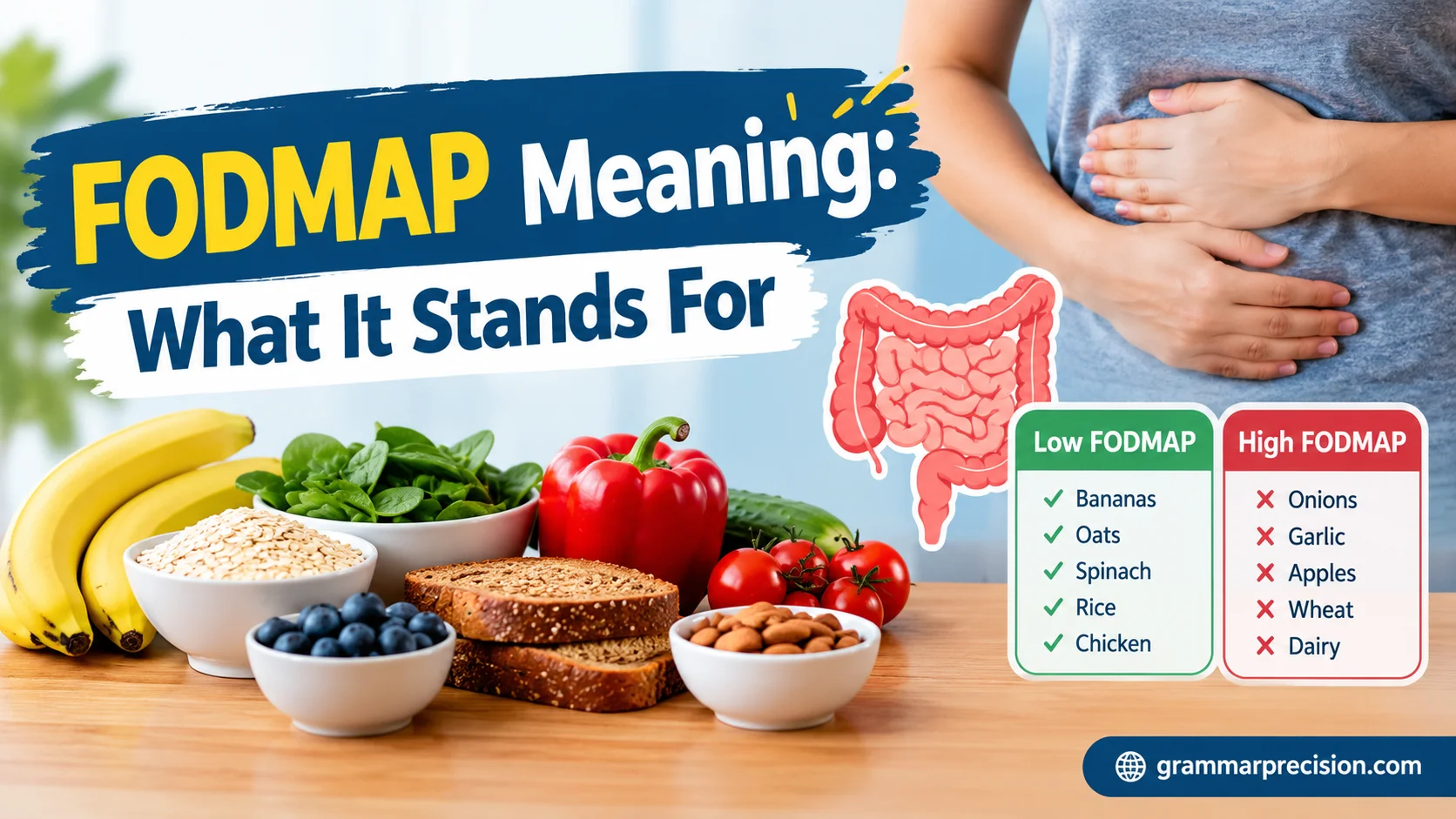
Have you ever experienced bloating, gas, or stomach discomfort after eating certain foods? Understanding FODMAP meaning can help explain why some everyday foods trigger digestive issues, especially for people with irritable bowel syndrome (IBS). FODMAP stands for Fermentable Oligosaccharides, Disaccharides, Monosaccharides, and Polyols—a group of short-chain carbohydrates that can be difficult for some people to digest. In this article, we’ll explore the definition of FODMAP, how these carbohydrates affect digestion, and why the low-FODMAP diet may help manage digestive symptoms.
Understanding FODMAP also highlights the importance of clear terminology and accurate explanations in health-related writing. Unlike abbreviations used in business communication, scheduling, time management, online booking, broadcasting, meetings, calendar management, or project management, FODMAP relates to nutrition and digestive health. We’ll explain common FODMAP foods, clarify the difference between high-FODMAP and low-FODMAP options, and answer frequently asked questions using accessible language. Whether you follow US or UK English conventions, this article prioritizes clear definitions, accurate terminology, and readability while keeping the information practical and easy to understand.
What Does FODMAP Mean?
FODMAP stands for Fermentable Oligosaccharides, Disaccharides, Monosaccharides, and Polyols. These are short-chain carbohydrates and related sugar alcohols found in a wide range of everyday foods.
Your small intestine absorbs many carbohydrates during digestion. However, certain FODMAPs resist complete absorption or digestion in some people. They can draw water into the intestine and travel to the large intestine, where gut bacteria ferment them and produce gas.
For people with sensitive digestive systems, these processes may contribute to bloating, abdominal pain, gas, diarrhea, or other bowel changes.
The term doesn’t mean that a food is unhealthy or dangerous. FODMAPs occur naturally in fruits, vegetables, grains, legumes, and dairy products. Many of these foods provide important vitamins, minerals, fiber, and other nutrients.
The key is understanding how your body responds to particular carbohydrates rather than avoiding every food that contains them.
What Does Each Letter in FODMAP Stand For?
Each part of the acronym describes a different carbohydrate group. Understanding these categories makes food labels and dietary advice easier to follow.
| Letter | Full term | Common examples |
| F | Fermentable | Carbohydrates fermented by gut bacteria |
| O | Oligosaccharides | Fructans and galacto-oligosaccharides (GOS) |
| D | Disaccharides | Lactose |
| M | Monosaccharides | Excess fructose |
| A | And | Connects the carbohydrate groups |
| P | Polyols | Sorbitol and mannitol |
The first four carbohydrate categories describe sugars and related carbohydrates based on their structure. Polyols are sugar alcohols that occur naturally in some foods and are also used in certain sweeteners.
Together, these groups form the term FODMAP, which researchers use when studying diet-related digestive symptoms.
What Does Fermentable Mean in FODMAP?
Fermentation happens when microorganisms, including gut bacteria, break down carbohydrates. During this process, bacteria produce gases such as hydrogen and carbon dioxide. Some people also produce methane through the activity of particular gut microbes.
This process is normal and occurs in healthy digestive systems. Problems may arise when gas production and water movement cause uncomfortable intestinal stretching, particularly in people with IBS who may have increased sensitivity to these changes.
For example, someone might eat a meal containing onions and beans and experience significant bloating a few hours later. Another person could eat the same meal without noticeable discomfort.
That difference helps explain why FODMAP tolerance is highly individual.
How Do FODMAPs Affect Your Digestive System?
FODMAPs affect digestion mainly through two processes: osmosis and fermentation. These processes help explain why certain foods trigger symptoms in people with sensitive digestive systems.
How FODMAPs Draw Water Into the Intestine
Some poorly absorbed carbohydrates attract water into the small intestine through osmosis. This extra water can affect the movement and consistency of intestinal contents.
For some people, the increased water content may contribute to loose stools or diarrhea. The effect depends on the type and quantity of carbohydrates consumed and the person’s digestive response.
How Gut Bacteria Produce Gas
When FODMAPs reach the large intestine, gut bacteria ferment them. This produces gases that increase the volume of intestinal contents.
Your body usually manages these gases through absorption and the passage of gas. However, excessive gas accumulation or heightened sensitivity to intestinal stretching can contribute to discomfort.
Common symptoms include:
- Bloating: A feeling of fullness or pressure in the abdomen.
- Abdominal pain: Cramping or discomfort that may change after a bowel movement.
- Gas: Increased flatulence or pressure caused by intestinal fermentation.
- Diarrhea: Loose or frequent stools in some individuals.
- Constipation: Changes in bowel habits that may occur alongside other IBS symptoms.
Not everyone experiences these symptoms after eating FODMAPs. The response depends on several factors, including gut sensitivity, intestinal movement, the food’s composition, and serving size.
Why People With IBS May React More Strongly
Irritable bowel syndrome, commonly called IBS, is a disorder of gut-brain interaction. It can affect bowel movements and cause recurring abdominal pain without necessarily producing visible structural damage to the digestive tract.
People with IBS may experience visceral hypersensitivity, which means they feel intestinal stretching or other sensations more intensely than some other people do.
Consequently, an ordinary amount of gas might cause little discomfort for one person but significant pain or bloating for someone with IBS.
FODMAPs don’t cause IBS itself. However, reducing certain FODMAPs may help some people manage symptoms associated with the condition.
High-FODMAP vs. Low-FODMAP Foods
Understanding the difference between high-FODMAP and low-FODMAP foods can make meal planning easier. However, these labels depend on the food’s type, serving size, and preparation.
A food may be suitable in a particular portion but less suitable in a larger serving. Therefore, avoid treating food lists as permanent rules that apply equally to everyone.
Common High-FODMAP Foods
High-FODMAP foods contain relatively large amounts of one or more fermentable carbohydrates in the serving being considered.
Examples include:
- Fruits: Apples, pears, and watermelon in portions that provide higher FODMAP amounts.
- Vegetables: Onions, garlic, and some varieties of cauliflower.
- Legumes: Certain servings of beans, chickpeas, and lentils.
- Dairy products: Regular milk and some soft dairy products containing lactose.
- Grains: Wheat- and rye-based foods, depending on their ingredients and serving sizes.
- Sweeteners: Products containing sorbitol, mannitol, or other relevant sugar alcohols.
These foods aren’t inherently unhealthy. Apples provide fiber, legumes supply plant-based protein, and milk contains nutrients such as calcium. The goal of FODMAP management is to identify individual triggers without unnecessarily eliminating nutritious foods.
Common Low-FODMAP Alternatives
Lower-FODMAP options can help people create balanced meals while investigating their symptoms.
| Food category | Examples of lower-FODMAP options |
| Fruits | Oranges, kiwi, and suitable portions of firm bananas |
| Vegetables | Carrots, spinach, and zucchini in appropriate servings |
| Grains | Rice, oats, and quinoa in suitable portions |
| Dairy | Lactose-free milk and suitable lactose-free yogurt |
| Protein | Eggs, plain meat, fish, and firm tofu |
| Drinks | Water and selected unsweetened beverages without high-FODMAP additives |
These examples are starting points, not a guarantee that every product or serving will suit every person. Recipes, ripeness, processing, and portion size can change a food’s FODMAP content.
For the most reliable food-specific guidance, use a current, research-based FODMAP food resource or consult a registered dietitian trained in this approach.
Does Portion Size Matter?
Absolutely. FODMAP content is dose-dependent, so the amount you eat can influence your digestive response.
Consider a person who tolerates a small serving of a particular fruit but develops bloating after eating several servings together. The larger amount may provide a greater combined FODMAP load.
This also explains why eating several individually suitable foods in large portions can sometimes create problems. Their combined carbohydrate content may exceed what the person comfortably tolerates.
Keep a food and symptom diary to track portions, meal timing, symptoms, and other possible triggers. Patterns over several days may prove more useful than judging a food after a single meal.
What Is a Low-FODMAP Diet?
A low-FODMAP diet is a structured dietary approach that reduces certain fermentable carbohydrates to help manage digestive symptoms, especially in people with IBS.
It isn’t intended to eliminate all carbohydrates or permanently remove every high-FODMAP food. Instead, the approach helps identify which foods and quantities a person can tolerate.
Dietitians commonly describe the process in three stages.
The Restriction Stage
During the first stage, you temporarily reduce high-FODMAP foods and replace them with suitable alternatives. This phase generally lasts around two to six weeks under appropriate guidance.
The aim is to determine whether reducing FODMAP intake improves your symptoms. You should continue eating a varied, nutritionally balanced diet rather than cutting out as many foods as possible.
If symptoms don’t improve, further restriction may not be helpful. A healthcare professional can help assess other possible explanations.
The Reintroduction Stage
Once symptoms improve, you systematically reintroduce individual FODMAP groups to assess your tolerance.
For example, a dietitian might guide you through testing foods associated with lactose, fructans, or excess fructose. You introduce a selected food in planned portions while monitoring your symptoms.
Testing one category at a time makes it easier to identify potential triggers. A structured approach also reduces the risk of blaming a food for symptoms caused by another meal or unrelated factor.
The Personalization Stage
The final stage builds a long-term eating pattern around your individual tolerance.
You may discover that you can eat small amounts of certain foods without discomfort while needing to limit others. You can then expand your food choices rather than continuing the initial restriction indefinitely.
The long-term goal is the least restrictive diet that manages your symptoms while maintaining good nutrition and quality of life.
How to Read Food Labels for FODMAP Ingredients
Food labels can help you identify ingredients that may contribute to your FODMAP intake. However, the ingredient list alone doesn’t always reveal the amount of a particular carbohydrate in a serving.
Ingredients Worth Checking
When shopping for packaged foods, pay attention to these ingredients:
- Lactose: May appear in milk powder, milk solids, and some dairy-based ingredients.
- Inulin and chicory root fiber: These ingredients can contain fructans.
- Honey and certain fruit concentrates: May contribute excess fructose, depending on the product.
- Sorbitol and mannitol: Sugar alcohols that can occur in foods or appear in sugar-free products.
- Wheat and rye ingredients: May contribute fructans, depending on the product and serving.
An ingredient’s presence doesn’t automatically mean the food will trigger symptoms. The quantity matters, and people have different tolerance levels.
A Simple Food-Label Example
Imagine you’re comparing two snack bars. One contains chicory root fiber and sorbitol, while the other uses ingredients that better fit your current dietary plan.
The first bar may provide more potential FODMAP triggers, depending on its formulation and serving size. However, you shouldn’t assume that the second bar is suitable without checking its ingredients and relevant food guidance.
Practical tip: Compare serving sizes as well as ingredient lists. A product may fit your needs in one portion but not another.
A Sample Day of Lower-FODMAP Meal Ideas
A lower-FODMAP day can include a variety of foods without making meals complicated. The following example illustrates one possible approach, but individual needs and suitable portions vary.
| Meal | Example | Helpful consideration |
| Breakfast | Oatmeal with kiwi | Choose portions that fit your dietary plan |
| Lunch | Rice with grilled chicken, carrots, and spinach | Check sauces and seasonings for onion or garlic |
| Snack | An orange with a suitable serving of nuts | Individual tolerance and portion size matter |
| Dinner | Baked fish, potatoes, and zucchini | Use suitable seasonings and balanced portions |
| Drinks | Water or an appropriate unsweetened beverage | Check added ingredients in packaged drinks |
This menu isn’t a complete personalized meal plan. Energy requirements, allergies, nutritional needs, and individual FODMAP tolerance can change which foods are appropriate.
You also don’t need to eat differently from everyone around you. Simple adjustments, such as using suitable seasonings or choosing lactose-free milk, can make familiar meals easier to manage.
Common FODMAP Myths You Should Know
Misunderstandings can make FODMAP management more restrictive than necessary. Knowing the facts helps you focus on what actually matters.
Myth: All FODMAPs Are Bad for You
Fact: FODMAPs aren’t inherently harmful. Many occur in nutritious foods that provide fiber, vitamins, minerals, and other beneficial compounds. People who tolerate these carbohydrates generally don’t need to avoid them.
Myth: Everyone With Bloating Needs a Low-FODMAP Diet
Fact: Bloating has many possible causes, including constipation, eating habits, food intolerances, and digestive conditions. A low-FODMAP diet may help some people with IBS, but it isn’t the right solution for every case.
Myth: Low FODMAP Means No Carbohydrates
Fact: The diet targets specific fermentable carbohydrates rather than eliminating all carbohydrates. Rice, potatoes, oats, and suitable fruits can remain part of a balanced eating pattern.
Myth: High-FODMAP Foods Must Be Avoided Forever
Fact: The initial restriction is temporary. Reintroduction helps identify personal tolerance so you can restore as many suitable foods as possible.
Myth: A Low-FODMAP Diet Is the Same as a Gluten-Free Diet
Fact: Gluten is a protein found in wheat, barley, and rye. FODMAPs are particular carbohydrates and sugar alcohols. Wheat products can contain both gluten and fructans, but these substances aren’t the same.
A person with celiac disease needs to avoid gluten, while someone managing IBS may need to investigate particular FODMAPs. Their dietary requirements can overlap, but one diet doesn’t automatically replace the other.
When Should You Talk to a Healthcare Professional?
If you regularly experience abdominal pain, bloating, diarrhea, or constipation, speak with a healthcare professional rather than assuming FODMAPs are responsible.
A clinician can evaluate your symptoms and consider conditions that may resemble IBS. A registered dietitian can also help you follow a low-FODMAP plan without sacrificing nutritional variety.
Seek prompt medical evaluation for warning signs such as blood in your stool, unexplained weight loss, persistent vomiting, anemia, or severe or worsening abdominal pain. These symptoms deserve attention rather than self-treatment through dietary restriction.
People with a history of restrictive eating, nutritional deficiencies, or complex dietary needs should seek professional guidance before attempting an elimination diet.
FAQs About FODMAP Meaning
What Does FODMAP Stand for in Simple Terms?
FODMAP stands for Fermentable Oligosaccharides, Disaccharides, Monosaccharides, and Polyols. These are certain carbohydrates and sugar alcohols that may be poorly absorbed and fermented in the digestive tract, potentially triggering symptoms in people with sensitive guts.
Are Eggs High in FODMAPs?
Plain eggs are naturally low in FODMAPs because they contain virtually no carbohydrates. However, added ingredients such as onion, garlic, or certain sauces can change the FODMAP content of an egg-based meal.
Can You Eat Fruit on a Low-FODMAP Diet?
Yes. Many fruits can fit into a low-FODMAP eating plan when you choose suitable varieties and portions. Oranges and kiwi are common examples. However, some fruits contain higher amounts of particular FODMAPs, so portion size and individual tolerance remain important.
How Long Should You Follow a Low-FODMAP Diet?
The initial restriction phase generally lasts around two to six weeks. If symptoms improve, you move toward systematic reintroduction and long-term personalization. Extended restriction without reintroduction isn’t the intended approach and may unnecessarily reduce dietary variety.
Can FODMAPs Cause IBS?
No. FODMAPs don’t cause IBS itself. However, these carbohydrates can trigger or worsen symptoms in some people who already have the condition. IBS involves complex interactions between the gut, nervous system, and other factors.
Is a Low-FODMAP Diet Healthy for Everyone?
No. Most people don’t need to restrict FODMAPs. The diet can help manage symptoms in selected individuals, particularly those with IBS, but unnecessary restriction may reduce fiber intake, limit food variety, and make eating more difficult.
Conclusion:
Understanding FODMAP meaning helps you recognize how certain carbohydrates can affect digestion and trigger symptoms like bloating, gas, and abdominal discomfort. Learning about high-FODMAP and low-FODMAP foods can help you make informed dietary choices and support better digestive health.
A low-FODMAP diet may help people with irritable bowel syndrome (IBS) manage digestive symptoms more effectively. However, individual food tolerances vary, so avoid unnecessary restrictions. Consult a qualified healthcare professional or registered dietitian before making major dietary changes. With the right guidance, you can identify trigger foods, improve comfort, and develop a balanced, sustainable eating plan that supports your overall well-being.