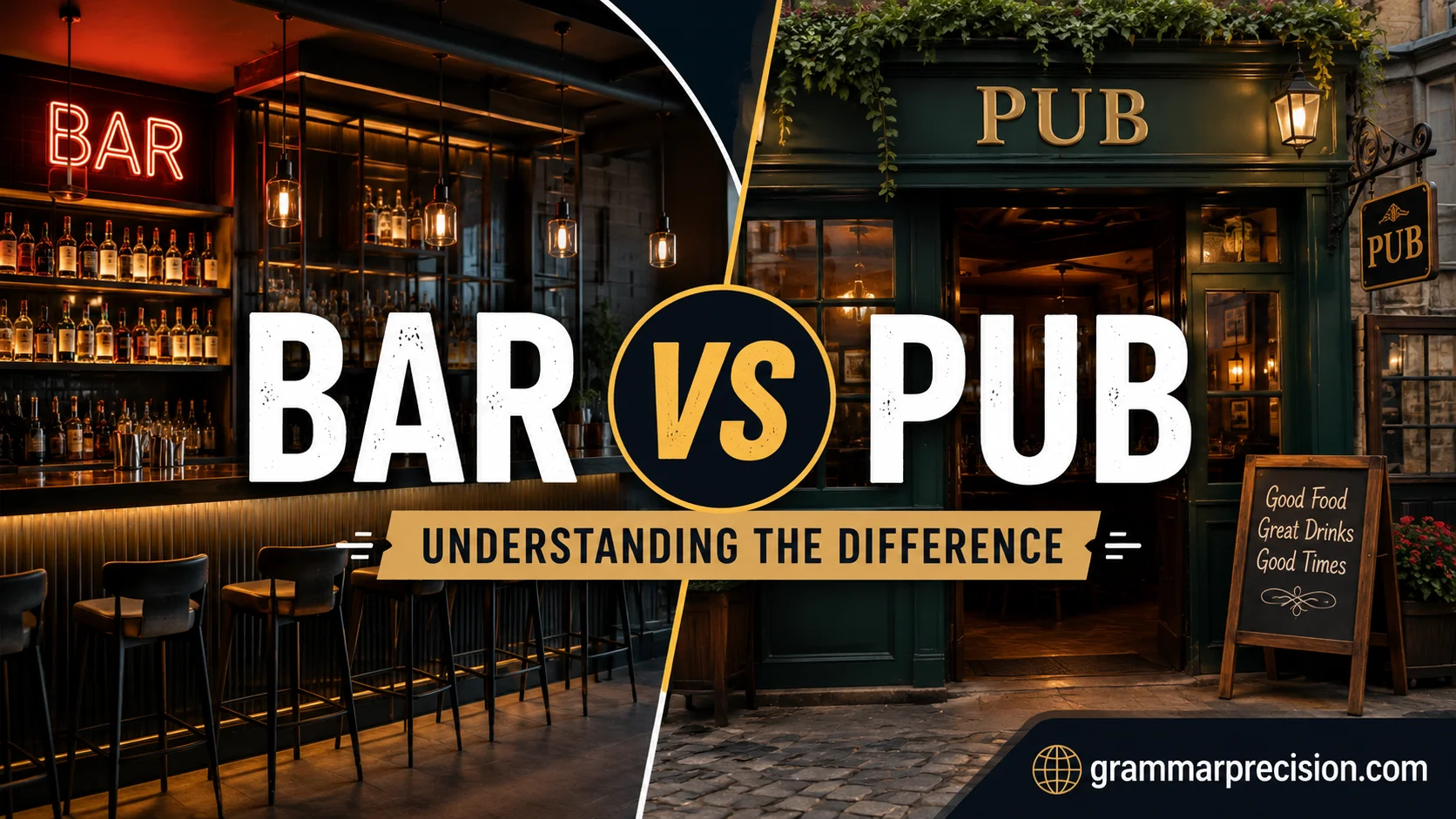
Discover Bar vs Pub differences through this guide to understand how these venues compare in terms of drinks, food, atmosphere, and social experiences while exploring their cultural and historical roots.
Both pubs and bars are establishments that are licensed to serve alcoholic beverages and often food. Their atmosphere creates a different experience for visitors because each venue has its own vibe and style. A pub often feels more relaxed and community-focused, while a bar usually offers a more energetic setting with modern drinks and entertainment.
Many people often don’t know the real difference between these places because the terms are used interchangeably. To explain this debate, we can compare their distinct characteristics and origins. Although they share similarities, their cultural and historical backgrounds show why this comparison still matters today and helps people choose the right social space for them.
Bar vs Pub: Quick Difference Explained
The simplest way to understand the difference is this:
| Feature | Bar | Pub |
| Main purpose | Drinks, entertainment, and nightlife | Drinks, food, and social connection |
| Origin | Commonly associated with American drinking culture | Originated from British and Irish traditions |
| Atmosphere | Often energetic, modern, or lively | Usually relaxed, comfortable, and community-focused |
| Popular drinks | Cocktails, spirits, wine, beer | Beer, ale, cider, and traditional drinks |
| Food options | Snacks or modern meals | Often serves full meals |
| Main customers | Friends, tourists, nightlife crowds | Local communities and regular visitors |
A bar usually focuses more on the drinking experience itself. People often visit bars for cocktails, music, parties, or entertainment.
A pub, short for public house, traditionally focuses on creating a welcoming place where people can eat, drink, and spend time together.
However, modern businesses often combine both ideas. A place can be called a pub while offering a nightclub atmosphere, or a bar can feel like a neighborhood meeting spot.
Bar Meaning: Definition, History, and Characteristics
What Is a Bar?
A bar is a place where alcoholic drinks are served, usually from a counter called a bar. The word can describe both the physical counter where drinks are prepared and the entire establishment.
For example:
- “We met at a bar after work.”
- “The bartender made a special cocktail.”
- “The hotel has a rooftop bar.”
The word bar has several meanings in English, but when discussing social places, it refers to a venue where people gather to purchase and consume drinks.
Modern bars can range from small neighborhood spots to luxury venues with professional mixologists, live music, and themed experiences.
The History of Bars
Bars have existed in different forms for centuries. Ancient civilizations had places where people gathered to drink, socialize, and exchange information.
However, the modern idea of a bar developed strongly in the United States. During the 19th century, American saloons became popular gathering places for workers, travelers, and communities.
Over time, saloons evolved into different types of bars, including:
- Cocktail bars
- Sports bars
- Wine bars
- Hotel bars
- Dive bars
- Rooftop bars
Each type created a different experience for customers.
For example, a sports bar focuses on watching games with friends, while a cocktail bar emphasizes carefully crafted drinks and a sophisticated atmosphere.
Types of Bars You Should Know
Bars are not all the same. Their purpose and atmosphere can vary greatly.
Cocktail Bar
A cocktail bar specializes in mixed drinks created by skilled bartenders.
Common features include:
- Creative drink menus
- Premium ingredients
- Professional bartenders
- Stylish environments
These places often attract people who enjoy unique flavors and a more refined experience.
Sports Bar
A sports bar combines drinking with entertainment.
Typical features include:
- Large television screens
- Sports broadcasts
- Casual seating
- Food menus
Many people visit sports bars to watch major events such as football games, basketball matches, or championships.
Wine Bar
A wine bar focuses mainly on wine and often offers:
- Wine tastings
- Cheese boards
- Small meals
- A quieter environment
These venues usually create a relaxed setting for conversation.
Dive Bar
A dive bar is usually a simple, casual drinking place.
Characteristics often include:
- Affordable drinks
- Local customers
- Informal atmosphere
- Long-time regular visitors
Although the name may sound negative, many dive bars have loyal communities and strong local identities.
Pub Meaning: Definition, History, and Cultural Importance
What Is a Pub?
A pub is a traditional drinking establishment that originated in Britain and Ireland. The word pub is short for public house, meaning a place open to the public.
Unlike many modern bars, pubs were designed as community spaces. People didn’t only visit to drink. They came to talk, eat, relax, and connect with others.
A traditional pub often feels like an extension of the neighborhood.
For example:
- “The villagers meet at the local pub every Friday.”
- “We stopped at a countryside pub for lunch.”
The word creates an image of comfort, familiarity, and social connection.
The History of Pubs
Pubs have deep roots in British history. Their development can be traced back hundreds of years when inns and alehouses provided travelers and locals with food, drinks, and shelter.
During medieval times, many communities relied on these places as important social centers.
Pubs served several roles:
- Meeting places
- Food providers
- Communication hubs
- Rest stops for travelers
In many villages, the local pub became one of the most important buildings because people gathered there to share news and build relationships.
A famous saying connected with pub culture is:
“The local pub is often the heart of the community.”
Although modern lifestyles have changed, many pubs still maintain this community-focused identity.
Common Features of Traditional Pubs
A traditional pub often includes:
- A relaxed atmosphere
- Comfortable seating
- Local customers
- Beer and ale selections
- Homemade-style food
- Friendly conversation
Many pubs also have unique characteristics such as:
- Historic buildings
- Fireplace areas
- Garden seating
- Local decorations
- Traditional names
Some pubs have existed for hundreds of years and have become cultural landmarks.
Types of Pubs Around the World
Traditional British Pub
A traditional British pub usually emphasizes:
- Local community
- Classic meals
- Beer and cider
- Conversation
Popular foods may include:
- Fish and chips
- Meat pies
- Sunday roast
- Sandwiches
Irish Pub
Irish pubs are famous worldwide for their welcoming atmosphere.
Common features include:
- Live traditional music
- Guinness or local beers
- Storytelling culture
- Friendly social interaction
Many cities outside Ireland have Irish-style pubs because the concept has become internationally popular.
Gastropub
A gastropub combines the traditional pub environment with high-quality restaurant food.
The term became popular when some pubs began offering:
- Chef-created meals
- Modern cuisine
- Premium ingredients
- Extensive drink menus
A gastropub shows how traditional pubs continue to evolve.
Bar vs Pub: Major Differences Explained
Although bars and pubs may look similar, several important differences separate them.
Atmosphere and Environment
The biggest difference between a bar and a pub is often the feeling you get when you enter.
A bar may feel:
- Energetic
- Fast-paced
- Entertainment-focused
- Trendy
People often visit bars for:
- Parties
- Dating
- Nightlife
- Music
A pub usually feels:
- Comfortable
- Familiar
- Relaxed
- Social
People often visit pubs for:
- Conversations
- Meals
- Meeting friends
- Spending several hours together
A simple comparison:
A bar is often where people go to enjoy the night. A pub is often where people go to enjoy the company.
Drinks: Bar vs Pub
Both places serve alcohol, but their drink cultures can differ.
Bars often specialize in:
- Cocktails
- Spirits
- Premium wines
- Creative beverages
Examples:
- Martini
- Margarita
- Mojito
- Whiskey cocktails
Pubs often specialize in:
- Beer
- Ale
- Cider
- Traditional drinks
Examples:
- Lager
- Stout
- Pale ale
- Local craft beer
Of course, many modern pubs now serve cocktails, and many bars offer traditional beers.
Also Read This: Sprang vs. Sprung: What’s the Difference?
Bar vs Pub: Food and Social Experience Differences
Food Options in Bars and Pubs
Another major difference between a bar and a pub is the role of food.
Traditionally, bars focused mainly on drinks. Food was often limited to simple snacks such as:
- Chips
- Nuts
- Pretzels
- Small appetizers
However, modern bars have changed significantly. Many now offer complete menus with:
- Burgers
- Pizza
- Seafood
- Small plates
- Desserts
A high-end bar may even compete with restaurants by offering carefully prepared dishes.
Pubs, on the other hand, have historically placed more importance on food. Many traditional pubs serve hearty meals designed for comfort and sharing.
Common pub foods include:
- Fish and chips
- Shepherd’s pie
- Roast dinners
- Sausages and mash
- Sandwiches
The idea behind pub food is simple: good meals create longer conversations and stronger connections.
Social Experience: Nightlife vs Community
The social purpose of bars and pubs often separates them the most.
A bar usually creates an environment where people come for an experience. The focus may be on:
- Music
- Dancing
- Meeting new people
- Celebrations
- Entertainment
For example, a group of coworkers might visit a bar after work to relax and enjoy drinks together.
A pub often creates a slower and more personal environment. People may visit the same pub for years, know the staff by name, and build relationships with other customers.
A regular pub visitor is sometimes called a local because the place becomes part of their everyday community.
Think of it this way:
- A bar can feel like a destination.
- A pub can feel like a second home.
Bar vs Pub Around the World
The meaning of these words changes depending on where you are.
Bar vs Pub in the United States
In American English, bar is a very common word. Americans often use it for many types of drinking establishments.
Examples:
- “Let’s go to a bar.”
- “There is a new bar downtown.”
- “The hotel has a bar.”
The word pub is less common and often creates a specific image of a British-style or Irish-style establishment.
A person in the United States may call a place a bar even if it serves food and has a relaxed atmosphere.
Bar vs Pub in the United Kingdom
In the UK, the word pub carries much stronger cultural meaning.
A pub is not simply a place that sells alcohol. It represents tradition, community, and social connection.
British people may visit pubs for:
- Lunch
- Dinner
- Sports events
- Family gatherings
- Casual meetings
The word “bar” in the UK often refers specifically to the counter where drinks are served inside a pub or hotel.
For example:
- “I’ll meet you at the pub.”
→ A social drinking and eating place. - “I’ll order another drink at the bar.”
→ The counter area.
Bar vs Pub in Ireland
Ireland has one of the world’s strongest pub cultures.
Irish pubs are famous for:
- Traditional music
- Storytelling
- Friendly conversations
- Community traditions
Many Irish pubs around the world try to recreate this atmosphere.
However, a modern Irish pub is not only about alcohol. It represents hospitality and connection.
Bar vs Pub vs Tavern vs Lounge: Understanding Similar Words
English has many words for places where people gather, and they are not always interchangeable.
| Word | Meaning | Common Characteristics |
| Bar | A place serving alcoholic drinks | Cocktails, nightlife, entertainment |
| Pub | Traditional public house | Food, drinks, community atmosphere |
| Tavern | Historic drinking establishment | Traditional or old-fashioned feeling |
| Lounge | Relaxed social venue | Comfortable seating and premium drinks |
| Club | Entertainment-focused venue | Music, dancing, memberships |
Understanding these differences helps you choose the right word in conversations.
For example:
- “We went to a club.”
→ You probably expect dancing and loud music. - “We went to a pub.”
→ You probably expect drinks, food, and conversation. - “We went to a cocktail bar.”
→ You probably expect specialty drinks.
How Native Speakers Use Bar and Pub Naturally
Many English learners understand the definitions but struggle with real-life usage.
Here are some examples:
Example One
Sentence: “Let’s grab a drink at the bar.”
This sounds natural because the speaker probably means a place focused on drinks and socializing.
Example Two
Sentence: “We had lunch at a small country pub.”
This works because pubs are strongly connected with meals and traditional settings.
Example Three
Sentence: “The hotel bar is open until midnight.”
Here, “bar” refers to a service area where guests buy drinks.
Example Four
Sentence: “Everyone in town knows the local pub.”
This highlights the community role of a pub.
Common Mistakes When Using Bar and Pub
Mistake: Thinking They Mean Exactly the Same Thing
Although both words describe drinking places, they create different impressions.
Calling a traditional British pub a “bar” may not always be wrong, but it removes some of the cultural meaning.
Mistake: Assuming Every Pub Looks Old-Fashioned
Modern pubs can be stylish and contemporary.
Many new pubs include:
- Modern designs
- Craft beer selections
- Luxury food menus
- Outdoor spaces
The word “pub” does not automatically mean old or outdated.
Mistake: Believing Bars Are Only for Alcohol
Today, many bars serve:
- Coffee
- Mocktails
- Food
- Desserts
Some people visit bars mainly for the atmosphere rather than drinking.
Interesting Facts About Bars and Pubs
Here are some facts that show how important these places are in different cultures:
- The word pub comes from “public house,” referring to a place open to ordinary people.
- British pub culture has existed for centuries.
- Many historic pubs in England are hundreds of years old.
- The modern cocktail bar became especially popular during the 19th and 20th centuries.
- Pubs often serve as important community spaces in rural areas.
- Bars have become major parts of nightlife culture in cities worldwide.
Case Study: How a Traditional Pub Became a Modern Social Space
Consider a small village pub in England.
Years ago, people mainly visited for:
- Local conversations
- Ale
- Community gatherings
As customer habits changed, the pub introduced:
- Better food
- Craft beverages
- Family-friendly dining
- Outdoor seating
The result? The pub remained traditional while adapting to modern expectations.
This example shows that the difference between a bar and pub is not fixed. Culture continues to shape how these places operate.
Bar vs Pub: Which One Should You Choose?
The best choice depends on what experience you want.
| If You Want… | Choose… |
| Cocktails and nightlife | Bar |
| A quiet conversation | Pub |
| Live music | Either, depending on the venue |
| A full meal | Pub or restaurant-style bar |
| Meeting locals | Pub |
| Dancing and entertainment | Bar |
| A traditional experience | Pub |
Neither option is better. They simply offer different experiences.
A person celebrating a birthday may prefer a lively bar, while someone wanting a relaxed evening with friends may enjoy a pub.
FAQs:
What is the main difference between a bar and a pub?
The main difference between a bar and a pub is their atmosphere and purpose. A pub usually focuses on a relaxed, community-based experience with food, conversation, and traditional drinks. A bar often provides a more energetic setting with entertainment, cocktails, and a modern vibe.
Are pubs and bars the same thing?
No, pubs and bars are not exactly the same, although people often use these terms interchangeably. Both are establishments that serve alcoholic beverages, but their culture, design, and overall experience can be different depending on location and traditions.
Do pubs serve food like bars?
Yes, many pubs serve food alongside drinks, and this is one of their key characteristics. Some bars also offer food, but they usually focus more on beverages, entertainment, and creating a lively social atmosphere.
Why are pubs considered more traditional than bars?
Pubs are often considered more traditional because of their historical and cultural origins. They have long been community gathering places where people meet, relax, and socialize. Bars generally developed with a stronger focus on nightlife, entertainment, and modern drinking experiences.
Which is better for a night out, a pub or a bar?
The better choice depends on your preference and the type of experience you want. A pub suits those looking for a casual and friendly environment, while a bar is better for people seeking music, energy, and a more exciting night out.
Conclusion:
Understanding the Bar vs Pub difference helps you choose the right place for your social plans. While both venues serve drinks and create enjoyable experiences, their atmosphere, history, and purpose make them unique. A pub offers a relaxed community feel, whereas a bar provides a livelier environment. Knowing these differences makes your next visit more enjoyable.