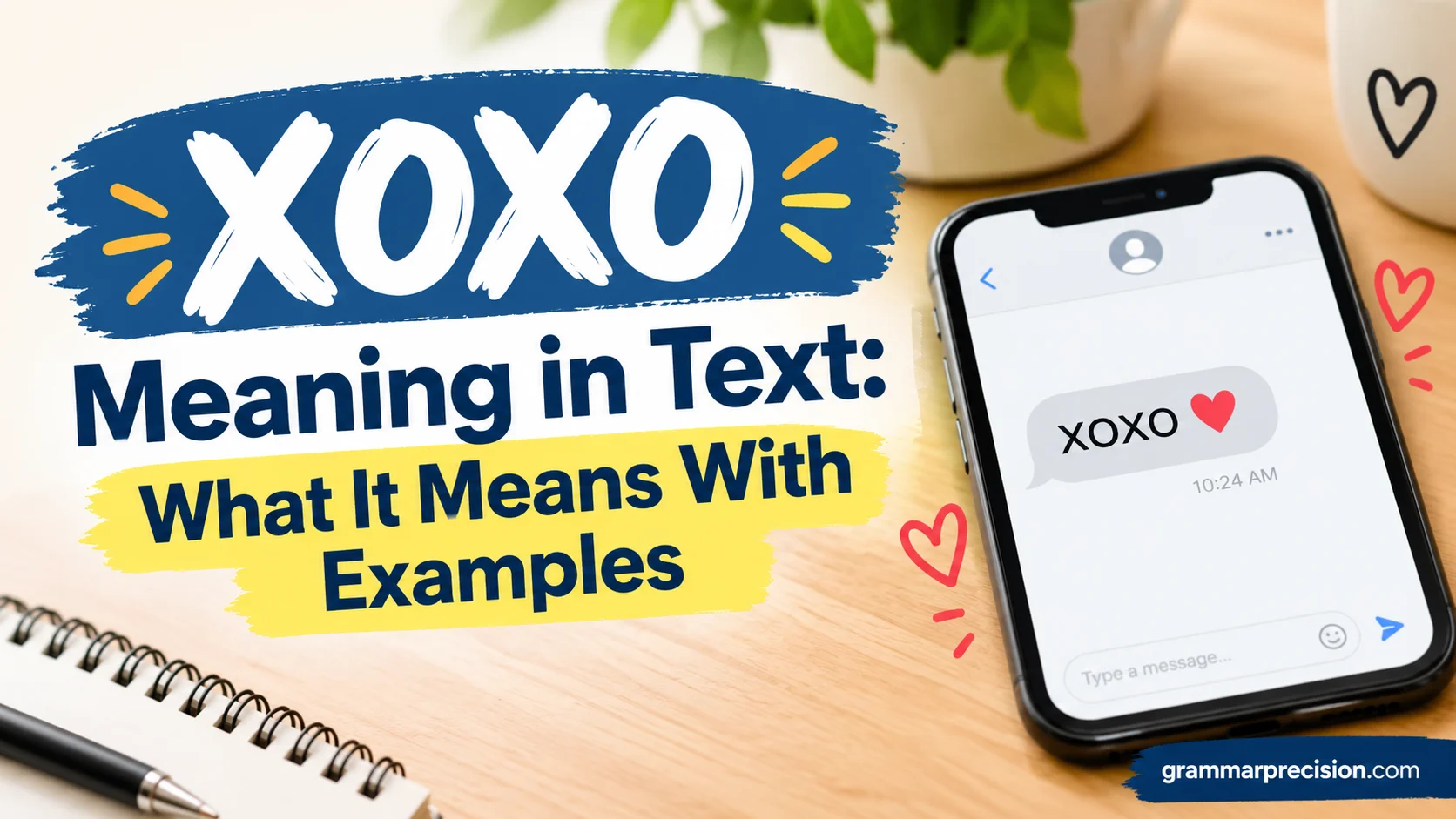
Have you ever received a text ending with “XOXO” and wondered whether the sender was being friendly, romantic, or playful? This little combination of letters appears in text messages, social media captions, and everyday conversations. Although it looks simple, its meaning can change depending on who sends it and how they use it.
The XOXO meaning in text is generally “hugs and kisses.” People use it to express affection, warmth, love, or friendliness. Sometimes it carries a romantic message, while other times it simply adds a sweet touch to a conversation. Understanding the context helps you interpret the message without reading too much into four familiar letters.
Quick Answer: What Does XOXO Mean in Text?
XOXO means “hugs and kisses” in text messages. The letter X traditionally represents a kiss, while O represents a hug. People commonly add XOXO to messages when they want to express affection, end a conversation warmly, or show someone they care.
For example:
- “Good night, XOXO!” means the sender wishes you a warm, affectionate good night.
- “Miss you! XOXO” expresses affection and possibly a desire to feel closer.
- “Thanks for everything, XOXO.” communicates gratitude with a personal touch.
- “Love you, XOXO!” adds hugs and kisses to an already affectionate message.
The important thing to remember is that XOXO doesn’t automatically mean romantic love. Friends, relatives, partners, and even casual acquaintances may use it differently.
What Does XOXO Stand For?
XOXO stands for hugs and kisses, a familiar expression of affection used in written communication. People often place it at the end of a message, much like a warm sign-off.
The expression combines two letters that have become widely associated with physical affection.
Why Does X Mean a Kiss?
The letter X has a long association with kisses in written communication. One historical explanation connects the symbol with signatures and marks used in documents, sometimes followed by a kiss as a sign of sincerity.
Over time, X became a familiar way to represent a kiss in letters and personal messages. Writing a single X can communicate affection, while several Xs may emphasize that feeling.
For example:
- “See you tomorrow x” adds a friendly, affectionate touch.
- “Miss you xx” expresses warmth and closeness.
- “Sending kisses xxx” makes the affectionate meaning more explicit.
The number of Xs doesn’t have a universal meaning. Some people use several out of habit, while others reserve them for close relationships.
Why Does O Represent a Hug?
The letter O is commonly associated with a hug in the expression XOXO. Its rounded shape can suggest arms wrapped around someone, although this explanation is more of a popular interpretation than a firmly established historical origin.
When combined, X and O create a simple pattern that represents affection through kisses and hugs.
For instance, a friend might write, “Feel better soon! XOXO,” to offer emotional comfort. A romantic partner might use the same expression to end a loving message.
How Did XOXO Become Popular?
People have used written symbols to express affection for generations. As personal letters, greeting cards, and informal notes became common, Xs gained a recognizable association with kisses.
The expression later found a natural home in digital communication. Text messaging, email, online chats, and social media made short expressions especially convenient.
Today, XOXO remains a familiar way to communicate affection without writing a lengthy message. It can sound sincere, playful, romantic, or simply friendly depending on the conversation.
What Does XOXO Mean From Different People?
The sender matters just as much as the expression itself. Four letters can communicate different feelings depending on your relationship, shared habits, and the surrounding conversation.
XOXO From a Romantic Partner
When your boyfriend, girlfriend, husband, or wife sends XOXO, it usually reinforces affection and closeness.
For example:
“Can’t wait to see you tonight. Love you, XOXO!”
Here, the expression adds warmth to a clearly romantic message. It can make an ordinary text feel more personal and loving.
Partners also use XOXO to maintain emotional closeness during busy days, long-distance relationships, or quick conversations between activities.
XOXO From Your Crush
Receiving XOXO from someone you like can feel exciting. However, it doesn’t automatically prove that your crush has romantic feelings for you.
Consider these two messages:
- “Thanks for helping me today, XOXO!”
- “I can’t stop thinking about you. XOXO 😘”
The first could be friendly gratitude. The second sounds more intimate because the surrounding words suggest romantic interest.
Pay attention to the overall conversation rather than relying on one expression.
XOXO Between Friends
Close friends often use XOXO to show appreciation, affection, or emotional support. In these situations, the expression doesn’t necessarily have a romantic meaning.
For example, your friend might text, “You’re the best! Thanks for listening, XOXO.”
The message communicates gratitude and closeness. It doesn’t suggest that the friendship must become something more.
XOXO From Family Members
Parents, siblings, grandparents, and other relatives may use XOXO to express love and care.
A parent might send, “Good luck on your exam tomorrow. You’ve got this! XOXO.”
Here, the expression adds reassurance and affection. Family members may also use it in birthday wishes, holiday greetings, and everyday check-ins.
XOXO From Someone You Barely Know
Sometimes, an acquaintance or new friend uses XOXO simply because they have an expressive communication style.
For example, someone might end a friendly birthday message with “Hope you have an amazing day! XOXO.”
This doesn’t necessarily indicate unusual closeness. Some people regularly use affectionate language, while others reserve it for their closest relationships.
The best interpretation comes from the sender’s usual communication style and your relationship with them.
Is XOXO Romantic or Just Friendly?
One of the most common questions about XOXO is whether it signals attraction. The answer depends on context, because the expression can communicate several kinds of affection.
Signs XOXO Might Be Romantic
XOXO may carry romantic meaning when it appears alongside other signs of personal interest.
Look for patterns such as:
- The sender regularly expresses interest in spending time alone with you.
- Their messages include sincere compliments or romantic language.
- They initiate conversations and show genuine interest in your life.
- They use affectionate expressions alongside clear signs of attraction.
- Their words and actions consistently suggest that they want a closer relationship.
For example, “I had such a great time with you tonight. I wish the evening lasted longer. XOXO ❤️” sounds more romantic than a casual thank-you.
Even so, no single text can confirm someone’s feelings with certainty.
Signs XOXO Is Probably Friendly
XOXO may be entirely platonic when the sender uses it with many people or communicates affection openly.
For instance, a friend who regularly writes “Love you, bestie! XOXO” may simply be expressing friendship.
Other clues include a casual conversation, an established friendship, or a consistent pattern of using affectionate sign-offs with relatives and friends.
Don’t assume romantic interest just because someone uses XOXO. Look at the bigger picture and respect the possibility that the sender means exactly what they wrote.
Why Context Matters More Than the Letters
Imagine receiving “Good night, XOXO” from two different people.
Your partner might use it as an intimate good-night message. Meanwhile, your longtime friend might use it as a familiar sign-off.
The words remain identical, but the relationships give them different meanings.
When interpreting XOXO, consider the conversation, the sender’s personality, your relationship, and the tone of previous messages. These details usually provide more insight than the abbreviation alone.
What Does XOXO Mean in Different Situations?
The same expression can take on different shades of meaning depending on where it appears and what comes before it.
| Text Message | Possible Meaning | Likely Tone |
| “Good night, XOXO” | Warm wishes before bed | Affectionate |
| “Miss you, XOXO” | Expressing that someone is missed | Loving or friendly |
| “Thank you so much, XOXO” | Appreciation and warmth | Friendly |
| “Happy birthday, XOXO!” | Celebrating someone with affection | Cheerful |
| “Take care, XOXO” | A caring goodbye | Warm |
| “Love you, XOXO” | Reinforcing affection | Romantic or familial |
| “You’re amazing, XOXO” | Showing appreciation | Friendly or flirty |
XOXO at the End of a Text Message
When XOXO appears at the end of a message, it often works as an affectionate sign-off.
Think of it as a warmer alternative to a simple “bye” or “talk later.” It adds a personal touch without requiring additional sentences.
For example, “I’ll call you tomorrow. Sleep well, XOXO” combines a practical message with affection.
XOXO in Good Morning and Good Night Texts
Good morning and good night messages often carry emotional significance because they help people maintain a sense of connection.
A partner might write, “Good morning, sweetheart! Hope you have a wonderful day. XOXO.”
A friend might send, “Sleep well! Talk tomorrow, XOXO.”
Both messages sound caring, but their relationship context determines the exact tone.
XOXO After a Compliment or Apology
After a compliment, XOXO can make the message feel sweeter or more playful.
For example: “You looked amazing today, XOXO!”
After an apology, it might communicate warmth or a desire to restore closeness: “I’m sorry about earlier. I hope we’re okay. XOXO.”
However, the expression doesn’t replace a sincere apology. Actions, accountability, and honest communication matter far more than an affectionate sign-off.
XOXO vs. XO vs. XX: What’s the Difference?
Although these expressions look similar, they aren’t always used in exactly the same way.
| Expression | Common Meaning | Typical Use |
| XOXO | Hugs and kisses | Affectionate messages and sign-offs |
| XO | Hugs and kisses | Short, casual expressions of affection |
| X | A kiss | Brief sign-off or affectionate message |
| XX | Two kisses | Warmth or affection, especially in informal messages |
| XOXOXO | Repeated hugs and kisses | Playful or emphatic affection |
These meanings aren’t strict rules. People often choose whichever form feels natural to them.
XOXO vs. XO
Both XOXO and XO commonly communicate hugs and kisses. XOXO spells out the alternating pattern, while XO offers a shorter version.
For example:
- “Thanks for everything, XO!”
- “Thanks for everything, XOXO!”
Both messages can express warmth and appreciation. The difference usually comes down to personal preference and texting style.
XOXO vs. XX
XX generally represents two kisses, especially in informal messages and some varieties of English-language texting.
XOXO explicitly combines the familiar symbols for hugs and kisses. XX, on the other hand, emphasizes kisses without the same alternating pattern.
Neither expression has a universal level of affection. One person might consider XX intimate, while another uses it casually.
Does XOXOXO Mean More Affection?
Writing XOXOXO can create a more playful or emphatic effect. Repeating the letters may suggest enthusiasm, excitement, or extra affection.
For example, “Happy birthday!! XOXOXO” feels more exuberant than a simple “Happy birthday, XO.”
Still, repetition doesn’t reliably measure someone’s feelings. Some people naturally use extra letters, while others prefer brief messages.
How to Reply to XOXO in a Text
Your response should match the relationship and the tone you want to communicate. You don’t have to mirror the sender’s exact expression.
Sweet Replies to XOXO
If you want to return the affection, try a warm and natural response.
- “Sending hugs right back!”
- “Aww, that’s so sweet!”
- “Lots of love to you, too!”
- “Hugs and kisses!”
- “You’re the sweetest. ❤️”
These responses work well with close friends, family members, and romantic partners, depending on the wording.
Flirty Replies to XOXO
If you like the sender and want to show interest, a playful reply can keep the conversation going.
- “Only hugs and kisses? 😉”
- “Saving those kisses for later!”
- “You’re making me smile.”
- “Guess I’ll have to return those in person.”
- “You’re pretty cute yourself. 😘”
Choose a response that reflects your genuine feelings. Flirting works best when both people feel comfortable.
Friendly Replies to XOXO
If you want to remain warm without suggesting romance, keep your response light.
- “You’re the best!”
- “Big hugs!”
- “Thanks, friend!”
- “Aww, appreciate you!”
- “Talk soon!”
Adding a word such as “friend” can help establish a platonic tone when necessary.
Funny Replies to XOXO
Humor can make a casual exchange more entertaining.
- “Hugs received. Kisses pending!”
- “Where’s the delivery confirmation?”
- “My virtual hug has officially arrived!”
- “Sending premium-grade hugs your way.”
- “Do virtual kisses count toward my daily allowance?”
Use these responses when you already share a playful rapport with the sender.
What If You Don’t Want to Encourage Flirting?
You can respond politely without matching the affectionate tone.
For example, “Thanks! Hope you have a great day, too” acknowledges the message while keeping things neutral.
You don’t owe anyone romantic language simply because they used XOXO. A friendly response is enough when you want to maintain a boundary.
When Should You Use XOXO?
XOXO works best when the relationship and situation support a warm, informal tone.
Consider using it in these situations:
- With romantic partners: Add affection to good-night messages, loving notes, and everyday check-ins.
- With close friends: Show appreciation, celebrate good news, or offer emotional support.
- With family: End birthday wishes, holiday greetings, and personal messages warmly.
- On social media: Add a friendly touch to captions or comments for people you know well.
- In personal emails: Use it when writing informally to someone with whom you share an affectionate relationship.
When Should You Avoid Using XOXO?
Although XOXO is common in casual communication, it doesn’t fit every setting.
Avoid it in formal business emails, professional correspondence with unfamiliar contacts, serious workplace discussions, and situations where affectionate language might confuse the recipient.
For example, “Please review the attached report. XOXO” would sound unusual in most professional settings.
A simple “Best regards,” “Thank you,” or “Best” usually works better.
When in doubt, match your sign-off to the relationship rather than forcing a casual expression into a formal conversation.
XOXO in Modern Digital Communication
XOXO appears across text messages, social media, and online conversations. Its basic meaning stays recognizable, but the platform and surrounding content can influence how people interpret it.
On Instagram, someone might add XOXO to a birthday caption or a photograph with friends. In WhatsApp messages, it may appear at the end of a personal conversation. On Snapchat, it can add a playful touch to a quick exchange.
Emojis can also affect the tone:
- XOXO ❤️ often emphasizes love or affection.
- XOXO 😘 may sound romantic, playful, or friendly.
- XOXO 😂 can make the message feel humorous.
- XOXO 🥰 often conveys warmth or fondness.
These interpretations are common rather than universal. The same emoji can mean different things to different people.
A Simple Case Study: Two Messages, Two Meanings
Consider two fictional conversations.
Conversation A
Mia texts her best friend: “Thanks for always being there for me. XOXO!”
Her message expresses gratitude and friendship. Their established relationship makes the affectionate tone easy to understand.
Conversation B
Mia texts someone she’s dating: “I loved spending time with you tonight. XOXO 😘”
This message sounds more romantic because the words, emoji, and relationship context reinforce one another.
The example illustrates an important point: XOXO doesn’t carry its entire meaning by itself. The surrounding message helps communicate the sender’s intentions.
FAQs About XOXO Meaning in Text
Does XOXO Mean Love?
XOXO expresses affection through the familiar idea of hugs and kisses. It can communicate romantic love, friendship, or family affection. The exact meaning depends on the relationship and context.
What Does XOXO Mean From a Girl?
When a girl sends XOXO, she may be expressing friendliness, affection, gratitude, or romantic interest. Her communication habits and the surrounding conversation offer better clues than the expression alone.
What Does XOXO Mean From a Guy?
A guy may use XOXO to express warmth, affection, or attraction. Some people use it casually with friends and relatives, while others reserve it for intimate relationships. Consider his usual texting style before drawing conclusions.
Is XOXO Flirty?
XOXO can sound flirty, especially when paired with compliments, romantic language, or a kissing emoji. However, many people use it platonically, so the expression alone doesn’t confirm romantic interest.
What Is the Difference Between XOXO and XO?
Both expressions commonly mean hugs and kisses. XOXO uses four letters to alternate between kisses and hugs, while XO provides a shorter version. Neither automatically communicates stronger affection.
Is XOXO Appropriate for Friends?
Yes. Friends often use XOXO to express affection, gratitude, or emotional support. It’s especially common among people who feel comfortable using warm, expressive language with one another.
How Should You Reply to XOXO?
Choose a response that matches your relationship and comfort level. You can send “Hugs right back,” reply with a playful message, or simply say “Thanks!” if you prefer a neutral tone.
Conclusion:
The XOXO meaning in text is simple: it commonly represents hugs and kisses, offering a warm way to express affection. People use it with romantic partners, friends, family members, and sometimes acquaintances. Its tone can range from playful and friendly to deeply affectionate.
When someone sends you XOXO, consider the relationship, surrounding message, and their usual communication style. Don’t assume the expression proves romantic interest, and don’t feel pressured to respond with the same level of affection. A thoughtful, natural reply is usually all you need.