Have you ever wondered what does PPE stand for when you see workers wearing hard hats, gloves, or safety glasses? The answer opens the door to a broader world of workplace safety and personal protection.
PPE means Personal Protective Equipment, but its role extends far beyond one definition. Whether you encounter the term during business communication, scheduling, meetings, project management, or formal writing, understanding its meaning helps you communicate with greater accuracy and consistency.
This guide explores the PPE meaning, full form, definition, types, examples, and everyday uses in clear detail. You’ll learn how PPE applies across healthcare, construction, manufacturing, laboratories, and other environments. Although terms and usage can vary between US and UK English, major style guides generally favor clarity and consistency.
You’ll also discover how PPE terminology appears in English usage, grammar, calendar planning, online booking, broadcasting, and professional communication, giving you useful context beyond the basic acronym.
What Does PPE Stand For?
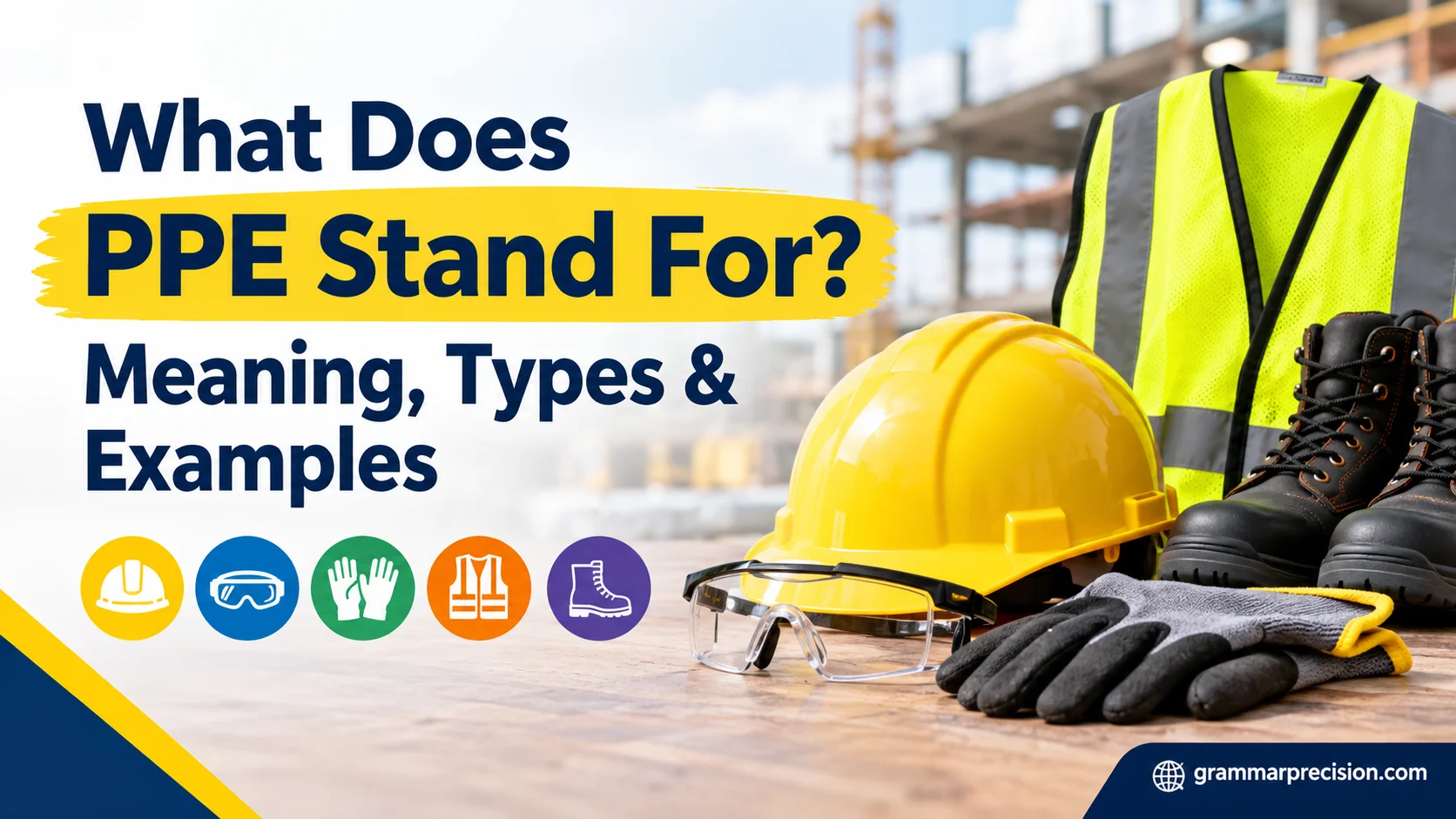
PPE stands for Personal Protective Equipment. The term describes equipment or clothing worn or used by a person to reduce exposure to hazards that could cause injury, illness, or other harm.
The three words each add an important piece of meaning:
- Personal: The equipment protects an individual user.
- Protective: Its purpose involves reducing exposure to a hazard.
- Equipment: It includes specialized items designed for a protective function.
For example, a pair of ordinary fashion sunglasses isn’t automatically PPE. Safety eyewear designed and selected for a workplace hazard serves a protective purpose and may meet applicable safety requirements.
What Is the PPE Definition in Simple English?
In simple terms, PPE is protective gear you wear or use when a hazard could harm you.
Imagine cutting material that can send small particles toward your eyes. Safety glasses provide a barrier between those particles and your eyes. Now imagine working around excessive noise. Hearing protection can reduce the amount of sound reaching your ears.
The key point is that PPE should match the hazard, not simply the job title.
Why Is PPE Important?
PPE matters because workers can encounter hazards even after employers apply other safety controls. A machine guard, ventilation system, safer process, or administrative rule may reduce risk. However, some exposure can remain.
That is where suitable PPE can provide another layer of protection.
PPE can help address hazards such as:
- Flying particles and impact hazards
- Chemical splashes
- Excessive workplace noise
- Dust and certain airborne contaminants
- Heat and cold
- Sharp objects
- Electrical hazards
- Biological exposure
- Falls from elevated work areas
However, PPE isn’t a magic force field. Poor fit, incorrect selection, damage, contamination, or improper use can reduce its protective value.
PPE Is the Last Line of Defense
Workplace safety commonly follows the hierarchy of controls, which prioritizes methods that control hazards closer to their source. Elimination and substitution generally come before engineering controls, administrative controls, and PPE.
For example, removing a hazardous chemical from a process can eliminate exposure entirely. Installing ventilation can reduce airborne exposure. Training and procedures can help workers follow safer methods. PPE can then provide personal protection against remaining exposure.
This distinction matters. If a company relies on gloves while ignoring a serious chemical hazard that could be eliminated through process changes, the gloves shouldn’t become an excuse to overlook better controls.
What Are the Main Types of PPE?
PPE comes in many forms. The appropriate category depends on what part of the body needs protection and what hazard exists.
Head Protection
Hard hats and other protective helmets can help protect the head from specified impacts, falling objects, and other hazards for which they are designed.
Construction crews, utility workers, and industrial employees may encounter overhead hazards. Some protective headgear also addresses electrical risks when specifically rated for them.
A helmet only works as intended when you use the correct type, maintain it properly, and replace it according to applicable requirements and manufacturer guidance.
Eye and Face Protection
Safety glasses, goggles, and face shields protect against different types of eye and facial hazards.
Safety glasses can help with flying particles. Goggles may provide a closer seal around the eyes for certain splash or particulate hazards. Face shields can protect more of the face, although they may need to be worn with other eye protection depending on the hazard.
Hearing Protection
Earplugs and earmuffs can reduce exposure to excessive noise.
The right choice depends on the noise level, frequency, duration of exposure, communication needs, and other workplace factors. Hearing protection shouldn’t become an afterthought around loud machinery.
Respiratory Protection
Respirators are designed to reduce exposure to particular airborne hazards when correctly selected, fitted, maintained, and used.
This category requires special care. A simple face covering isn’t automatically equivalent to a properly selected respirator. Different respirators address different hazards, and some situations require fit testing, medical evaluation, training, or a formal respiratory protection program.
Hand and Arm Protection
Gloves can protect hands from specific hazards, including cuts, abrasion, heat, chemicals, and biological materials.
No single glove protects against everything. A glove that handles mechanical work well may perform poorly against a particular chemical. Material compatibility, thickness, dexterity, and task duration all matter.
Protective Clothing
Coveralls, chemical-resistant suits, high-visibility garments, aprons, and other protective clothing can provide protection for the body.
High-visibility clothing, for instance, helps make workers more noticeable around moving vehicles or equipment. Chemical-resistant clothing serves a different purpose and must match the substances involved.
Foot Protection
Safety shoes and boots can help protect feet against hazards such as impact, compression, punctures, slips, and certain electrical risks when designed and rated for those hazards.
A steel toe alone doesn’t make a boot suitable for every workplace. You need to consider the actual exposure.
Fall Protection
Harnesses, lanyards, lifelines, and related equipment can form part of a personal fall-protection system.
Fall protection requires more than simply wearing a harness. Anchorage, compatibility, inspection, clearance, training, and rescue planning can all affect the system’s performance.
PPE by Hazard: Match the Gear to the Risk
One of the easiest ways to understand PPE is to start with the hazard instead of the equipment.
| Workplace hazard | Possible PPE | Key consideration |
| Flying particles | Safety glasses, goggles, face shield | Impact and facial exposure |
| Chemical splash | Chemical-resistant gloves, goggles, protective clothing | Chemical compatibility |
| Excessive noise | Earplugs, earmuffs | Exposure level and duration |
| Airborne contaminants | Appropriate respirator | Hazard identification and fit |
| Falling objects | Protective helmet, safety footwear | Impact protection |
| Sharp materials | Cut-resistant gloves, protective footwear | Cut and puncture risk |
| Vehicle traffic | High-visibility clothing | Worker visibility |
| Work at height | Fall-protection equipment | System compatibility and clearance |
| Extreme temperatures | Protective clothing, gloves | Heat or cold exposure |
The word “possible” matters here. PPE selection isn’t a universal shopping list. A qualified hazard assessment should determine what protection the task actually requires.
Where Is PPE Used?
PPE appears in industries with very different risks. The equipment changes because the hazards change.
PPE in Construction
Construction workers can face falling objects, dust, noise, sharp materials, moving equipment, electrical hazards, and falls. Common protective equipment may include hard hats, safety glasses, hearing protection, gloves, safety footwear, high-visibility clothing, and fall-protection systems.
PPE in Healthcare
Healthcare professionals may use gloves, gowns, eye protection, masks, or respirators depending on the task and exposure risk.
For example, handling blood or certain body fluids can create exposure concerns. Infection-control procedures determine what protective equipment is appropriate for the situation.
PPE in Manufacturing
Factories can expose workers to machinery, noise, chemicals, heat, sharp edges, and airborne particles. PPE might include hearing protection, safety eyewear, gloves, protective clothing, respiratory protection, or specialized footwear.
PPE in Laboratories
Laboratory PPE can include coats, gloves, safety glasses, goggles, and face protection. The specific combination depends on the materials, procedures, and potential exposure routes involved.
PPE in Agriculture and Outdoor Work
Agricultural work can involve pesticides, dust, machinery, animals, heat, and other hazards. Protective gloves, eyewear, respiratory protection, protective clothing, and suitable footwear may be used according to the task and product requirements.
PPE vs. Safety Equipment: Are They the Same?
The terms overlap, but they aren’t always identical.
PPE generally refers to equipment worn or used by an individual for personal protection. Safety equipment is a broader phrase that can include PPE as well as devices that protect groups of people or control hazards at the source.
For example, safety glasses are PPE. A machine guard is safety equipment, but it isn’t normally considered PPE because the worker doesn’t wear it.
That difference becomes important when discussing workplace safety programs. Personal protection is only one part of hazard control.
PPE Selection: How Do You Choose the Right Protection?
Choosing PPE should begin with a hazard assessment.
Start by identifying what could cause harm. Then consider how the worker could be exposed. Is the hazard airborne? Could it strike the body? Can it splash, cut, burn, crush, or overwhelm hearing?
A practical selection process looks like this:
- Identify the hazard.
- Determine the exposure route.
- Choose equipment designed for that hazard.
- Check fit, size, and comfort.
- Confirm compatibility with other PPE.
- Train the user.
- Inspect and maintain the equipment.
Comfort deserves attention. If equipment constantly slips, pinches, fogs, or interferes with a task, workers may be tempted to adjust or remove it. Good selection balances protection with proper fit and practical use.
Also Read This: What Does .com Stand For? Everything You Need to Know
Common PPE Mistakes
Even good protective equipment can fail to protect properly when people use it incorrectly.
Wearing the Wrong PPE
A general-purpose glove may look protective while offering little defense against a particular chemical or cut hazard.
Ignoring Fit
Oversized gloves, poorly fitted respirators, loose eyewear, or badly adjusted head protection can interfere with protection.
Using Damaged Equipment
Cracked lenses, torn gloves, damaged straps, worn harness components, or compromised protective clothing can affect performance.
Treating PPE as Optional
A task that takes five minutes can still create a serious exposure. Duration matters, but a short task isn’t automatically a safe task.
Mixing Incompatible Equipment
Some PPE items can interfere with others. For example, eyewear, respirators, hearing protection, and helmets may need to work together without creating gaps or discomfort.
How Should PPE Be Maintained?
PPE needs care after you select it.
Inspect equipment before use according to workplace procedures and manufacturer instructions. Look for cracks, tears, deformation, contamination, missing components, or other signs of damage.
Clean reusable equipment appropriately. Store it where heat, moisture, chemicals, sunlight, or physical damage won’t compromise it.
Replacement timing varies by equipment type. Don’t assume an item remains safe simply because it looks acceptable. Follow the manufacturer’s instructions and applicable workplace requirements.
PPE Standards and Workplace Requirements
Different industries and jurisdictions use specific safety standards for PPE. In the United States, OSHA establishes workplace safety requirements, while organizations such as ANSI develop voluntary consensus standards that cover many types of protective equipment.
The important point is that “PPE” isn’t one universal certification. A hard hat, respirator, safety shoe, and protective glove can have different performance requirements.
Employers should identify applicable requirements for the hazards and workplace. Workers should also receive appropriate instruction on selection, use, limitations, care, and disposal.
A Quick PPE Case Study
Imagine a worker cutting concrete indoors. The task creates dust, noise, and flying particles.
Choosing only gloves would miss several hazards. A better assessment would examine eye protection, hearing protection, respiratory protection, footwear, and other controls.
Next, the workplace could consider engineering controls such as wet methods or local exhaust ventilation. Administrative measures could further reduce exposure. PPE then adds personal protection for hazards that remain.
This example illustrates a central safety principle: PPE selection starts with the hazard assessment, not the equipment cabinet.
PPE Myths You Shouldn’t Believe
“More PPE Always Means More Safety”
Not necessarily. Excessive or incompatible PPE can interfere with movement, visibility, communication, or other protective measures.
“All Gloves Protect Against Chemicals”
They don’t. Chemical resistance varies by glove material and substance.
“A Mask and Respirator Are the Same”
They aren’t interchangeable terms. Respirators are specifically designed and regulated for particular forms of respiratory protection.
“PPE Prevents Every Accident”
PPE reduces exposure to particular hazards. It doesn’t eliminate the hazard itself.
“If It Looks Fine, It Must Be Fine”
Appearance isn’t a complete inspection. Follow equipment-specific inspection and replacement requirements.
PPE in Everyday Life
The idea behind PPE extends beyond formal workplaces.
A cyclist’s helmet, a person’s protective eyewear during home renovation, or gloves used for certain chemical-cleaning tasks can serve protective functions. Whether a particular item legally qualifies as workplace PPE depends on the setting, purpose, and applicable requirements.
PPE Quick-Check Checklist
Before beginning a task, ask yourself:
- What hazards are present?
- How could exposure happen?
- Can the hazard be eliminated or reduced first?
- What PPE matches the remaining risk?
- Does each item fit correctly?
- Can the PPE work together without interference?
- Is every item clean and undamaged?
- Do you know its limitations?
- Do you know when to replace or dispose of it?
These questions turn PPE from a vague safety slogan into a practical decision process.
FAQs About PPE
What does PPE stand for?
PPE stands for Personal Protective Equipment. It refers to equipment or clothing used to reduce a person’s exposure to specific hazards that could cause injury or illness.
What is an example of PPE?
Common PPE examples include hard hats, safety glasses, gloves, hearing protection, respirators, safety footwear, protective clothing, and fall-protection equipment.
Why is PPE important?
PPE provides a personal layer of protection against hazards that remain after other safety controls are considered. Its effectiveness depends on correct selection, fit, use, inspection, maintenance, and training.
Is PPE only used at work?
No. Protective equipment can also appear during activities such as cycling, home improvement, laboratory work, and certain recreational tasks. Workplace PPE requirements depend on the specific hazards and applicable rules.
What are the main categories of PPE?
Major categories include head, eye and face, hearing, respiratory, hand and arm, body, foot, and fall protection. The exact equipment depends on the hazard and task.
Conclusion:
Now that you know what PPE stands for, the bigger picture becomes clear. Personal Protective Equipment includes specialized gear that helps reduce exposure to workplace and task-specific hazards.
From hard hats and safety glasses to respirators and fall-protection systems, each item serves a particular purpose. The smartest approach isn’t to wear the most equipment possible. It’s to identify the hazard, control it where possible, and select suitable PPE for the remaining risk.
Good PPE programs combine the right equipment with proper fit, training, inspection, maintenance, and safe work practices. Once you understand that principle, PPE stops looking like a collection of random safety gear and starts making sense as one part of a complete protection strategy.