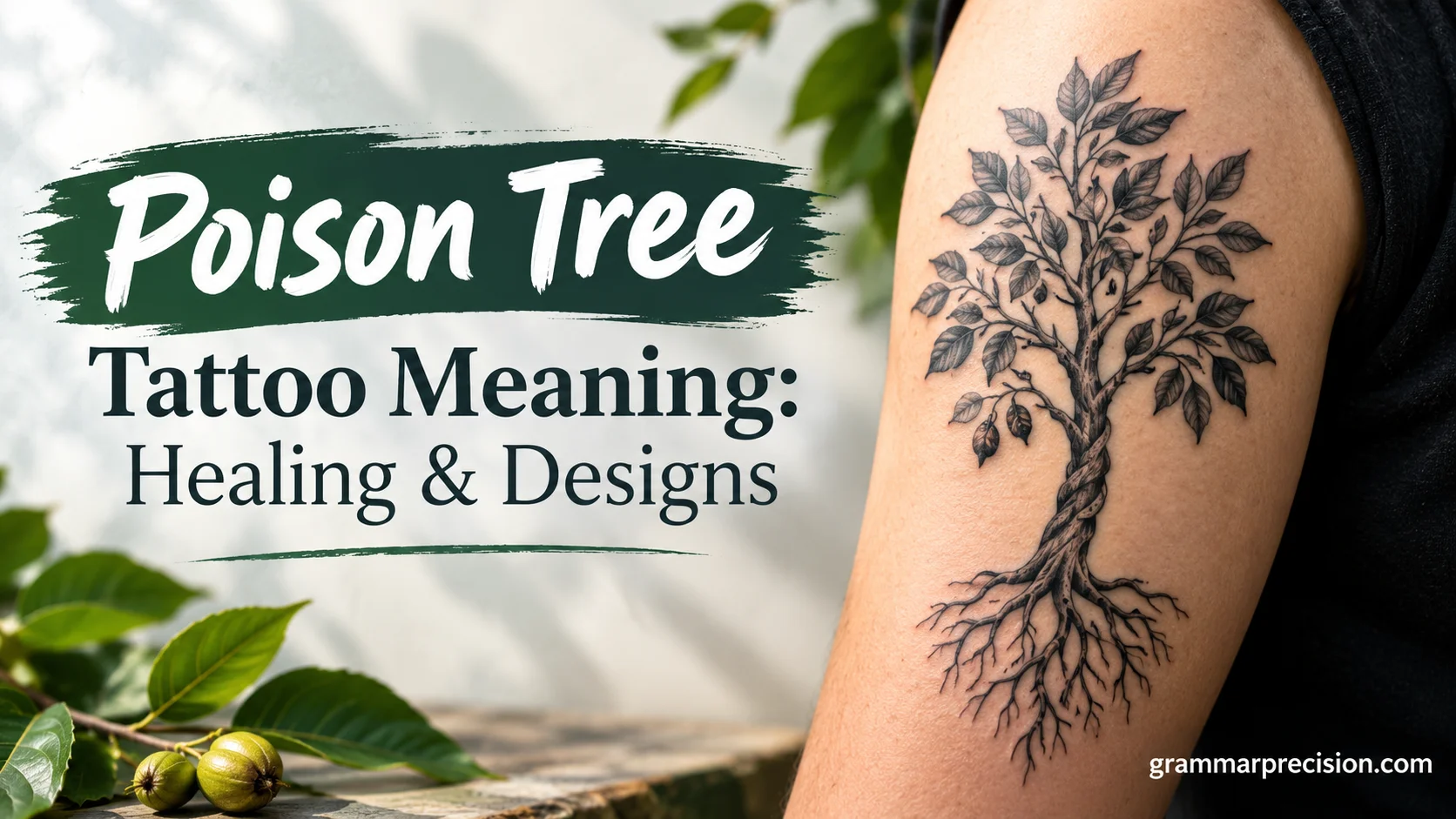
What does a tree hiding poisonous fruit really say about the person wearing it? The Poison Tree Tattoo Meaning goes far beyond dark aesthetics, often representing suppressed anger, betrayal, emotional pain, hidden resentment, consequences, and personal growth. Inspired strongly by William Blake’s A Poison Tree, this striking symbol turns complicated emotions into visual storytelling. Whether you’re researching tattoo symbolism, planning a meaningful design, or exploring literary imagery, understanding its roots makes the artwork far more compelling.
In this guide, you’ll discover poison tree symbolism, the meaning of apples, roots, branches, thorns, colors, and popular tattoo designs. You’ll also explore placement ideas and ways to create a deeply personal concept. Although terms like scheduling, time management, business communication, online booking, broadcasting, meetings, calendar, and project management belong to different contexts, English usage, grammar, formal writing, and consistency still shape how symbolic phrases communicate meaning. Regional style guides also differ between US and UK English, especially in spelling and punctuation. By the end, you’ll understand how this haunting symbol can represent both pain and transformation without reducing its meaning to a single interpretation.
What Does a Poison Tree Tattoo Mean?
At its heart, a poison tree tattoo represents an emotion or experience that grows beneath the surface. Anger provides the clearest interpretation, but it isn’t the only one.
The image can represent feelings that someone couldn’t express at the time. Those emotions might include resentment, grief, jealousy, betrayal, loneliness, or disappointment. The tree becomes a visual record of something that took root internally.
William Blake’s poem gives this interpretation its strongest foundation. The speaker says that anger toward a friend ended after he expressed it. His anger toward an enemy, however, grew because he kept it hidden.
That contrast creates several common meanings:
- Suppressed anger
- Unresolved resentment
- Emotional pain
- Betrayal and broken trust
- Secrets and deception
- Revenge
- Consequences
- Emotional survival
- Self-awareness
- Healing and transformation
Importantly, a poison tree tattoo doesn’t automatically mean that the wearer is angry or vengeful. Tattoos often preserve a chapter of someone’s life rather than describe their personality.
The Story Behind the Poison Tree Tattoo
To understand the symbol fully, you need to look at its literary roots.
William Blake published “A Poison Tree” as part of Songs of Experience in 1794. The collection explored darker emotional and social realities than Songs of Innocence. The poem uses an extended metaphor in which hidden anger becomes a growing tree.
The opening establishes a striking comparison. The speaker becomes angry with a friend and communicates the feeling. His anger ends. When he becomes angry with a foe, he remains silent, and the anger grows instead.
From there, the emotional process becomes gardening imagery.
The speaker feeds his anger with fear and tears. He also gives it false smiles and deceptive behavior. Eventually, the tree produces a bright apple that attracts his enemy. The poem ends with the foe lying beneath the tree.
This is what makes the image so powerful for tattoo art. A simple tree can carry an entire emotional narrative.
The Poison Tree as an Emotional Metaphor
Think of the tree as a timeline.
Pain → silence → resentment → growth → consequences → realization
The roots represent where the emotion began. The trunk represents everything that happened afterward. Branches show how the feeling spread into different parts of life. The fruit represents what eventually came from it.
That makes the design more than decorative. Every part can tell part of a story.
Why Does the Poison Tree Represent Suppressed Anger?
Anger is one of the strongest meanings associated with the poison tree.
Blake’s poem doesn’t portray anger as something that automatically becomes destructive. Instead, it contrasts communicated anger with nursed anger. The speaker’s openly expressed anger disappears, while his concealed anger becomes stronger.
That distinction matters.
A poison tree tattoo can therefore symbolize a period when someone swallowed their feelings instead of addressing them. Perhaps they stayed quiet during a difficult relationship. Maybe they couldn’t confront someone who hurt them. Perhaps circumstances forced them to hide what they really felt.
The tree then represents the emotional aftermath.
It says, in visual form:
What you bury doesn’t always disappear. Sometimes it grows.
This interpretation can also make the tattoo a reminder rather than a celebration of anger. The wearer may be acknowledging what happened while choosing not to repeat the same pattern.
Poison Tree Tattoo Symbolism Explained
Different people attach different meanings to the same imagery. Still, several interpretations appear repeatedly.
Anger and Resentment
The most direct interpretation is unresolved anger.
The tree represents resentment that continues growing because nobody addressed its roots. Dark branches and sharp silhouettes can emphasize this idea.
Betrayal
A poison tree can represent betrayal because betrayal often creates emotions that remain difficult to express.
A person may feel hurt while pretending everything is fine. The contrast between a beautiful exterior and poisonous interior fits this experience remarkably well.
Emotional Pain
The tree can also symbolize invisible suffering.
Roots remain underground, just as emotional wounds can remain hidden from everyone else. A beautiful tree above the soil may conceal an extensive underground system.
Secrets and Deception
Blake’s poem specifically connects the tree’s growth with deceptive smiles and hidden intentions.
For that reason, a poison tree tattoo may represent a secret that shaped someone’s life.
Revenge and Consequences
The final scene introduces a darker interpretation.
The speaker takes satisfaction in finding his foe beneath the tree. The ending can therefore symbolize revenge, retaliation, or the destructive consequences of nurturing hatred.
Growth and Transformation
Not every interpretation needs to remain dark.
A tree naturally represents growth. A poison tree can therefore symbolize growing through painful experiences. The poisonous part may represent the past rather than the person’s present identity.
That creates an interesting contrast: something painful produced something meaningful.
What Do the Roots, Trunk, Branches, Leaves, and Fruit Mean?
One advantage of tree tattoos is their layered symbolism. You can assign meaning to nearly every component.
| Tattoo element | Possible meaning |
| Roots | Origins, childhood experiences, hidden pain |
| Trunk | Strength, endurance, life journey |
| Branches | Choices, relationships, emotional consequences |
| Leaves | Change, memory, passing time |
| Thorns | Defense, betrayal, emotional boundaries |
| Fruit | Consequences, temptation, hidden danger |
| Dead branches | Loss, grief, emotional exhaustion |
| New growth | Healing, renewal, personal transformation |
| Exposed roots | Confronting the past |
| Twisted trunk | Inner conflict or a complicated life journey |
This approach lets you personalize the tattoo instead of copying a generic design.
What Does the Apple Mean in a Poison Tree Tattoo?
The apple is arguably the most recognizable detail from Blake’s poem.
The speaker’s tree eventually produces “an apple bright.” The fruit attracts his foe, who enters the garden at night and is later found beneath the tree.
The apple can therefore represent temptation, attraction, consequence, or danger disguised as beauty.
Its appearance matters too. A bright red apple against a dark tree creates immediate visual tension. It looks inviting while carrying a threatening meaning.
Some interpretations also connect the apple imagery with the biblical Garden of Eden. Blake frequently drew on biblical imagery, although interpretations of the poem’s exact religious symbolism vary.
For a tattoo, the apple can become the focal point.
A person might use it to symbolize:
- A tempting but harmful relationship
- A secret that became dangerous
- Revenge disguised as opportunity
- A difficult choice
- The consequences of past actions
- Something beautiful with a darker history
Poison Tree Tattoo Designs and Their Meanings
The visual style can completely change the emotional tone.
Minimalist Poison Tree Tattoo
A minimalist design might use thin branches, a small trunk, and one simple fruit.
This style works well when you want private symbolism rather than dramatic imagery. The meaning stays hidden unless someone understands the reference.
Gothic Poison Tree Tattoo
Gothic designs often feature twisted branches, dark shading, ravens, skulls, or dramatic backgrounds.
This approach emphasizes mortality, darkness, grief, and inner conflict.
Poison Apple Tree Tattoo
Adding a prominent apple makes the Blake connection easier to recognize.
The apple can become the centerpiece while the tree remains relatively simple.
Poison Tree With Exposed Roots
Exposed roots create a powerful visual metaphor.
They can represent confronting the past rather than hiding it. You can even incorporate small symbols into the roots, such as initials, dates, or objects connected to a specific memory.
Poison Tree With Flowers
Flowers introduce an unexpected contrast.
A dark tree surrounded by flowers can represent healing after suffering. The poisonous tree remains part of the story, but new life appears around it.
Poison Tree With a Snake
A snake can introduce themes of temptation, danger, transformation, or deception.
Because the apple already carries biblical associations for many viewers, adding a snake can make the symbolism even more layered.
Half-Dead, Half-Blooming Poison Tree
This design offers one of the clearest representations of personal transformation.
One side looks damaged while the other side produces fresh leaves or flowers. The message becomes simple:
The past hurt me, but it didn’t stop me from growing.
Poison Tree Tattoo Color Meanings
Color can change the message dramatically.
| Color or style | Common symbolic effect |
| Black and gray | Mystery, grief, darkness, memory |
| Red | Anger, passion, danger, revenge |
| Green | Nature, toxicity, growth, renewal |
| Purple | Mystery, emotional depth, individuality |
| White | Contrast, remembrance, peace |
| Muted colors | Nostalgia, melancholy, subtle emotion |
| Bright fruit | Temptation, attraction, hidden danger |
A black-and-gray tattoo can feel solemn and literary. A vivid red apple can create a sharper warning.
Meanwhile, green leaves may soften the image by introducing renewal and growth.
Poison Tree Tattoo Placement and Symbolism
Placement doesn’t have a fixed universal meaning. However, it can influence how private or expressive the tattoo feels.
Forearm
The forearm provides enough space for branches, roots, and fruit while keeping the artwork visible.
It’s especially suitable if you want the tattoo to function as a daily reminder.
Back
The back offers a larger canvas for an elaborate tree.
A large design can include roots, branches, fruit, flowers, moonlight, and surrounding scenery without crowding the composition.
Chest
A chest tattoo can feel more personal because the design remains easier to conceal.
This placement works particularly well for symbolism connected to private experiences.
Rib Cage
The rib area offers a more discreet location.
It’s useful for people who want a meaningful tattoo without making it immediately visible.
Shoulder and Upper Arm
These areas work well for medium-sized designs.
A tree can curve naturally around the shoulder or extend down the upper arm.
Thigh and Calf
These placements provide enough space for detailed artwork while allowing easy concealment.
Poison Tree Tattoo Ideas Based on Personal Stories
The strongest tattoo concepts usually connect symbolism with an actual experience.
A Tattoo About Betrayal
Use a beautiful tree with one poisonous fruit.
The contrast can represent someone or something that appeared trustworthy but caused harm.
A Tattoo About Survival
Consider a damaged trunk with fresh leaves growing from it.
The broken sections represent hardship. New growth represents survival.
A Tattoo About Letting Go
A tree shedding dark leaves can symbolize releasing old resentment.
You could gradually transition from dark leaves into lighter ones to represent emotional change.
A Tattoo About a Difficult Relationship
Use two branches growing separately from the same trunk.
They can represent two people who shared a history but eventually followed different paths.
A Tattoo About Personal Growth
Combine twisted roots with healthy new branches.
This design acknowledges painful beginnings without allowing them to define the ending.
Can a Poison Tree Tattoo Have a Positive Meaning?
Absolutely.
The symbolism becomes more hopeful when you focus on growth rather than poison.
A tree survives storms, drought, broken branches, and changing seasons. That natural resilience makes it a strong metaphor for human recovery.
For example, a poison tree tattoo with fresh flowers could mean:
- I survived what hurt me.
- I learned from my past.
- I no longer hide my emotions.
- I transformed pain into strength.
- I recognize where my wounds began.
- I choose growth instead of resentment.
This interpretation also avoids reducing the tattoo to simple anger.
The darkest part of the image can represent what happened. The new growth can represent what came afterward.
What Does a Poison Tree Tattoo Say About You?
A tattoo doesn’t have one fixed psychological message.
Someone might choose a poison tree because they love William Blake. Another person might connect with its imagery because of a difficult relationship. Someone else may simply appreciate the contrast between beauty and danger.
The same design can therefore communicate completely different stories.
If you want the tattoo to feel personal, decide what your tree represents before choosing its details.
Ask yourself:
- What emotion sits at the roots?
- What does the fruit represent?
- What part of my past am I acknowledging?
- Do I want the tattoo to feel dark or hopeful?
- Which symbols tell my story without words?
- Should the Blake connection be obvious or subtle?
Those questions can turn a visually attractive tattoo into something genuinely meaningful.
How to Create a Personalized Poison Tree Tattoo
Start with the emotion rather than the artwork.
If betrayal is central, consider broken branches or thorns. If healing matters more, use new leaves or flowers. If you want the literary connection to dominate, include the recognizable apple and garden imagery.
Next, think about composition.
A small tattoo might need only a twisted trunk and one apple. A larger piece can tell an entire story through roots, branches, fruit, shadows, and surrounding elements.
A Simple Personalization Formula
Emotion → Symbol → Design → Color → Placement
For example:
Betrayal → poisoned apple → twisted tree → black and red → forearm
Or:
Healing → new growth → damaged tree → muted green → upper arm
This method prevents the design from becoming visually crowded.
Important Things to Consider Before Getting a Poison Tree Tattoo
A meaningful tattoo still needs thoughtful planning.
First, make sure you understand the symbolism you want. The poison tree has a particularly dark literary origin, so consider whether that interpretation matches your intended message.
Second, think about longevity. Fine details can become harder to distinguish as tattoos age, especially when packed into a very small design.
Third, consider scale. Roots, tiny leaves, and intricate branches require enough room to remain readable.
Finally, choose an artist whose portfolio matches your preferred style. A realistic botanical tattoo requires different skills from minimalist linework or gothic blackwork.
FAQs:
What does a poison tree tattoo mean?
A poison tree tattoo commonly symbolizes suppressed anger, resentment, betrayal, emotional pain, secrecy, consequences, and personal growth. Its meaning often connects to William Blake’s poem A Poison Tree.
What does the apple mean in a poison tree tattoo?
The apple can represent temptation, hidden danger, attraction, revenge, or consequences. In Blake’s poem, the bright apple becomes the result of anger that has been secretly nurtured.
Is a poison tree tattoo always negative?
No. A poison tree tattoo can also represent healing, resilience, self-awareness, and transformation. New leaves or flowers can emphasize growth after a difficult experience.
What do the roots symbolize in a poison tree tattoo?
The roots often represent the origins of emotional pain, past experiences, hidden feelings, or personal history. Exposed roots can suggest confronting something that was previously buried.
Where is the best place for a poison tree tattoo?
Popular placements include the forearm, upper arm, back, chest, ribs, thigh, and calf. Larger areas work well for detailed trees with roots, branches, fruit, and surrounding imagery.
Conclusion:
The Poison Tree Tattoo Meaning reflects hidden anger, emotional pain, betrayal, resilience, and growth, transforming difficult experiences into meaningful artwork that can preserve personal stories and emotional lessons.
Whether inspired by William Blake or personal experiences, this powerful symbol can represent healing, transformation, consequences, and self-awareness. From twisted roots to poisonous fruit, every detail can add a deeply personal meaning to your tattoo.