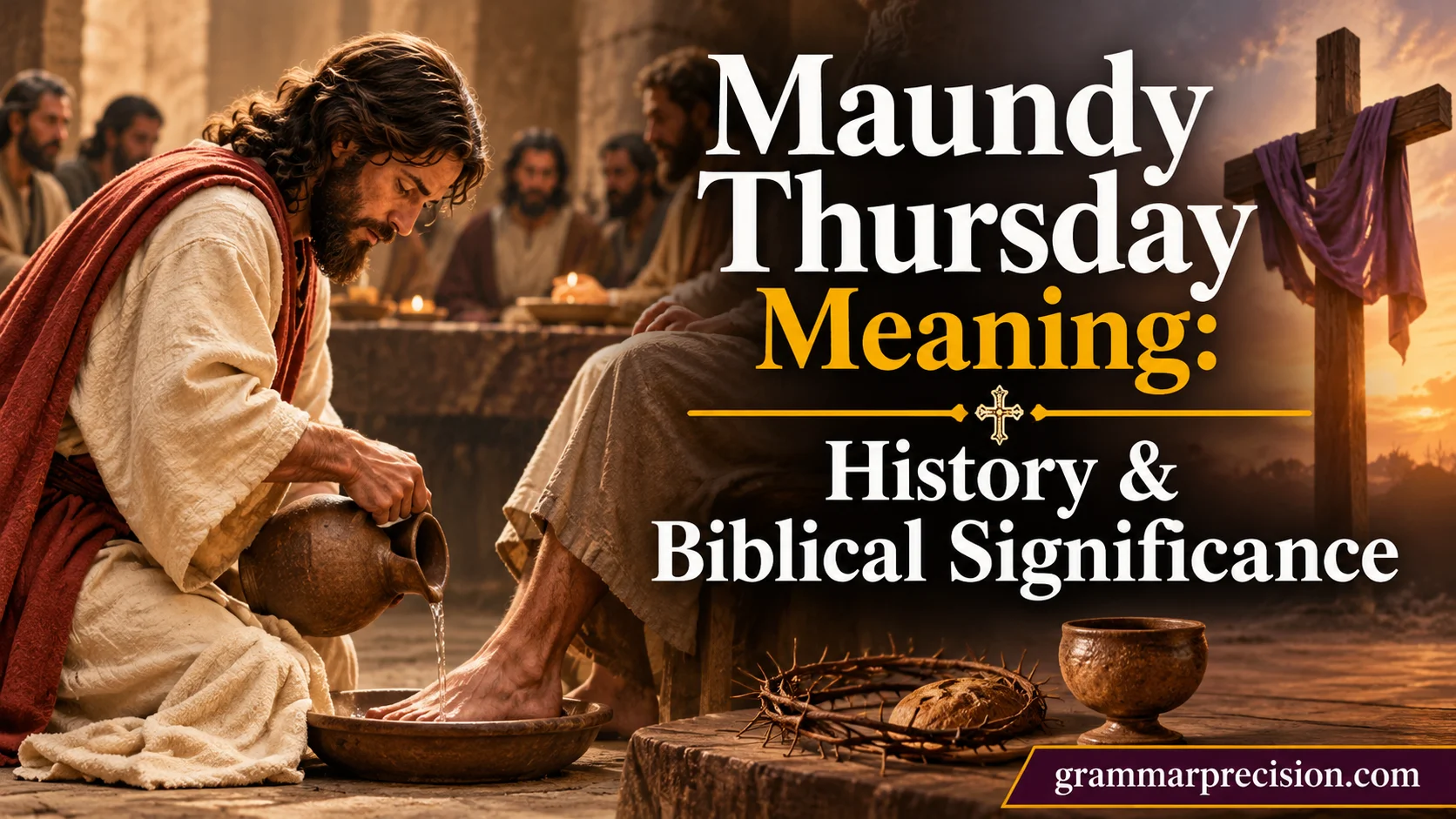
Have you ever wondered why Maundy Thursday holds such deep meaning in Christian traditions? Maundy Thursday meaning centers on Jesus Christ’s Last Supper, humility, love, and service.
This article explores the biblical meaning, historical background, and religious traditions associated with Maundy Thursday. You’ll discover its connection to the Last Supper, foot washing, Holy Week, and the commandment of love. We’ll also explain how Christians observe this important day through worship, prayer, and reflection.
Understanding religious terms requires clarity, just like English usage, grammar, and formal writing demand consistency. Although scheduling, time management, business communication, online booking, broadcasting, meetings, calendars, and project management involve different contexts, clear communication always matters. This guide makes the meaning, significance, and traditions of Maundy Thursday easy to understand.
Quick Answer: What Does Maundy Thursday Mean?
Maundy Thursday is a Christian holy day that commemorates Jesus Christ’s Last Supper with his disciples before his crucifixion. It remembers the institution of Holy Communion, Jesus washing his disciples’ feet, and his commandment to love others.
The word Maundy comes from the Latin word mandatum, meaning commandment. It refers to Jesus’ instruction that his followers should love one another as he loved them.
Christians observe this day during Holy Week, usually on the Thursday before Easter Sunday. It marks an important part of the final events leading to Jesus’ death and resurrection.
What Is Maundy Thursday?
Maundy Thursday is one of the most meaningful days in the Christian calendar. It invites believers to remember Jesus’ final evening with his closest followers.
According to the New Testament, Jesus gathered his twelve disciples for a special meal. During that gathering, he shared important teachings about faith, service, love, and sacrifice.
This occasion became known as the Last Supper. Christians consider it especially significant because Jesus established the practice of Holy Communion during this meal.
The day also highlights Jesus washing his disciples’ feet. Through this humble action, he demonstrated that genuine leadership involves serving others.
The Definition of Maundy Thursday
Maundy Thursday refers to the Thursday before Easter Sunday. Christians also call it Holy Thursday or Great and Holy Thursday in some traditions.
The observance forms part of Holy Week, which remembers the final days of Jesus’ earthly life.
Its central themes include:
- Love: Jesus commanded his followers to love one another.
- Humility: He washed his disciples’ feet despite being their teacher.
- Service: He encouraged believers to help others without seeking recognition.
- Sacrifice: He shared bread and wine before facing crucifixion.
- Faith: He prepared his disciples for the difficult events ahead.
Together, these themes explain why Maundy Thursday remains important across many Christian communities.
Why Christians Observe This Holy Day
Christians observe Maundy Thursday because it commemorates several foundational moments in their faith.
The Last Supper introduced the Christian practice of sharing bread and wine in remembrance of Jesus. His foot washing also provided a lasting example of humility and compassion.
Furthermore, Jesus gave his disciples a new commandment about loving one another. This teaching became central to Christian beliefs about relationships and community.
For many believers, Maundy Thursday offers an opportunity to reflect on their responsibilities toward others. It encourages people to practice kindness rather than simply talk about it.
When Maundy Thursday Takes Place
Maundy Thursday takes place three days before Easter Sunday when counting the traditional sequence of Holy Week days.
Its date changes every year because Easter follows a calendar calculation based on the spring equinox and the lunar cycle.
In Western Christianity, Easter falls on the first Sunday after the first ecclesiastical full moon on or after March 21.
For example, Maundy Thursday falls on April 2 in 2026 and March 25 in 2027.
Eastern Orthodox churches may observe Easter on a different date because they generally follow the Julian Paschalion calculation.
Where Does the Word Maundy Come From?
The unusual word Maundy often makes people curious about this religious celebration. Its history explains why the day focuses so strongly on love and service.
The term comes through Middle English and Old French from the Latin word mandatum. This Latin term means commandment, order, or instruction.
Its connection to Jesus comes from his words during the Last Supper. He gave his disciples a new commandment about loving one another.
The Latin Origin of Maundy
The Latin word mandatum appears in the biblical phrase Mandatum novum. This phrase translates into English as a new commandment.
John 13:34 records Jesus telling his disciples:
“That ye love one another; as I have loved you.”
This quotation comes from the King James Version of the Bible.
The instruction followed Jesus’ act of washing the disciples’ feet. Therefore, the word Maundy became closely connected with this important biblical event.
The Meaning of Mandatum Novum
Mandatum novum means new commandment in Latin. It describes Jesus’ instruction that his followers should love one another.
However, Jesus wasn’t simply asking people to feel affection. He wanted them to demonstrate love through practical actions.
For example, believers could support struggling neighbors, forgive others, welcome strangers, and serve people in need.
This commandment gives Maundy Thursday its deeper spiritual identity. It connects religious belief with everyday behavior.
How the Word Became Associated With Holy Thursday
Over time, Christian communities began using the Latin phrase Mandatum novum during Holy Thursday ceremonies.
The tradition became especially associated with foot washing services. Church leaders and religious communities performed this act to remember Jesus’ example.
Eventually, the shortened form Maundy became the familiar English name for the day.
Today, both Maundy Thursday and Holy Thursday describe the same Christian observance.
The Biblical Story Behind Maundy Thursday
The Bible provides the foundation for understanding Maundy Thursday. Several important events occurred during Jesus’ final evening with his disciples.
The four Gospels describe different parts of this period. Matthew, Mark, and Luke discuss the Last Supper, while John provides a particularly detailed account of the foot washing.
Jesus and His Disciples Gather for the Last Supper
Jesus gathered his twelve disciples in Jerusalem to share a meal before his arrest.
The Gospel accounts describe this meal in connection with Passover. During the gathering, Jesus explained that difficult events were approaching.
He shared bread with his disciples and identified it with his body. He also shared a cup of wine and connected it with his blood and the covenant.
These actions became the foundation of Christian Holy Communion.
The meal carried another important message. Jesus knew that one of his followers would betray him.
Despite knowing what would happen, he continued teaching and preparing his disciples.
Jesus Washes His Disciples’ Feet
One of the most memorable moments of Maundy Thursday appears in John 13.
During the meal, Jesus stood up, wrapped a towel around himself, and began washing his disciples’ feet.
In biblical times, people commonly wore sandals and walked along dusty roads. Washing someone’s feet was generally a servant’s responsibility.
Therefore, Jesus’ action surprised his followers.
Peter initially resisted because he struggled to accept that his teacher would perform such a humble task.
Jesus explained that his disciples needed to understand the meaning behind his example.
His message was simple: No one becomes less important by serving others.
This lesson remains relevant in families, workplaces, churches, and communities.
Judas Iscariot and the Betrayal of Jesus
The Last Supper also included a painful moment involving Judas Iscariot.
Judas was one of Jesus’ twelve disciples. However, he agreed to betray Jesus and identify him to the authorities.
During the meal, Jesus indicated that someone among them would betray him.
The announcement deeply disturbed the disciples. They began questioning who could commit such an act.
According to the Gospel accounts, Judas eventually left the gathering.
His betrayal led to Jesus’ arrest later that night.
This part of the story reminds Christians that the events surrounding Maundy Thursday included both love and human weakness.
Jesus Gives His Disciples a New Commandment
After washing their feet, Jesus explained the importance of loving one another.
John 13:34 records his instruction to follow the same love he demonstrated toward them.
This teaching became known as the New Commandment.
Jesus wanted his followers to recognize love through their actions. Kindness, forgiveness, generosity, and service all demonstrate this principle.
His message also challenged traditional ideas about importance and status.
Rather than seeking power over others, Christians should learn to care for them.
The Garden of Gethsemane and Jesus’ Prayer
After the Last Supper, Jesus traveled with his disciples to the Garden of Gethsemane.
There, he prayed while preparing for the suffering ahead.
The Gospel accounts describe his deep distress and his request that God guide him through the coming ordeal.
Meanwhile, his disciples struggled to remain awake.
Judas eventually arrived with people who arrested Jesus.
This event connected the final meal with the beginning of Jesus’ suffering and the events remembered on Good Friday.
Why Is Maundy Thursday Important to Christians?
Maundy Thursday holds an important place in Christian worship because it connects several central teachings.
Its significance extends beyond remembering an ancient meal. It encourages believers to examine their faith and relationships.
The Meaning of Love and Humility
Jesus demonstrated that love requires more than kind words. It involves patience, sacrifice, forgiveness, and genuine concern.
His decision to wash his disciples’ feet showed humility in action.
For Christians, this example challenges pride and encourages respect for everyone.
A manager helping an employee or a neighbor supporting an elderly resident can reflect the same principle.
The Importance of Forgiveness and Service
The events surrounding Maundy Thursday encourage Christians to serve others without expecting rewards.
Jesus continued teaching his disciples despite knowing their weaknesses and upcoming failures.
Peter would deny knowing him, while Judas would betray him.
Nevertheless, Jesus showed compassion during their final meal.
This message encourages believers to practice forgiveness and extend kindness, even during difficult relationships.
The Beginning of the Easter Triduum
Maundy Thursday also marks the beginning of the Easter Triduum in Western Christian traditions.
The Triduum includes three major observances:
- Maundy Thursday: Remembers the Last Supper and Jesus’ foot washing.
- Good Friday: Commemorates Jesus’ crucifixion and death.
- Holy Saturday: Remembers the period between his death and resurrection.
The Triduum reaches its celebration with the Easter Vigil and Easter Sunday.
These observances form one connected period within the Christian calendar.
The Connection Between Maundy Thursday and Salvation
Christians understand Jesus’ final meal and approaching crucifixion as essential parts of God’s plan for salvation.
The bread and wine point toward his coming sacrifice. His teachings prepare the disciples to understand what happens next.
For believers, Maundy Thursday therefore connects Jesus’ love with his willingness to sacrifice himself.
It reminds Christians that faith involves both receiving love and sharing it with others.
Important Symbols and Their Meanings on Maundy Thursday
Religious symbols help Christians remember the central messages of this holy day.
Each symbol represents an important part of Jesus’ final evening with his disciples.
| Symbol | Meaning | Biblical connection |
| Bread | Jesus’ body and spiritual nourishment | Matthew 26:26 |
| Wine | Jesus’ blood and the new covenant | Matthew 26:27–28 |
| Water | Cleansing and service | John 13:5 |
| Towel | Humility and servant leadership | John 13:4–5 |
| Shared table | Fellowship and unity | Luke 22:14–20 |
Bread and Wine
Bread and wine represent the central elements of Christian Communion.
Jesus shared bread with his disciples and connected it with his body. He then shared wine as a symbol of his blood.
Different Christian denominations understand the precise meaning of these elements differently.
However, they generally recognize the meal as a powerful remembrance of Jesus’ sacrifice.
Water and Foot Washing
Water represents cleansing and service through Jesus’ act of washing his disciples’ feet.
The ceremony reminds Christians that genuine humility requires action.
Some churches continue this practice during Maundy Thursday worship services.
The Table and Shared Meal
The Last Supper table represents fellowship, unity, and shared faith.
Jesus gathered his disciples around one meal despite their different personalities and weaknesses.
For Christians, this image encourages hospitality and stronger community relationships.
The New Commandment of Love
The New Commandment connects all the other symbols.
Bread, wine, water, and service point toward one central teaching: love should guide Christian behavior.
This principle explains why Maundy Thursday remains spiritually meaningful today.
Maundy Thursday Traditions Around the World
Although Christians share the same biblical foundation, their local customs can differ.
Some traditions focus on foot washing, while others emphasize Communion, prayer, or charitable service.
Foot Washing Ceremonies
Many churches organize special foot washing ceremonies on Maundy Thursday.
A priest, pastor, or church leader may wash the feet of selected participants.
The ceremony recreates Jesus’ humble example and reminds believers to serve others.
Holy Communion Services
Churches often organize special Communion or Eucharist services.
These ceremonies remember the Last Supper and emphasize the connection between Jesus’ sacrifice and Christian faith.
In Catholic churches, the Mass of the Lord’s Supper begins the evening liturgy of the Triduum.
The Royal Maundy Tradition in England
The United Kingdom has one of the most recognizable Maundy Thursday customs.
During the Royal Maundy service, the British monarch distributes specially prepared Maundy money to selected recipients.
The ceremony traditionally includes two purses:
- Red purse: Contains money associated with ordinary allowances.
- White purse: Contains specially minted Maundy coins.
The number of recipients traditionally corresponds to the monarch’s age. Each recipient receives an equal number of coins.
This ceremony connects Christian charity with centuries of British royal history.
Church Bells and Altar Stripping
In many Western churches, Maundy Thursday services include a solemn ceremony called the stripping of the altar.
Church leaders remove altar decorations, cloths, and other items after the service.
This action symbolizes the approaching suffering of Jesus.
Some churches also stop ringing their bells until the Easter celebration.
Special Prayers and Religious Processions
Many Christian communities organize prayer gatherings and religious processions.
In some Catholic traditions, worshippers visit several churches after the evening Mass.
This practice is especially popular in countries with strong Holy Week traditions.
These activities help believers reflect on Jesus’ final hours.
How Different Christian Denominations Observe Maundy Thursday
Christian denominations share the remembrance of Jesus’ final meal, but their ceremonies differ.
Understanding these differences helps explain the variety of Maundy Thursday celebrations.
Roman Catholic Traditions
The Catholic Church celebrates the Mass of the Lord’s Supper on Maundy Thursday evening.
The service remembers the institution of the Eucharist and may include foot washing.
After Mass, the Blessed Sacrament is transferred to a place of repose for prayer and reflection.
The altar is then stripped, creating a solemn atmosphere.
Anglican and Episcopal Traditions
Anglican and Episcopal churches commonly hold Holy Communion services.
Some congregations include foot washing to remember Jesus’ example of humility.
Many also organize quiet prayer services after the main worship gathering.
Lutheran Traditions
Lutheran churches often emphasize the Last Supper and the institution of Holy Communion.
Their services may include Scripture readings, hymns, prayers, and Communion.
Some congregations also include foot washing as a reminder of Christian service.
Orthodox Christian Traditions
Eastern Orthodox churches generally call the day Great and Holy Thursday.
Their services remember the Last Supper, Jesus’ foot washing, and his betrayal.
Some Orthodox communities also perform a special foot washing ceremony.
The day holds a significant place in the Orthodox Holy Week calendar.
Protestant Church Practices
Protestant observances vary considerably between denominations and congregations.
Some churches organize Communion services, while others focus on biblical readings and prayer.
Baptist and Methodist congregations may also include special worship gatherings.
Not every Protestant church observes Maundy Thursday with a formal ceremony.
Maundy Thursday vs. Good Friday vs. Holy Saturday
These three days belong to the final period of Holy Week. However, each remembers a different part of Jesus’ story.
| Holy day | What it commemorates | Main theme |
| Maundy Thursday | The Last Supper and foot washing | Love and service |
| Good Friday | Jesus’ crucifixion and death | Sacrifice and redemption |
| Holy Saturday | Jesus’ burial and the waiting period | Silence and reflection |
| Easter Sunday | Jesus’ resurrection | Hope and new life |
Maundy Thursday focuses on Jesus’ final meal and teachings.
Good Friday remembers his suffering and crucifixion.
Holy Saturday represents the period of waiting before Easter.
Finally, Easter Sunday celebrates the resurrection of Jesus Christ, which Christians consider the foundation of their faith.
How Can Christians Observe Maundy Thursday Today?
You don’t need elaborate ceremonies to appreciate the meaning of Maundy Thursday.
Simple actions can help you understand its spiritual message and apply its lessons.
Attend a Church Service
Participating in a Maundy Thursday service offers an opportunity to remember the Last Supper.
You can listen to biblical readings, receive Communion where appropriate, and join communal prayers.
Practice Acts of Kindness
Jesus demonstrated humility through service.
You can follow his example by helping neighbors, supporting struggling families, or volunteering for community projects.
Even a small act of kindness can make someone’s day easier.
Share a Meaningful Meal
The Last Supper reminds Christians of fellowship and shared faith.
Consider sharing a meal with family or friends. Use the occasion to express gratitude and strengthen relationships.
Reflect on Jesus’ Teachings
Read John 13–17 to explore Jesus’ final teachings to his disciples.
These chapters discuss humility, love, unity, faith, and spiritual encouragement.
Spend some time thinking about how these lessons apply to your daily choices.
Spend Time in Prayer
Prayer offers an opportunity to reflect on forgiveness, gratitude, and personal growth.
You can also pray for people experiencing hardship or loneliness.
This practice keeps the central message of Maundy Thursday alive beyond church ceremonies.
FAQs About Maundy Thursday Meaning
What Does Maundy Thursday Mean in Simple Words?
Maundy Thursday remembers Jesus’ Last Supper with his disciples before his crucifixion. It also celebrates his example of humility through foot washing and his commandment to love others.
Why Is It Called Maundy Thursday?
The name comes from the Latin word mandatum, meaning commandment. It refers to Jesus’ instruction that his followers should love one another as he loved them.
What Happened on Maundy Thursday in the Bible?
Jesus shared the Last Supper with his disciples, washed their feet, and taught them about love and service. Later, he prayed in Gethsemane and faced arrest.
Why Did Jesus Wash His Disciples’ Feet?
Jesus washed their feet to demonstrate humility and servant leadership. He wanted his followers to understand that genuine greatness comes through serving others.
Is Maundy Thursday a Day of Celebration or Mourning?
Maundy Thursday combines remembrance, gratitude, and solemn reflection. Christians celebrate the Last Supper while preparing to remember Jesus’ suffering on Good Friday.
Do Christians Have to Attend Church on Maundy Thursday?
Attendance requirements depend on individual denominations and church traditions. Many Christians attend special services, but observance practices vary between communities.
What Foods Are Traditionally Eaten on Maundy Thursday?
There isn’t one universal Maundy Thursday meal. Some communities eat simple meals, while certain European traditions include green vegetables and other regional foods.
Is Maundy Thursday the Same as Holy Thursday?
Yes. Both names generally describe the Thursday before Easter Sunday. Different Christian traditions prefer different names for the observance.
Does Maundy Thursday Celebrate Jesus’ Resurrection?
No. Maundy Thursday remembers the Last Supper and Jesus’ final teachings. Easter Sunday celebrates his resurrection.
Conclusion:
Maundy Thursday reminds Christians of Jesus Christ’s love, humility, and sacrifice through the Last Supper and foot washing. Understanding Maundy Thursday meaning helps you appreciate its biblical significance, spiritual lessons, and important place within Holy Week and Christian traditions.
Whether you observe this day through prayer, church services, or personal reflection, its message remains powerful. Love, forgiveness, kindness, and selfless service encourage everyone to treat others with compassion. By understanding its history and traditions, you can better appreciate why Christians remember this meaningful day each year.
Latest Posts:
- What Does # Mean in Text? Meaning, Uses, & Examples
- BFE Meaning: What Does BFE Mean in Text?
- NT Meaning in Text: What Does NT Mean in Texting?
- YHU Meaning in Text: Definition, Examples, & How to Use It
- WYH Meaning in Text: Definition, Examples, & How to Respond