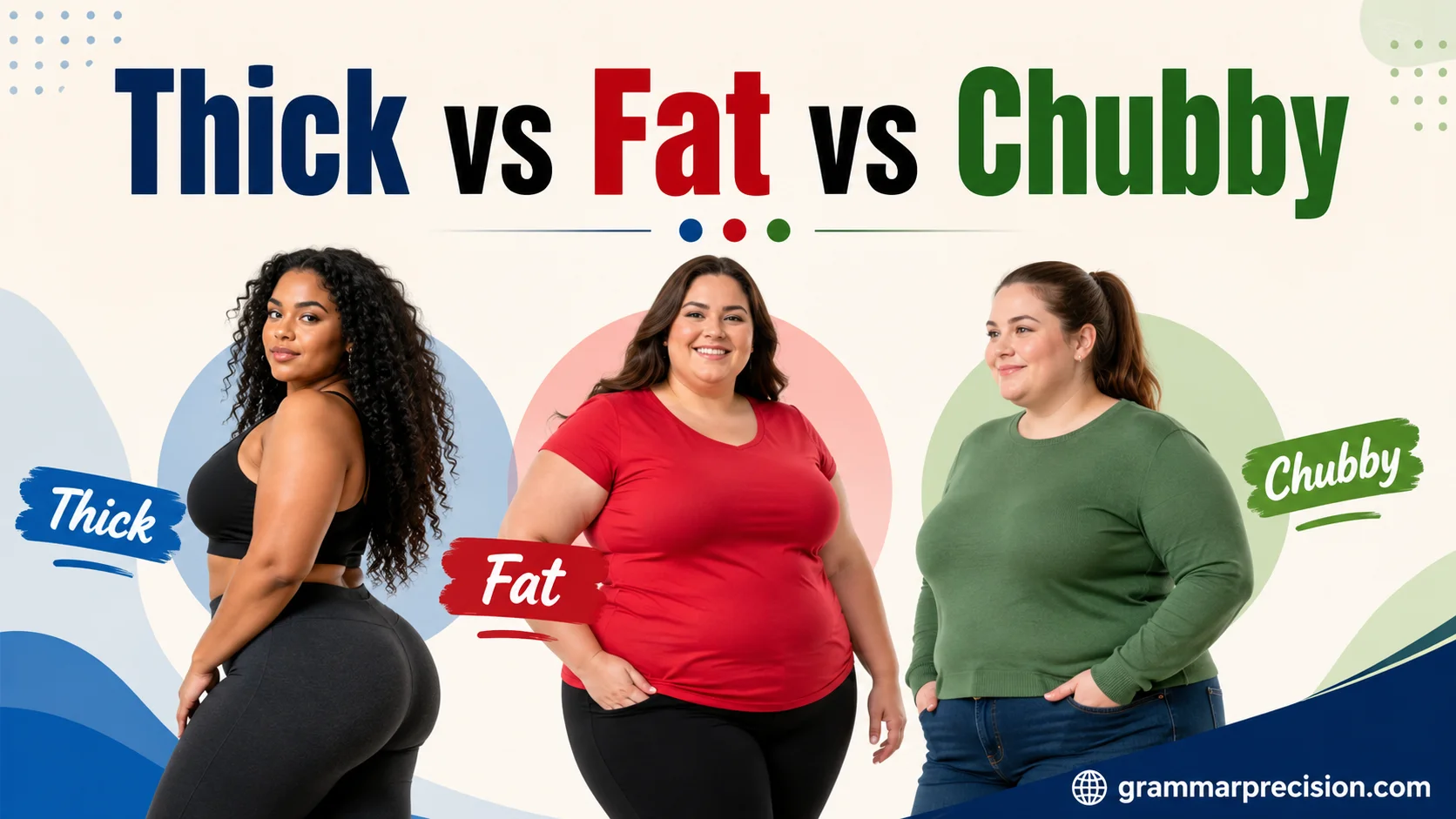
Understanding Thick vs Fat vs Chubby helps you choose the right words when describing body types because each term has a different meaning, tone, and social impact in everyday English.
When you compare these words, you discover that thick often describes curves or a fuller shape, while fat focuses on body fat and size. Chubby usually suggests softness or roundness and often appears in gentle descriptions of children and features like cheeks. Understanding these differences helps you communicate more clearly and avoid unintended negative meanings.
Body descriptions can carry emotional and cultural meanings beyond simple definitions. The way you use thick, fat, or chubby can change how your message sounds to others. This guide explains their differences with examples and practical tips so you can select the most appropriate terms in different situations while maintaining respect and thoughtful communication skills.
Thick vs Fat vs Chubby: Quick Difference Between These Words
Although thick, fat, and chubby all relate to body size, they do not mean exactly the same thing.
| Word | Basic Meaning | Common Feeling | Typical Usage |
| Thick | Having a fuller, wider, or curvier body shape | Often positive or neutral | Mostly used for adults |
| Fat | Having a large amount of body fat | Can be neutral or offensive depending on context | General body description |
| Chubby | Slightly rounded or plump | Usually softer and more casual | Often used for children |
The biggest difference comes from tone and intention. The words describe size, but they also communicate an attitude.
For example:
- “She has a thick figure.” → Often suggests curves or a fuller shape.
- “He is fat.” → A direct statement that may sound judgmental.
- “The baby has chubby cheeks.” → Usually sounds affectionate.
The meaning changes because language is not only about definitions. It is also about feelings.
What Does Thick Mean?
The word thick has several meanings in English. It can describe objects, materials, sounds, and even body shapes.
When talking about a person’s body, thick usually means someone has a fuller or more developed figure. It often refers to noticeable curves, a strong build, or a wider body structure.
Unlike “fat,” thick is frequently used as a compliment, especially in modern casual speech.
Thick Meaning in Body Description
A person described as thick may have:
- Wider hips
- Fuller thighs
- A larger but proportionate body shape
- A muscular or strong build
For example:
“She has a thick figure with strong legs and a confident style.”
This sentence does not necessarily criticize the person. It focuses on body shape rather than weight alone.
However, context matters. Calling someone thick without knowing their preference may still feel uncomfortable because body descriptions are personal.
Is Thick a Compliment?
In many modern conversations, especially online and in popular culture, thick can be a positive word.
People often use it to describe:
- Curves
- Confidence
- Attractiveness
- A healthy-looking body shape
For example:
“She looks amazing. She has a thick and athletic build.”
Here, thick suggests strength and shape.
However, not everyone interprets the word the same way. Some people may feel uncomfortable because they do not want attention focused on their body.
A good rule is simple:
A compliment should make someone feel appreciated, not analyzed.
What Does Fat Mean?
The word fat has a straightforward meaning: it describes having a large amount of body fat. It can also describe food, animals, or objects.
For example:
- Fat tissue stores energy in the human body.
- A fat cat has a heavier body shape.
- Fat in food affects flavor and texture.
The difficulty appears when the word describes a person.
Is Fat Always an Insult?
No, fat is not always an insult, but many people consider it sensitive because it has often been used negatively.
The meaning depends on:
- The speaker’s intention
- The relationship between people
- The situation
- The tone of voice
For example:
Neutral or descriptive use:
“The doctor explained that excess fat can affect health.”
This is a medical discussion.
Negative use:
“You are fat.”
This may sound like a personal attack.
Personal identity use:
Some people use the word fat to describe themselves without shame as part of body acceptance movements.
The important point is that a word’s meaning comes from both definition and social experience.
What Does Chubby Mean?
Chubby describes someone or something that is slightly round, soft, or plump.
People commonly use it for:
- Babies
- Young children
- Animals
- Cheeks
- Hands
For example:
“The baby has cute chubby cheeks.”
This sounds warm and affectionate.
However, using “chubby” for adults can be more complicated.
Why Chubby Sounds Different From Fat
The word chubby feels softer because it usually suggests a smaller amount of extra weight.
Compare:
- “A chubby child” → Often sounds cute.
- “A fat child” → Sounds much harsher.
- “A chubby puppy” → Sounds adorable.
- “A fat puppy” → Sounds more clinical.
The difference is emotional rather than purely physical.
Chubby often creates an image of softness and roundness. Fat focuses more directly on size or body fat.
Thick vs Fat vs Chubby: Detailed Comparison
Understanding the differences becomes easier when you compare their meanings side by side.
| Feature | Thick | Fat | Chubby |
| Main focus | Body shape | Body size or fat amount | Soft roundness |
| Common with adults | Yes | Yes | Less common |
| Can be positive? | Often | Sometimes | Usually in specific contexts |
| Emotional tone | Attractive or neutral | Sensitive | Cute or gentle |
| Common examples | Thick waist, thick thighs | Fat tissue, overweight person | Chubby cheeks |
Thick vs Chubby: Are They the Same?
Many people confuse thick and chubby because both describe fuller bodies. However, they create different images.
A thick person is usually imagined as having a larger but shaped figure.
A chubby person is usually imagined as having softness or extra roundness.
For example:
- A fitness model with strong legs and curves may be described as thick.
- A toddler with round cheeks may be described as chubby.
The words overlap, but they are not interchangeable.
Thick vs Fat: What Is the Main Difference?
The biggest difference between thick and fat is the focus.
Thick usually focuses on shape.
Fat usually focuses on size or body fat.
Imagine two people with the same weight:
- One person may have a muscular body with curves.
- Another person may have more body fat distributed differently.
People might describe the first person as thick, while the second might be described as fat.
Body shape and body weight are related, but they are not identical.
How Context Changes the Meaning of Body Words
Words do not exist alone. The situation around them changes how people understand them.
Consider these examples:
| Sentence | Meaning |
| “The baby has chubby cheeks.” | Loving description |
| “She has a thick figure.” | Often a compliment |
| “The doctor measured body fat levels.” | Medical context |
| “He called someone fat during an argument.” | Insulting use |
The same topic can sound respectful or hurtful depending on the words and situation.
Also Read This: Peaked vs. Peeked vs. Piqued: The Complete Guide
Common Mistakes When Using Thick, Fat, and Chubby
Many English learners make mistakes because they focus only on dictionary meanings.
Here are some common problems:
Using Body Words Without Considering Feelings
A person may not want their appearance discussed.
Even if you mean something positively, the listener may interpret it differently.
Assuming Everyone Likes the Same Compliments
One person may appreciate being called thick.
Another person may dislike it.
People have different preferences.
Confusing Honesty With Insensitivity
Being truthful does not mean ignoring emotions.
Good communication combines honesty with respect.
Better Alternatives to Describe Body Types
Sometimes you need a neutral or respectful way to describe someone’s appearance.
Here are some alternatives:
| Situation | Better Words |
| Complimenting appearance | Curvy, attractive, confident |
| Talking about fitness | Strong, muscular, athletic |
| Medical discussion | Higher body weight, body composition |
| Neutral description | Larger, fuller, broad |
Choosing the right word depends on your purpose.
How Native Speakers Understand These Words
Native speakers usually consider more than the word itself. They think about:
- Who said it
- Why they said it
- How they said it
- The relationship between people
For example, a close friend saying:
“You look thick and amazing.”
may sound playful.
A stranger saying the same thing may feel inappropriate.
Language depends heavily on social awareness.
Cultural Influence on Words Like Thick, Fat, and Chubby
Body descriptions change over time and across cultures.
In some communities, a fuller body represents:
- Beauty
- Health
- Wealth
- Strength
In other situations, slimmer body types may receive more attention.
Media, fashion, and social platforms influence how people understand these words.
For example, the popularity of body positivity has changed how many people view words like “fat” and “thick.” Some people now use these terms confidently, while others still prefer different descriptions.
Which Word Should English Learners Use?
If English is your second language, choosing the safest option can help you avoid accidental offense.
Here are some guidelines:
- Use chubby mostly for children, babies, or cute features.
- Use thick carefully because meanings vary.
- Avoid calling someone fat unless the situation clearly requires it.
- Use neutral descriptions when you are unsure.
When describing people, kindness matters as much as accuracy.
FAQs:
What is the difference between thick, fat, and chubby?
Thick usually describes a fuller or curvier body shape, while fat refers to having a larger amount of body fat and can sound sensitive depending on the context. Chubby suggests a soft, rounded appearance and is often used for children or cute features like cheeks.
Is thick a positive word for describing someone?
Yes, thick can be a positive word in many situations. People often use it to describe someone with curves, strength, or a fuller figure. However, personal preferences vary, so it is always important to consider the person and situation before using body-related descriptions.
Is calling someone chubby rude?
Calling someone chubby is not always rude, but the meaning depends on the context. It often sounds affectionate when describing babies or children. However, some adults may not like the word because they feel it focuses on their body size.
Can the word fat be used in a neutral way?
Yes, fat can be neutral in medical, scientific, or descriptive contexts. For example, doctors may discuss body fat during health conversations. However, when used directly toward a person, it can sound hurtful or judgmental because of its common negative associations.
Which word should I use instead of thick, fat, or chubby?
The best choice depends on your purpose. For respectful descriptions, words like curvy, fuller, strong, athletic, or larger may work better. Choosing the right word shows awareness and respect while helping you communicate your message more effectively.
Conclusion:
Understanding Thick vs Fat vs Chubby helps you recognize how body-related words can carry different meanings and emotions. While thick may sound positive, fat can feel sensitive, and chubby often sounds softer. Using these terms carefully with the right context allows you to communicate with clarity, kindness, and respect in everyday conversations.