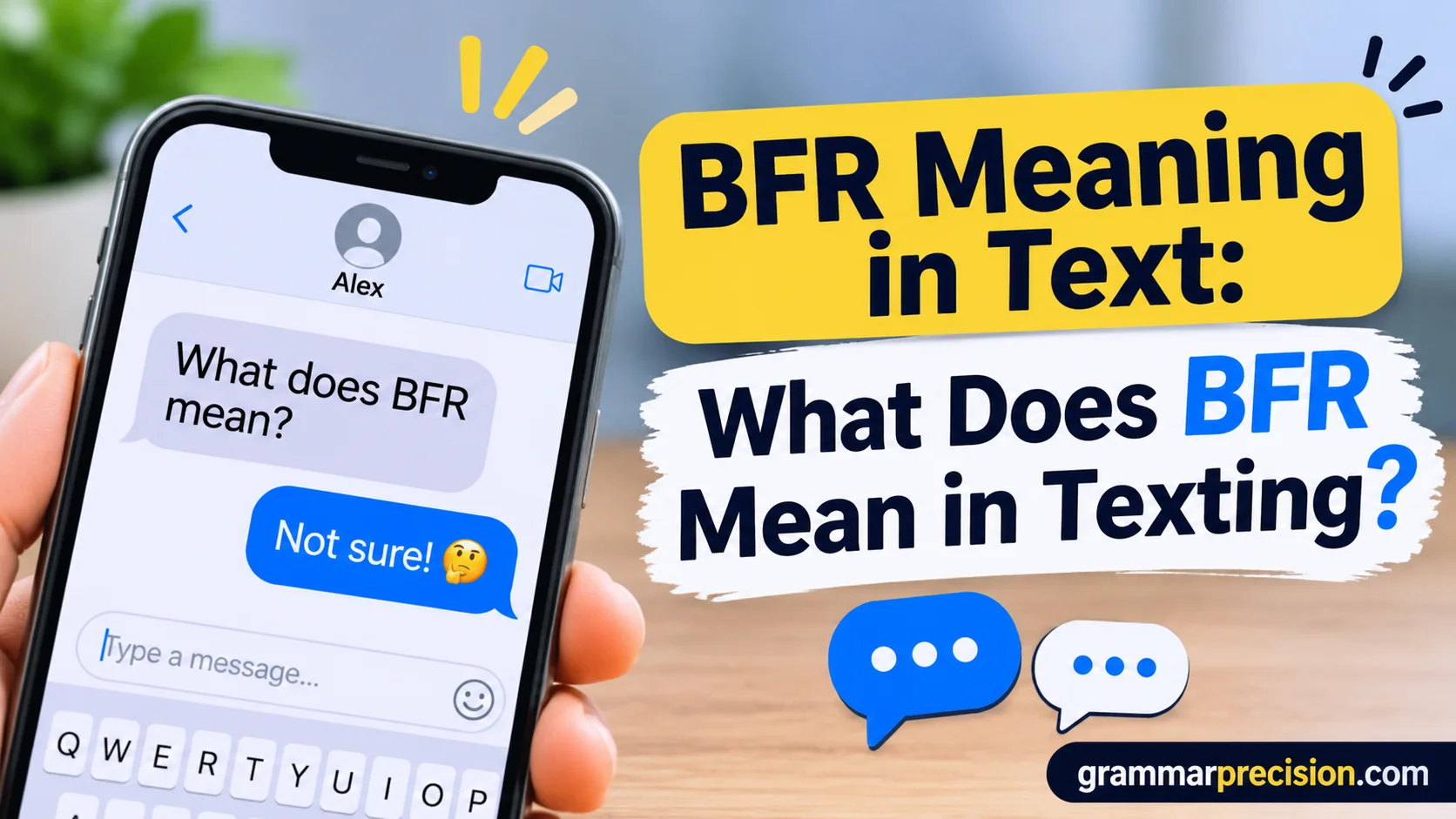
Have you ever received BFR in a message and wondered what someone really meant? This popular slang expression adds personality, disbelief, and honesty to everyday digital conversations.
Understanding BFR meaning in text helps you recognize its tone across texting, Snapchat, TikTok, and Instagram. This guide explores its meanings, practical examples, and natural responses. You’ll also discover how context influences its use in casual conversations and everyday English communication.
Whether someone uses BFR jokingly, sarcastically, or seriously, knowing its meaning prevents misunderstandings. Explore its relationship with FR, FRFR, and TBH, learn appropriate responses, and discover why clear language and conversational consistency matter when interpreting modern internet slang.
Quick Answer: What Does BFR Mean in Text?
BFR means “Be for real” in texting and online conversations. People use it when they want someone to be honest, stop exaggerating, or acknowledge something obvious.
Depending on the situation, BFR can communicate several emotions:
- Disbelief: Someone finds a statement difficult to believe.
- Surprise: Something sounds unexpected or unbelievable.
- Sarcasm: Someone playfully challenges another person’s comment.
- Frustration: Someone thinks another person isn’t being realistic.
- Honesty: Someone wants a straightforward answer without excuses.
For example:
Person A: I finished an entire pizza by myself in five minutes.
Person B: BFR! How is that even possible?
Here, BFR expresses disbelief and playful surprise.
The expression can sound friendly, sarcastic, or slightly confrontational. Its meaning becomes clearer when you consider the surrounding conversation.
What Does BFR Stand For in Texting?
BFR stands for “Be for real.” It’s an informal expression that encourages someone to speak honestly or recognize reality.
The phrase existed as ordinary conversational language before people shortened it for digital communication. Like many internet abbreviations, BFR makes messages quicker while preserving the original expression.
People frequently use it when somebody makes an unbelievable claim or behaves unrealistically.
Consider this example:
Friend: I don’t need sleep. I can function perfectly with two hours every night.
You: BFR, that’s definitely not enough sleep.
The abbreviation communicates that you disagree with the statement and want your friend to acknowledge reality.
Why Do People Use BFR Instead of Writing the Full Phrase?
Online conversations move quickly. Short abbreviations help people communicate emotions without typing complete sentences.
BFR offers several advantages:
- Saves time: Three letters replace a longer expression.
- Creates emphasis: It immediately highlights disbelief or disagreement.
- Adds personality: It can make messages sound playful or expressive.
- Matches internet culture: It fits naturally into casual texting and social media.
- Communicates attitude: Depending on punctuation and context, it can sound humorous, serious, or sarcastic.
For example, compare these messages:
| Message | Meaning |
| Be for real! | Directly challenges someone’s statement. |
| BFR! | Expresses quick disbelief. |
| BFR 😂 | Adds humor or playful sarcasm. |
| BFR seriously? | Shows stronger frustration or surprise. |
Although the abbreviation saves space, it doesn’t automatically make every conversation friendlier. Tone still matters.
Is BFR the Same as Saying Be Serious?
Not exactly, although the expressions can overlap.
“Be serious” usually asks someone to stop joking or treat something with greater importance. Meanwhile, “Be for real” often challenges someone’s honesty, expectations, or understanding of reality.
For instance:
- Be serious: You’re joking about missing the entire meeting, right?
- BFR: You think you’ll become famous overnight without practicing?
Both expressions challenge someone’s attitude. However, BFR often carries a stronger sense of disbelief.
What Does BFR Mean From a Girl?
When a girl sends you BFR, she usually means “Be for real.” However, her intention depends on your relationship and the conversation.
She might be teasing you, questioning your statement, or asking you to stop exaggerating.
For example:
You: I think I’m the funniest person in our class.
Her: BFR 😂
She’s probably playfully disagreeing with your claim.
However, consider another situation:
You: I didn’t reply because I was busy all week.
Her: BFR. You posted stories every day.
Here, she’s challenging your explanation because she thinks your actions contradict your words.
Does BFR From a Girl Mean She’s Flirting?
Not necessarily.
BFR isn’t automatically a romantic expression. Its meaning depends on the emotional context and the relationship between two people.
Here are some possible interpretations:
- Playful teasing: She feels comfortable joking with you.
- Friendly disagreement: She doesn’t believe something you said.
- Mild frustration: She thinks you’re avoiding the truth.
- Flirty banter: She’s playfully challenging you during a romantic conversation.
For example:
You: I wasn’t checking your profile. I promise.
Her: BFR 😂
This could be playful flirting if both people already share a teasing relationship.
However, one abbreviation cannot confirm romantic interest. Look at the wider conversation rather than interpreting three letters in isolation.
What Does BFR Mean From a Guy?
When a guy texts BFR, he generally uses it to express disbelief, challenge an exaggerated statement, or react to something unexpected.
Its basic meaning doesn’t change based on gender.
For example:
You: I can beat you at basketball without practicing.
Him: BFR bro!
He’s probably challenging your confidence in a humorous way.
Another example:
You: I forgot your birthday because I was busy.
Him: BFR, you remembered everyone else’s birthday.
In this situation, his response sounds more serious because he questions your explanation.
Is BFR Rude When a Guy Uses It?
It depends on how he delivers the message.
Among close friends, BFR often feels harmless. During disagreements, however, it can sound dismissive or disrespectful.
Pay attention to these signals:
- Laughing emojis usually suggest playful teasing.
- A friendly conversation often makes the expression feel harmless.
- Repeated use during arguments may indicate frustration.
- A short, blunt response can sound more confrontational.
The best interpretation comes from the person’s usual communication style.
How to Use BFR in Text Messages
Using BFR correctly is easy once you understand its conversational purpose.
The expression works best when someone makes a surprising claim, exaggerates something, or says something that seems unrealistic.
However, you shouldn’t insert it randomly into every conversation. Like any slang expression, it works better when the situation calls for it.
BFR in Casual Conversations
Casual conversations provide the most natural setting for BFR.
Friends often use it when joking about everyday situations or reacting to unbelievable stories.
Examples:
- “You watched an entire series overnight? BFR!”
- “BFR, you forgot your phone at home again?”
- “You seriously think pineapple belongs on every pizza? 😂”
- “BFR, nobody finishes that much homework in ten minutes.”
These messages sound relaxed because the expression adds personality without making the conversation overly serious.
BFR in Funny and Sarcastic Messages
BFR can also make sarcastic comments more entertaining.
People use it when they want to highlight something ridiculous without writing a lengthy response.
Examples:
- “You said you’re always on time? BFR 😂”
- “BFR, you call instant noodles a five-star dinner?”
- “You spent your entire paycheck in one afternoon? Be for real!”
- “BFR, that haircut took you three hours?”
The humor usually comes from exaggeration or an unexpected contrast.
Still, sarcasm depends heavily on relationships. A joke between close friends might offend someone who doesn’t know you well.
BFR During Arguments or Serious Discussions
Although BFR frequently appears in funny conversations, people also use it during disagreements.
In these situations, it can communicate frustration or disbelief.
Example:
Person A: I never said anything about your project.
Person B: BFR. You discussed it with everyone yesterday.
Here, BFR challenges the other person’s honesty.
Another example:
Person A: I can finish this entire project without any preparation.
Person B: BFR. You haven’t even started researching.
Notice how the abbreviation sounds stronger when the surrounding conversation becomes serious.
Tip: Avoid using BFR when someone is discussing a sensitive problem. A direct and respectful response usually works better.
BFR Meaning on Social Media Platforms
BFR appears in casual digital communication, including social media comments, captions, and private messages.
Although its core meaning remains “Be for real,” the platform and surrounding content can influence its tone.
BFR Meaning on TikTok
TikTok’s short videos and comment sections create plenty of opportunities for expressions like BFR.
Users might write it beneath videos featuring exaggerated claims, unexpected situations, or humorous opinions.
For example:
- “BFR, this can’t be real.”
- “BFR, how did she do that?”
- “BFR, people actually believe this?”
- “This outfit is incredible. BFR!”
On TikTok, BFR can communicate disbelief, playful criticism, or excitement.
Its meaning becomes especially clear when you consider the video itself.
BFR Meaning on Snapchat
Snapchat encourages quick conversations through direct messages, pictures, and disappearing messages.
BFR fits naturally into this environment because it communicates a reaction using only three letters.
For example:
Friend: Sends a picture of an enormous burger.
You: BFR, you’re eating all that?
Or:
Friend: I didn’t see your message.
You: BFR, you opened it yesterday 😂
On Snapchat, the abbreviation generally maintains its casual and conversational meaning.
BFR Meaning on Instagram
Instagram users may encounter BFR in comments, captions, reels, and direct messages.
It’s particularly useful when reacting to dramatic opinions, funny videos, or unbelievable claims.
Examples include:
- “BFR, that’s the best outfit I’ve seen today.”
- “BFR, this recipe actually works?”
- “BFR, you really traveled there without planning?”
- “Someone needs to be honest. BFR!”
The expression helps users communicate their reactions without writing lengthy comments.
BFR in Group Chats and Online Communities
Group chats provide another natural environment for BFR.
Friends often use it when somebody makes an exaggerated statement or shares an unbelievable story.
For example:
Alex: I’m going to wake up at 4 a.m. every day from tomorrow.
Sam: BFR 😂
Chris: You’ve said that every Monday for six months.
In this exchange, BFR adds humor while highlighting someone’s unrealistic promise.
Online gaming communities might also use BFR when reacting to surprising gameplay claims or unbelievable performances.
However, the expression isn’t exclusive to any particular platform or online community.
What Does BFR Mean Depending on the Conversation?
One reason internet slang can become confusing is that the same expression communicates different emotions.
BFR is a good example. Its central meaning stays consistent, but its emotional purpose changes.
| Situation | Possible meaning | Example |
| Surprise | That sounds unbelievable. | “BFR, you won again?” |
| Disbelief | I don’t believe you. | “BFR, that never happened.” |
| Sarcasm | You’re being ridiculous. | “BFR, that’s your big excuse?” |
| Frustration | Stop making excuses. | “BFR, tell me what happened.” |
| Playfulness | You’re joking, right? | “BFR 😂” |
How Tone Changes the Meaning of BFR
Tone can completely change how someone interprets your message.
Consider these three examples:
Friendly tone:
“BFR 😂 You actually bought another pair of shoes?”
This sounds like harmless teasing.
Sarcastic tone:
“BFR. You think that’s a good excuse?”
This suggests disagreement or criticism.
Serious tone:
“BFR. We need to discuss what happened.”
This communicates frustration and requests honesty.
The abbreviation itself hasn’t changed. Only the situation and emotional delivery have changed.
How to Respond When Someone Texts You BFR
Receiving BFR doesn’t mean you need to write a complicated response.
Your reply should match the other person’s tone and the subject of the conversation.
If they’re joking, respond playfully. If they’re questioning something serious, answer honestly.
Funny Responses to BFR
If someone uses BFR jokingly, you can keep the conversation entertaining.
Try these responses:
- “I am being real. You’re just not ready for the truth!”
- “Believe it or not, it’s completely true.”
- “Don’t question my talent 😂”
- “You asked for honesty, and here it is.”
- “I wish I were joking!”
- “Reality sounds unbelievable sometimes.”
These responses work well with friends who enjoy playful conversations.
Casual Responses to BFR
Sometimes a simple answer is enough.
Here are some natural options:
- “I’m serious!”
- “I promise it’s true.”
- “That’s exactly what happened.”
- “No joke, I’m telling the truth.”
- “What makes you think I’m lying?”
- “I know it sounds crazy, but it’s real.”
These replies keep the conversation moving without adding unnecessary drama.
Serious Responses to BFR
If someone sounds frustrated, avoid responding with another sarcastic comment.
Instead, acknowledge their concern and explain yourself.
For example:
- “I understand why you think that.”
- “Let me explain what actually happened.”
- “You’re right. I should’ve been clearer.”
- “I’m being honest with you.”
- “I didn’t mean to make things confusing.”
A thoughtful response can prevent a small misunderstanding from becoming a bigger argument.
BFR vs. Other Popular Internet Slang
BFR belongs to a larger collection of internet expressions that help people communicate quickly.
Some abbreviations look similar or serve comparable purposes. However, their meanings aren’t interchangeable.
| Slang | Full Form | Meaning |
| BFR | Be for real | Challenges something unbelievable. |
| FR | For real | Expresses agreement or sincerity. |
| FRFR | For real, for real | Adds extra emphasis to sincerity. |
| TBH | To be honest | Introduces an honest opinion. |
| NGL | Not gonna lie | Introduces a frank statement. |
| IMO | In my opinion | Shares a personal viewpoint. |
| ISTG | I swear to God | Emphasizes sincerity or frustration. |
| SMH | Shaking my head | Expresses disappointment or disbelief. |
| IDK | I don’t know | Communicates uncertainty. |
| WTH | What the heck | Expresses surprise or confusion. |
BFR vs. FR
These abbreviations share similar wording but serve different conversational purposes.
FR generally means “For real.” People use it to agree with something or emphasize sincerity.
Example:
Friend: That movie was amazing.
You: FR!
Meanwhile, BFR challenges a statement.
Friend: I’m going to become a millionaire tomorrow.
You: BFR!
The difference is simple: FR often confirms something, while BFR questions someone’s statement.
BFR vs. TBH
TBH means “To be honest.” People use it when sharing a sincere opinion.
Example:
“TBH, I didn’t enjoy that movie.”
BFR means “Be for real.” It usually challenges someone else’s statement or behavior.
Example:
“BFR, you actually enjoyed that terrible movie?”
Both expressions can appear in the same conversation, but they perform different functions.
BFR vs. FRFR
FRFR means “For real, for real.”
People use it to add emphasis to an honest statement or strong agreement.
For example:
Friend: This restaurant has the best burgers.
You: FRFR!
However, BFR expresses disbelief or challenges someone to be realistic.
Understanding these differences helps you avoid confusing similar-looking abbreviations.
Is BFR Appropriate for Professional Conversations?
Generally, BFR isn’t suitable for formal or professional communication.
Although coworkers might understand the abbreviation, it can sound overly casual or disrespectful in workplace discussions.
For example, sending your manager this message might create the wrong impression:
“BFR, that deadline is impossible.”
A more professional alternative would be:
“I think we should reconsider the deadline because the current schedule may not be realistic.”
Here are some useful alternatives:
| Instead of BFR | Use This |
| Be for real! | Let’s be realistic. |
| BFR, that’s impossible. | I don’t think that’s achievable. |
| BFR, tell me the truth. | Could you clarify what happened? |
| BFR, that’s not correct. | I believe there’s a misunderstanding. |
| BFR, are you serious? | Could you confirm that information? |
You can still use BFR with close friends or colleagues who regularly communicate through informal messages.
However, professional emails, client conversations, interviews, and official documents require clearer language.
Common Mistakes People Make When Using BFR
Even simple abbreviations can cause confusion when people misunderstand their purpose.
Here are several mistakes worth avoiding.
Assuming BFR Always Sounds Friendly
BFR can sound playful, but it can also communicate irritation.
For example, “BFR 😂” might sound humorous between friends. However, “BFR. Stop lying.” feels much more confrontational.
Always consider the relationship and conversation before using it.
Confusing BFR With FR
These abbreviations aren’t interchangeable.
FR usually expresses agreement or sincerity. BFR challenges someone to be realistic or honest.
Using the wrong abbreviation can completely change your intended message.
Using BFR in Formal Communication
Short internet expressions don’t always belong in professional settings.
Instead of writing “BFR” in a business email, explain your concern using clear and respectful language.
Ignoring the Surrounding Context
Never interpret BFR without considering the message around it.
A laughing emoji, a serious question, or an ongoing disagreement can completely change its emotional meaning.
Other Meanings of BFR Outside Texting
Although “Be for real” is a common interpretation in casual internet conversations, BFR can represent other things in different industries and communities.
One important example is Big Friendly Robot, a fictional character from Roald Dahl’s children’s book The BFG.
Other meanings may appear in specialized discussions involving business, science, technology, or entertainment.
For instance, a technical document might use BFR as an organization-specific abbreviation.
This doesn’t mean every alternative definition applies to texting.
When you encounter BFR, consider these questions:
- Is the conversation casual or professional?
- Are people discussing internet slang?
- Does the surrounding sentence suggest a different meaning?
- Is the abbreviation connected to a particular industry or subject?
Context is the key to understanding abbreviations. The same three letters can communicate completely different ideas in unrelated situations.
FAQs About BFR
BFR usually means “Be for real.” People use it to express disbelief, question an exaggerated statement, or encourage someone to be honest.
When a girl sends BFR, she generally wants you to be realistic or honest. Depending on your relationship, it might communicate playful teasing, disbelief, or frustration.
A guy usually uses BFR to challenge something you said or express surprise. Its meaning doesn’t change based on gender.
No. BFR isn’t a swear word. However, it can sound rude or confrontational when someone uses it aggressively.
Not automatically. BFR can appear during playful flirting, but it doesn’t independently indicate romantic interest.
On Snapchat, BFR commonly means “Be for real.” Users send it when reacting to surprising messages, funny pictures, or unbelievable claims.
On TikTok, BFR generally expresses disbelief, sarcasm, or a reaction to something surprising. It frequently appears in comments and casual discussions.
You can respond with “I’m serious,” “I promise it’s true,” or “Believe me!” If someone uses it jokingly, a funny response can keep things entertaining.
BFR means “Be for real” and usually challenges someone’s statement. FR means “For real” and commonly expresses agreement or sincerity.
It’s better to avoid BFR in formal communication. Use expressions like “Let’s be realistic” or “Could you clarify?” instead.
Conclusion:
Understanding BFR meaning in text helps you recognize the tone behind modern slang and avoid confusing messages. Whether someone uses it jokingly, seriously, or sarcastically, context matters. Pay attention to the conversation before deciding what the sender really means.
As texting and social media continue evolving, expressions like BFR make everyday conversations more expressive. Use it naturally with friends, understand its different tones, and choose your responses carefully. Most importantly, remember that clear communication, context, and intent help you understand slang without unnecessary misunderstandings.
Latest Posts:
- What Does # Mean in Text? Meaning, Uses, & Examples
- BFE Meaning: What Does BFE Mean in Text?
- NT Meaning in Text: What Does NT Mean in Texting?
- YHU Meaning in Text: Definition, Examples, & How to Use It
- WYH Meaning in Text: Definition, Examples, & How to Respond